Expat Life in Poland: What Adjustment Really Looks Like
The essentials: Around two million foreigners live legally in Poland, and most pass through the same adjustment arc: honeymoon, frustration, routine, belonging. The language is hard and social style reserved, but routines and basic Polish change everything.

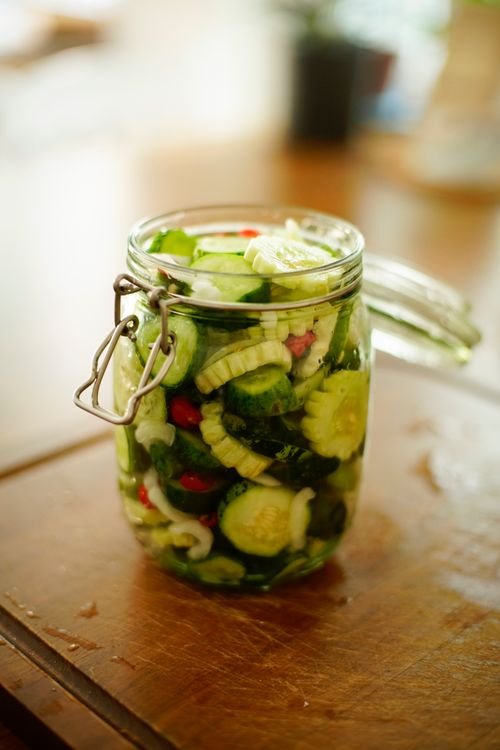
Liquid being poured into glass jars of cucumbers and herbs in Estonia; illustrative photograph. Photo: Eva Bronzini. Photo source. Original attribution. Pexels License. Illustrative stock photograph; cropped, resized and re-encoded.
Moving to Poland is easy to romanticise and easy to underestimate. Around two million foreigners were legally resident in the country as of 2026, roughly five percent of the population, and the Office for Foreigners publishes steadily growing legalisation statistics year after year. Behind those numbers is a shared experience that almost every long-term expat recognises: a predictable arc of adjustment, from honeymoon to frustration to something that finally feels like home. This is what that arc actually looks like in Poland.
The honeymoon phase ends, and that is normal
The first months in Poland feel like travel. The old towns are beautiful, the food is cheap and excellent, and every daily errand carries the thrill of novelty. Then, somewhere around month three to six, the novelty wears off. The beautiful square becomes the street you cross to buy milk. The charming tram becomes the thing that is late when it rains. Psychologists call this the end of the honeymoon stage of cultural adjustment, and expats in Poland report it as reliably as expats anywhere.
The mistake is reading this phase as a verdict on the country. It is not Poland disappointing you; it is your brain finishing the sightseeing tour and starting real life. The expats who settle well are the ones who expect the dip and treat it as a sign to build routines: a regular café, a gym, a weekly market, a Polish class.
The supermarket moment
Every expat in Poland has a version of the same story: standing in a supermarket aisle, confronted by twenty kinds of pickles, five kinds of kefir and a wall of unfamiliar flour types, and feeling oddly defeated. It is a small thing, but it captures the real texture of adjustment. Daily life runs on hundreds of tiny decisions that used to be automatic, and in a new country every one of them takes effort again.
The good news is that this stage is finite. Within a year, the same aisle is just where the ogórki konserwowe live, and you will have opinions about which jar is best.
The language wall is real, and so is the progress
Polish has a reputation as one of Europe's harder languages for English speakers, and the reputation is earned: seven grammatical cases, consonant clusters that look like typos, and a formal-informal distinction that governs how you address everyone from cashiers to bosses. Early attempts produce misunderstandings, and Poles switching to English to help can paradoxically slow your progress.
What experienced expats consistently report is that the breakthrough comes from routine exposure rather than talent: the same phrases at the same shops, the same small talk with the same neighbour, until one day the cashier's question lands as a question instead of noise. You do not need fluent Polish to live well in Poland's big cities, but even modest, error-filled Polish changes how the country treats you.
Reserved, not cold
Newcomers often read Polish social style as unfriendliness. People do not smile at strangers on the street, small talk with shop staff is minimal, and invitations take time. The pattern behind it is a culture that separates public politeness from private warmth. Poles tend to be reserved with strangers and intensely hospitable once someone crosses into the friend zone. The colleague who seemed distant in March may insist on feeding you three courses at their name-day party in October.
Belonging everywhere and nowhere
Long-term expats describe a strange final stage: feeling at home in Poland while also feeling permanently foreign, and discovering that visits "back home" no longer feel quite like home either. It is not a problem to solve but a condition to accept, and most expats eventually come to value it. Living between cultures turns out to be its own place.
Frequently asked questions
How many foreigners live in Poland?
Around two million foreigners were legally resident in Poland as of 2026, about five percent of the population, according to reporting based on official data. The Office for Foreigners (UDSC) publishes regular statistics on legalised stays, and the numbers have grown steadily.
Is it hard to adjust to life in Poland as an expat?
The adjustment arc is the same as anywhere: a honeymoon phase, a frustrating dip when novelty ends, and gradual settling. Poland-specific challenges are the language's difficulty and a reserved social style, but expats consistently report that routine, a few local habits and basic Polish go a long way.
Do I need to speak Polish to live in Poland?
In big cities, daily life in English is possible, especially in international workplaces. But everyday errands, offices and healthcare still run mostly in Polish, and even basic Polish measurably improves how you are received. A Polish class is among the best first investments a new expat can make.