Leszno Museum in the Former Synagogue: Winter Tickets and Access
The essentials: Leszno Museum exhibitions are at Narutowicza 31, not the administration address. Winter hours: Tue-Fri and Sun 09:00-17:00, Sat 10:00-15:00; last entry 30 minutes before closing. Standard/reduced tickets 12/10 zł, Tuesday exhibitions free. Quiet Saturday visits require booking.
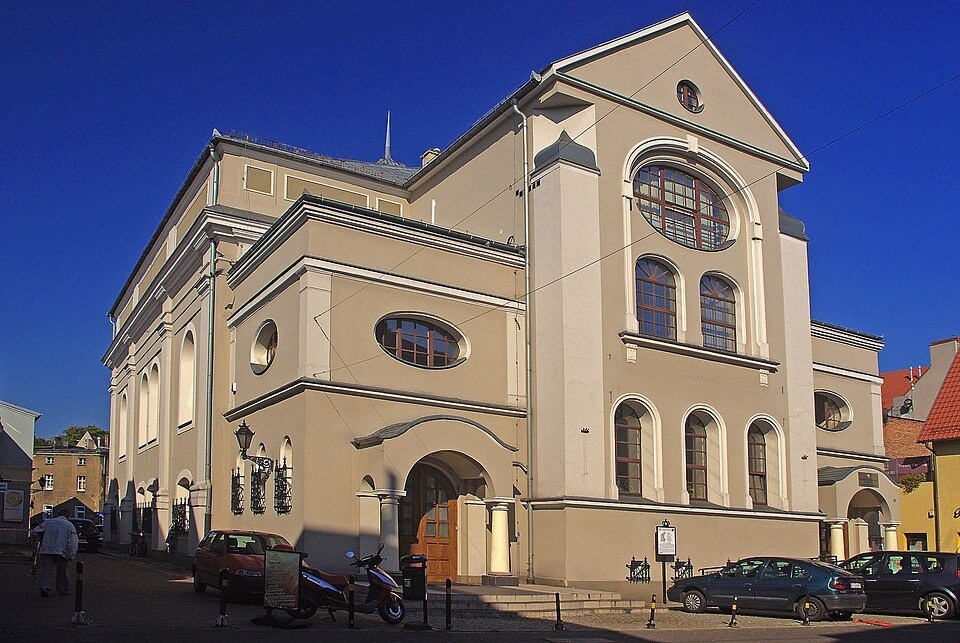
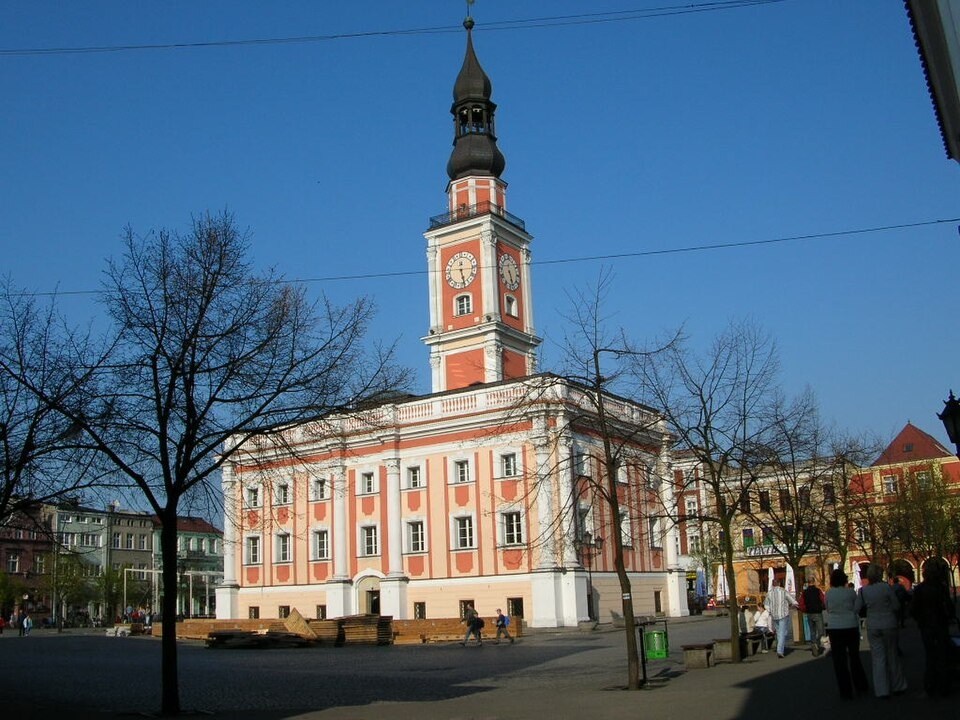
Cover: former synagogue at Narutowicza 31, September 2012. Historic exterior photograph, not a present-day entrance or accessibility diagram. Photo: Mieczysaw / Wikimedia Commons, CC BY-SA 3.0 Poland. Resized and recompressed; adaptation under the same licence.
Leszno's museum is in the former synagogue, not the administration building
The exhibition address for Muzeum Okręgowe w Lesznie is ul. Gabriela Narutowicza 31, Leszno. The museum also publishes an address at plac Jana Metziga 16, but that is its administration building. For an ordinary visit to the permanent and temporary exhibitions, use Narutowicza 31. This matters particularly if someone is dropping you off or you need the accessible entrance: the two buildings have very different access arrangements.
The former synagogue houses a permanent exhibition about the city's history and changing communities, alongside temporary exhibitions. It is a useful choice for residents who want more than a photograph of the old town. The permanent display connects religious objects, portraits, printing and everyday life to the people who shaped Leszno. This guide uses the museum's current Polish practical information and visiting rules, checked on 27 November 2026. Some older official documents and the English rules differ, so the important disagreements are identified below rather than combined into a misleading single policy.
Winter opening hours and the last-entry deadline
For the October-March season, the published routine is Tuesday-Friday 09:00-17:00, Saturday 10:00-15:00 and Sunday 09:00-17:00. Monday is closed. Tickets can be bought only until 30 minutes before closing, and the rules also set last entry at that point. That means 16:30 on a normal Tuesday-Friday or Sunday, but 14:30 on Saturday. These are admission deadlines, not suggested arrival times for a full visit.
If you want time to read the history displays rather than rush through them, choose an earlier arrival. Do not assume that a Saturday afternoon visit has the same margin as a Sunday visit. The museum's seasonal rules give different April-September weekday and Sunday hours, so keep the winter schedule separate from summer travel plans.
For the rest of 2026, the practical page lists closure on 24, 25, 26 and 28 December. The final date is also a Monday. Do not treat an unlisted holiday or a future year's calendar as automatically covered by these dates: recheck the museum's notices when planning around Christmas or New Year.
Tickets: standard entry, family conditions and Tuesday
The current practical page lists 12 zł standard admission and 10 zł reduced admission. It lists a 28 zł family ticket for up to five people, with at least two children, and 8 zł for the large-family-card option. Those are the figures displayed on the current visitor page. They do not establish that any family of five qualifies without the children condition, or that a visitor can claim a reduced ticket simply by asking for it.
There is an official-document discrepancy worth knowing before a family trip. The downloadable order dated 30 April 2025 gives the same 28 zł price but describes a family ticket as a maximum of four people. The current practical page instead says up to five with at least two children. Use the current page as the planning reference, but confirm your exact party with the ticket office if the difference determines what you will pay. The museum's published information is inconsistent on this point, and a promised five-person entitlement would go further than the evidence supports.
Tuesday admission to the permanent and temporary exhibitions is free under the current Polish rules. Guiding, museum lessons and workshops remain paid extras. A ticket is for one entry on its purchase day, not an open-ended pass or a promise of re-entry after lunch. Special exhibition arrangements should still be checked against the notice for the event you intend to attend.
Reduced admission: bring proof, and check eligibility
The museum publishes a separate list of reductions, exemptions and accepted documents. Children under seven are among the free-entry categories. School and student status, age, retirement and disability can be relevant to a reduction, but the 2025 order includes citizenship or institutional conditions for several categories. It is not safe to tell every foreign student, pensioner or visitor with a disability that their overseas document will automatically qualify.
Bring the original document supporting your entitlement and ask the ticket office if it is not clearly covered. This is especially useful for visitors whose documents were issued outside the EU, Switzerland or the EFTA/EEA framework named in the order. The standalone discount sheet is less explicit than the order about some conditions. Budgeting the standard 12 zł until eligibility is confirmed avoids turning an uncertain discount into a surprise at the desk.
What the permanent exhibition explains
The permanent exhibition is called Na styku światów. Historia Leszna od XVI do XX wieku, roughly "At the meeting of worlds: the history of Leszno from the sixteenth to the twentieth century." The museum describes 15 sections exploring the city's history through its communities, religions, languages and material culture. Its detailed page reaches beyond the dates in the title, so think of the display as a broad historical narrative rather than a precisely bounded century-by-century syllabus.
The objects give that narrative substance. The museum identifies a Catholic monstrance, a Czech Brethren communion cloth probably brought to Leszno in 1628, portraits and material about local publishing. One example is Przyjaciel Ludu, a Polish periodical printed by a German firm. These are useful starting points for understanding a city whose history cannot be reduced to one language or one religious tradition.
The exhibition also addresses coexistence and conflict, migration around 1920, wartime occupation and the postwar period. It is not simply a celebration of uninterrupted tolerance. For an international resident, that distinction makes the museum more informative: the displays offer ways to understand changes in belonging, population and public life, rather than only a sequence of rulers and architectural styles.
A dated opportunity: the silver exhibition ends on 29 November
A temporary exhibition, Wspólnota gestu 1936-1939. Srebra Funduszu Obrony Narodowej, runs until Sunday, 29 November 2026. It presents 266 silver objects donated to the National Defence Fund in the interwar period, including jewellery, everyday objects and religious vessels. The museum describes donors from different nationalities, social groups and faiths, linked by support for equipping the Polish army.
The final-day curator tour is advertised for 15:00 on 29 November at Narutowicza 31, led by Renata Sobczak-Jaskulska of the National Museum in Poznań. The specific event notice gives tickets as 12 zł / 10 zł. It does not promise an English-language tour, so check language arrangements before attending primarily for the spoken commentary. This is a dated opportunity, not a recurring Sunday programme. After 29 November, do not travel expecting this temporary exhibition to remain open.
Step-free access: use the right building and entrance
The museum's accessibility declaration, dated March 2026, describes a ramp to the Narutowicza 31 exhibition building. The entrance doors are not automatic; a bell can summon a member of staff. Inside, a lift connects the entrance level with the hall, ticket office, cloakroom, shop and toilet, and gives access to the permanent exhibition on the first floor and the temporary exhibition on the second floor.
An adapted toilet has an alarm/call system, and a wheelchair is available for individual needs. Availability should be confirmed rather than treated as a guaranteed reservation. The declaration also says the two spaces behind the building are normally for museum vehicles but may be usable by a visitor with a disability after prior arrangement with security. That is not an unrestricted visitor car park. Public parking, including spaces for disabled drivers, is described along the street.
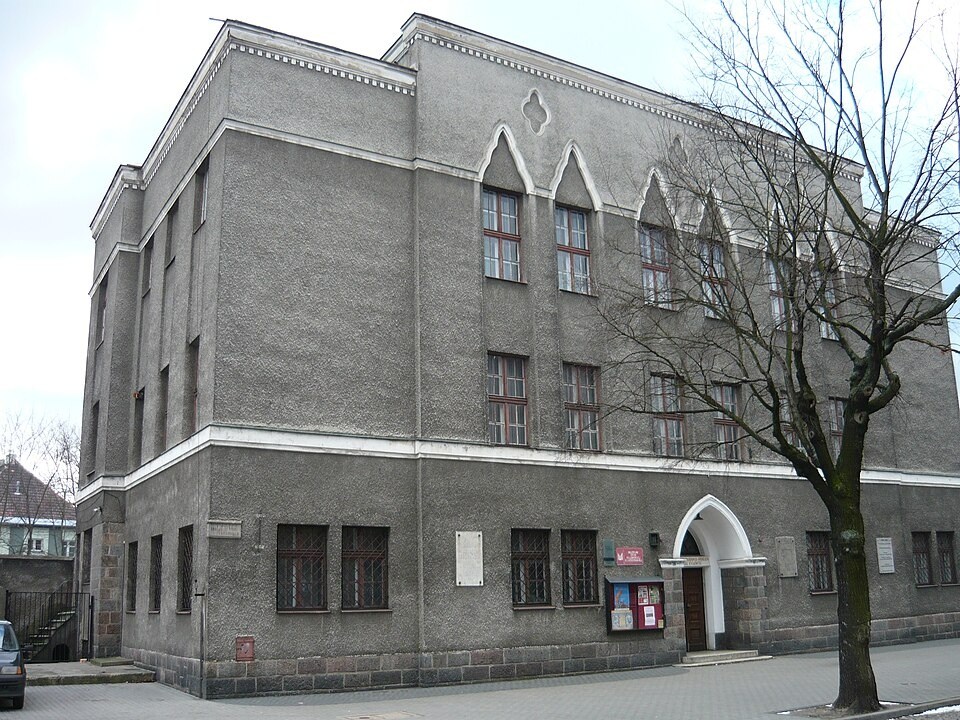
By contrast, the administration building at plac Jana Metziga 16 is described as unsuitable for wheelchair users, with stairs and restricted manoeuvring space. The museum's 2026 pre-visit guide is another useful preparation tool, with descriptions of the building and visit. Neither that guide nor a historic street photograph should replace a direct access check if a specific lift, chair or parking arrangement is essential.
Quiet visits, children and what to leave in the cloakroom
The current Polish rules offer a quieter Saturday visit from 08:00 to 10:00 by reservation. During that period, educational activities and guided group visits are not held, and selected sound and multimedia elements are switched off. This is earlier than normal Saturday opening, not a walk-in promise. Arrange it with the museum instead of arriving at 08:00 expecting ordinary ticket-office access.
The English rules describe different quiet-hour periods, a lower group limit and older conditions. For this guide, the current Polish rules are the reference: children under 13 need adult accompaniment, and the group ceiling is 50, not an entitlement for an unannounced group to enter together. Check directly if either point affects a school or organised visit.
Use the free cloakroom or lockers as directed. Large backpacks, luggage and umbrellas are not allowed into the exhibitions, and food and drink are restricted. Private photography is permitted subject to exhibit-specific restrictions, but flash, tripods and additional lighting require permission. Assistance-dog access has documentation, vaccination and harness requirements in the rules. These details are worth checking before bringing equipment or planning a visit around a service animal.
Guides and workshops: book the service, not just admission
The current Polish rules require guide reservations at least three working days before the intended visit, with cancellation notice at least 24 hours ahead. Do not rely on the English page's shorter advance-booking wording. The practical page displays 70 zł for a museum guide, 150 zł for city guiding and 150 zł for a translator. The downloadable 2025 order describes hourly charging and an additional foreign-language fee, so these headline amounts should not be presented as a guaranteed all-in English tour price.
Ask for the total for your duration, language and party before confirming. Current practical-page lesson prices are 6 zł for preschool children and 8 zł for pupils or adults; workshops are 13 zł and 15 zł respectively. Those figures differ from the older order too. For reservations, the current visitor page gives 65 529 61 40 extension 3, mobile 425 038 790 and [email protected]. State your date, number of visitors, language and any access needs so the museum can answer the actual request.
Frequently asked questions
Where is the museum entrance?
Exhibitions are at ul. Gabriela Narutowicza 31, in the former synagogue. Plac Jana Metziga 16 is the administration building.
Is Tuesday admission free?
The current Polish rules make permanent and temporary exhibition entry free on Tuesday. Guides, lessons and workshops remain paid extras.
Is the exhibition building accessible by wheelchair?
The March 2026 declaration describes a ramp, non-automatic doors with a staff bell, a lift to both exhibition floors and an adapted toilet. Arrange essential equipment or parking needs in advance.
Sources
- Current hours, prices and 2026 holiday closures
- Current Polish visiting rules
- Permanent exhibition
- Silver temporary exhibition
- 29 November final curator tour
- March 2026 architectural access declaration
- 2026 pre-visit guide
- Discount documents
- 2025 order: family and service-price differences
- English rules: differing older conditions