Siedlce Regional Museum: Winter Tickets, Sunday and Access
The essentials: The Regional Museum at Piłsudskiego 1 publishes October-March opening 10:00-16:00 every day except Saturday. Standard admission is 8 zł, reduced 4 zł; Sunday admission is free. The historic town hall has no lift. Family-card and disability concessions have specific conditions.
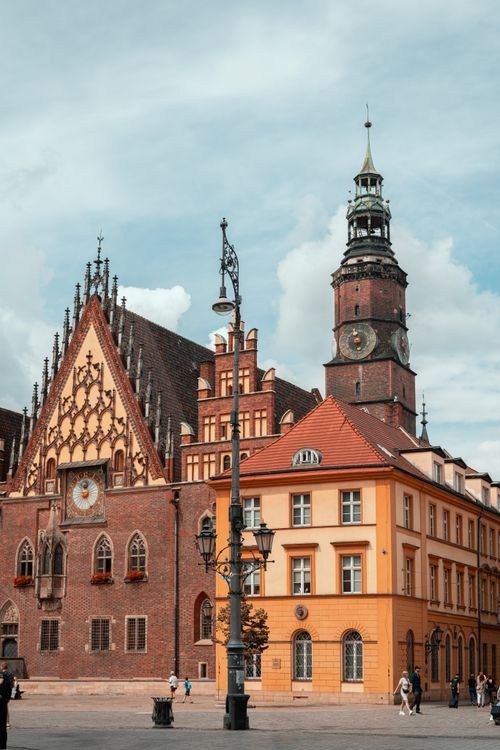
Cover: Wrocław Town Hall, an illustrative historic town-hall photograph, not Siedlce. Photo: Tetyana Kovyrina / Pexels.
The Regional Museum in Siedlce is a place to start with the city and its surrounding countryside, rather than a large national collection. Its home is the old town hall at ul. Piłsudskiego 1, crowned by the Atlas figure residents call Jacek. Inside, the permanent displays move between archaeology, local history, village life and Polish art. The practical surprise is the weekly timetable: the museum publishes Monday opening but closes on Saturday.
For a first visit in winter, plan around the October-March schedule and choose which collections interest you before arriving. Sunday is the published free-admission day. Access through the historic building needs more preparation: the museum describes narrow passages, different floor levels and steep stairs, without a lift. This is a useful local-history stop, but it should not be sold as a fully step-free museum.
Winter opening: do not default to Saturday
The museum's contact page and tariff both give 10:00-16:00 every day except Saturday from October to March. That includes Monday and Sunday. In April-September, Tuesday and Friday extend to 18:00; Monday, Wednesday, Thursday and Sunday remain 10:00-16:00. Saturday is not listed as an opening day in that seasonal timetable either.
This matters if you are organising a weekend from elsewhere. A Saturday-only trip based on the assumption that museums usually open at weekends is a poor fit. Sunday is the clearer published option, with the added benefit of free admission. A Monday visit may work when other institutions are shut, but check the museum's notices for the actual date before committing to travel.
Those are exhibition hours, not a promise of admission at the closing minute. The pages checked do not establish a separate, reliable last-entry cutoff. Arrive with time to see the collections, and ask the museum about final admission if you cannot arrive until late afternoon. The regular timetable is also not a holiday-opening guarantee. Christmas arrangements and one-off events need their own current check.
Tickets: 8 zł standard, 4 zł reduced, Sunday free
The published tariff gives 8 zł for a standard ticket and 4 zł for a reduced ticket. The contact page explicitly says admission is free on Sundays. The museum repeats Sunday free entry in its disability-support notice, so this is not simply an undated claim on a travel listing.
Do not assume every activity is included in ordinary exhibition admission. The tariff separately lists talks, lectures, recurring events and concerts at 2 zł, educational workshops at 10 zł and museum lessons at 5 zł. A special event can therefore require a different arrangement from walking around the permanent displays. Confirm the specific programme and booking requirements rather than treating a low general admission price as an all-inclusive pass.
The reduced-ticket line alone does not explain every qualifying category. Bring the document supporting a concession and ask which tariff applies. In particular, a child's age or a foreign student card should not be turned into a guaranteed free ticket without checking the museum's actual conditions. One clearly documented family offer is the national Large Family Card, which has its own rules.
The family-card offer has conditions
The museum's Karta Dużej Rodziny page says cardholding parents receive reduced admission to permanent and temporary exhibitions. Children from cardholding families enter free until age 18, or until age 25 if they are studying. The offer also names the museum's Dąbrowa and Kotuń branches.
That is a benefit for holders of the card, not a blanket promise that every child or student enters free. This distinction is easy to lose in a shortened online listing. If you are visiting as a family without the card, ask the museum for the applicable child tickets rather than budgeting on the cardholder exception. If you do have it, take the card and any documents needed to establish the relevant age or study status.
What the permanent displays offer
The permanent exhibition list gives four useful starting points. Siedleckie dzieje 1441-1939 follows the history of Siedlce from its earliest recorded mention to the outbreak of the Second World War. For someone living in the city, this is a way to put local names and streets into a longer story, instead of treating the town hall only as a landmark outside.
Ukryte w ziemi, translated as Hidden in the Earth, covers the prehistory and medieval past of the region. It shifts the focus from the modern city to the wider borderland of Podlasie and Mazovia. The museum's exhibition description identifies archaeology as a permanent subject, so this is a better basis for a first visit than an old temporary-show poster.
The village-room display presents the furnishings of a moderately prosperous rural household from the area around Siedlce in the first half of the twentieth century. Its objects come from the museum's ethnographic collection. Looking at domestic objects alongside the city-history display can make the contrast between urban and rural life easier to understand.
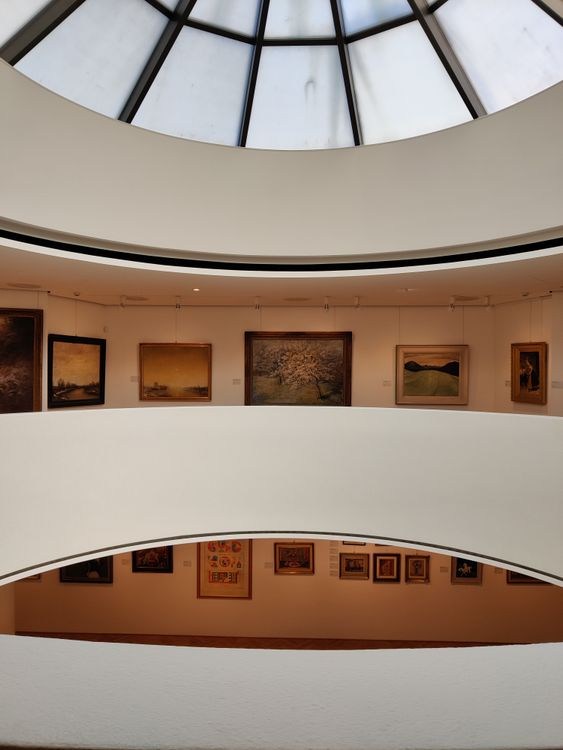
The Gallery of Polish Art is described as mainly twentieth- and twenty-first-century painting and sculpture, based on the museum's own collections. The institution also identifies work by artists including Michał Boruciński, Małgorzata Łada-Maciągowa and Joanna and Irena Karpińskie. Choose the gallery if art is your priority, but do not expect the particular works visible in an old publicity photograph to be a guaranteed current hang.
Read the 2026 exhibition plan as a plan
The museum publishes an annual temporary-exhibition schedule, which is helpful for choosing a date but is not a live room-by-room availability service. At the time of this guide, the schedule lists Droga mnie układa, graphics by Weronika Marszelewska, through 29 November 2026. That is a near-term end date, not a reason to assume the show will remain in place in December.
For later winter visits, the same plan lists traditional clothing from central and eastern Poland under Wydobyte z kufra for 23 October 2026-4 April 2027, and Pociągiem ku niepodległości for 8 November 2026-24 January 2027. A folk-sculpture Christmas exhibition is planned for 4 December 2026-7 February 2027. It should not be described as already open in November.
If one of these is your main reason to travel, check that exhibition directly with the museum. The annual list also contains shows that ended earlier in 2026. Seeing a title on that page is not enough; its date range matters. The permanent collections are the steadier foundation for a visit, with any confirmed temporary display as an addition.
Accessibility: separate admission support from the route
The museum's own accessibility information within its PJM page describes different floor levels, narrow passages and steep stairs with handrails. It explicitly says the building has no lift or lifting platform. It also welcomes guide and assistance dogs and points wheelchair users towards exhibitions mounted on the fencing outside the building.
Do not read an access-related concession as proof that all galleries are reachable. Before travelling with a wheelchair, limited stamina or a pushchair, ask which rooms can actually be reached on the day and what help is available at the entrance. The information checked does not justify promising an independent step-free route through the whole museum. A low ticket price does not remove those physical barriers.
There is also a separate, time-limited admission programme for people with disabilities resident in Mazowieckie and their carers. The museum's notice, updated in January 2026, says the 1 zł programme runs from 1 January to 31 December 2026. It requires a completed residence declaration and a valid disability document issued by the relevant Polish county or city assessment body. Do not assume a foreign disability card automatically meets that requirement, or that the programme has already been extended into 2027.
The museum publishes information in Polish Sign Language and offers virtual visits through its website. These can help with preparation or provide another way to see material, but they are not evidence of an on-demand interpreter or English-language guiding. If language support is essential, ask about it before fixing a group visit.
Keep the regional and diocesan museums separate
Siedlce has more than one museum. This guide concerns the Regional Museum at Piłsudskiego 1. The Diocesan Museum is a different institution at ul. Biskupa I. Świrskiego 56, with its own website, exhibitions, prices and timetable. Do not transfer a ticket or opening time from one to the other.
The diocesan museum's contact page currently advertises changed hours in connection with its exhibition: Tuesday-Sunday 10:00-16:00, Monday closed, with entry listed at 16 zł for adults and 10 zł for children. Those details illustrate why the distinction matters. In particular, the Regional Museum's Sunday free-entry rule does not establish a free Sunday at the diocesan institution.
A practical first-visit plan
Start with the address and date. For a winter Sunday, verify there is no special closure and use the Regional Museum's 10:00-16:00 timetable. For Saturday, choose another date rather than relying on the usual pattern elsewhere. If you need accessible rooms or English support, settle those questions with staff before travelling.
Then pick your main interest: city history, archaeology, rural domestic life or modern Polish art. Add a temporary exhibition only after checking its dates and current presentation. Families should bring concession documents rather than relying on a generic child-free claim. Anyone using the 2026 disability programme should check the residence and document requirements in advance.
The museum publishes +48 25 632 74 70 and [email protected] for enquiries. Give the date, group size, language and any access needs when asking. A short, specific check is more useful than a general question about whether the museum is open: it can establish the exact galleries and arrangements that make your own visit workable.
Frequently asked questions
Is the Regional Museum open on Saturday?
No. The published timetable excludes Saturdays. From October to March it gives 10:00-16:00 on the other days, including Monday and Sunday. Check holiday exceptions separately.
Do all children enter free?
Do not assume so. The documented Large Family Card offer gives free entry to children from cardholding families under the stated age and study conditions; other tickets need checking.
Is this the Diocesan Museum?
No. The Regional Museum is at Piłsudskiego 1. The Diocesan Museum is a separate institution at Biskupa I. Świrskiego 56 with different hours and prices.
Sources
- Official opening hours, address and Sunday free admission
- Official tariff
- Permanent exhibitions
- 2026 exhibition plan, scheduled dates not live availability
- Large Family Card terms
- Museum introduction, PJM information and building barriers
- 2026 disability admission programme
- Virtual visits
- Separate diocesan museum: current hours and prices