Kórnik Castle: Tickets, Autumn Hours, 2026 Exhibition and Access
The essentials: Zamkowa 5, Kórnik. Normal 40 zł, reduced 20 zł. Operator: Tue-Sun 10:00-15:15 through November, last entry 14:30; Monday closed. Seller hours conflict. Confirm December hours; exhibition ends 13 December 2026. Lift by staff arrangement; no pushchairs or storage.
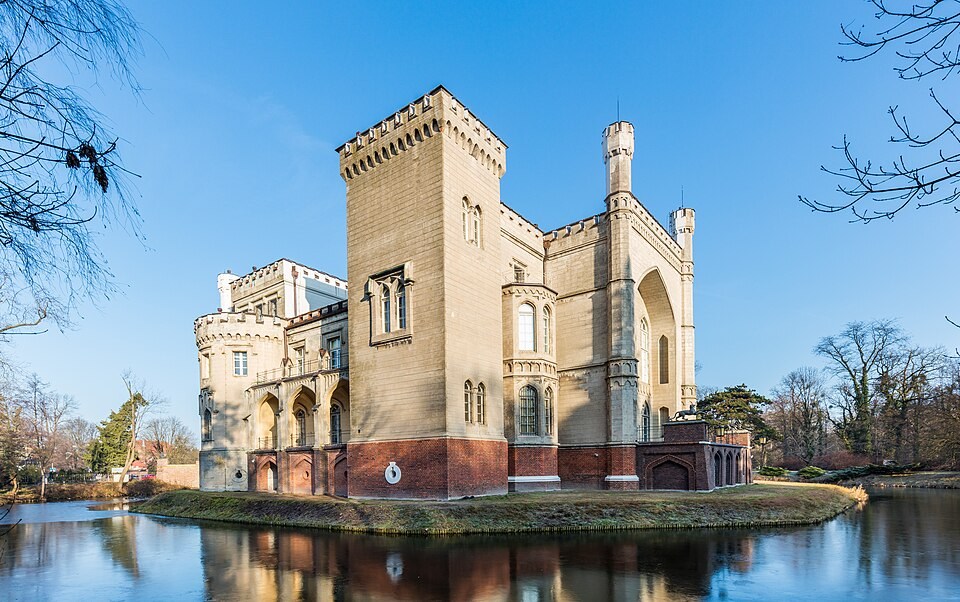
Cover: Kórnik Castle photographed on 21 December 2016. Archival exterior, not a current seasonal or access survey. Photo: Diego Delso / Wikimedia Commons, CC BY-SA 4.0. Resized and recompressed under the same licence.
Kórnik Castle makes a practical trip from Poznań, but late in the 2026 season the useful question is not simply whether it is open. Its operator and linked ticket seller publish different autumn hours and different season-end information. The operator's current page gives a shorter visiting day, while its anniversary exhibition has a separately stated December closing date. A visitor who checks only a search-result opening time could arrive too late.
This guide uses the PAN Biblioteka Kórnicka operator information as the main reference, explains the disagreements, and separates the castle museum from the arboretum, library research access and seasonal carriage-house offer. The address for the castle is ul. Zamkowa 5, 62-035 Kórnik. Normal admission is 40 zł and reduced admission is 20 zł. For a November visit, plan around the operator's 14:30 last entry, not an assumed late-afternoon arrival.
Autumn hours: follow the shorter operator schedule
The operator lists Tuesday-Sunday opening and Monday closure. For 1 October-30 November, its low-season hours are 10:00-15:15, with last entry at 14:30. The same low-season pattern is published for 14 February-30 April. These dates do not establish an uninterrupted year-round timetable: closures and the end of the tourist season need their own check.
The linked Tobilet page instead lists October-November hours of 10:00-16:00, with last entry at 15:15. It also says the castle is closed from 30 November to 31 December, whereas the operator's current castle page announces the end of the 2026 tourist season on 14 December. Those are material differences, not two ways of expressing the same schedule.
For a November visit, the shorter operator hours are the safer planning basis. For December, ask the castle directly about your date and entry time instead of treating either listing as a complete daily calendar. The operator announces a season end but does not fill the gap with a clear December daily-hours table. The castle contact is +48 61 817 00 81 or [email protected].
Tickets, guides and the real cost of a group visit
The operator and its infokiosk agree on 40 zł normal and 20 zł reduced admission. The reduced categories mentioned include children, young people, pensioners and retirees, with detailed entitlements linked from the tariff. Check the category that applies to you and bring any supporting document. A foreign resident should not assume that every student or age-based rule works without conditions.
Tickets are sold at the castle desk and through the linked Tobilet page. Read the selected date, time and final basket total before paying. A ticket-sales page can remain available while its descriptive hours lag behind an operator update. Buying online does not resolve the hours discrepancy unless the castle confirms that the selected slot is actually operating.
A guide in Polish is listed at 150 zł; English or German guiding is 200 zł. These are guide-service prices, not a reason to assume the group's admission is included. Ask for the total covering the guide and visitors when booking. Reservations go to [email protected] at least a week ahead, and the current operator wording says bookings are accepted no earlier than three months ahead.
That reservation wording differs from an English version on the infokiosk, which can be read as requiring three months' notice. Use the current castle page's Polish instruction and ask staff if your timing is close. It is worth stating the date, number of people and language in one message, so the reply can settle the whole arrangement rather than only guide availability.
The anniversary exhibition has its own end date
The 2026 programme marks 600 years of documented castle history and 200 years of the Kórnik Library. The operator's anniversary material explains the distinction: the oldest surviving document mentioning the castle dates to 1426, while Tytus Działyński began moving his book collection into the castle in 1826. These are documentary and institutional anniversaries, not a claim that every present wall is six centuries old.
The exhibition is titled “Otoczone troską. Kórnickie dziedzictwo w dziewięciu odsłonach”, describing Kórnik's heritage through a sequence of displays. The current exhibition page says it closes on Sunday 13 December 2026. The castle page's season-ending date is Monday 14 December, a day normally closed. Do not interpret the latter as a promise that exhibition visitors can enter on Monday.
Original objects rotate for conservation and to show more of the collection. The exhibition page says the last change of objects became available from 27 October. Consequently, an earlier photograph or review may describe an original that is no longer in the same case. The reason to visit is the current presentation, not a guarantee that one manuscript pictured in a past article remains on view.
What the castle's appearance tells you
The castle's history reaches back to the first half of the fifteenth century, with successive owners from several major Wielkopolska families. Its present appearance is associated with Tytus Działyński's nineteenth-century rebuilding in English Neo-Gothic style. Towers, battlements and dramatic shapes should not be mistaken for an untouched medieval defensive building.
The operator describes the present design as a combination of projects commissioned from European architects and shaped by the owner's vision. That is more accurate than attributing the entire finished castle to a single famous name copied from a photograph caption. Earlier phases also matter: Teofila Działyńska Szołdrska-Potulicka transformed the residence into a Baroque palace with an elaborate garden in the eighteenth century.
Teofila is the figure associated with the White Lady, or Biała Dama, tradition. Treat that as part of the site's historical storytelling and legend, not a literal fact about a haunting. The changing house, its owners and the preservation of their collections offer enough real history without turning the visit into a promise of supernatural entertainment.
The museum and library are related, but not identical visits
The castle houses the Kórnik Library, established by Tytus Działyński in 1826 and part of the Polish Academy of Sciences since 1953. The museum interiors allow ordinary visitors to encounter the residence and selected objects. That does not mean a museum ticket grants unrestricted handling of books, access to research collections or entry into every working room of the library.
The operator describes the later Zamoyski family's decision to give the estate to the Polish nation, with Fundacja Zakłady Kórnickie created in 1925. That history helps explain why the castle is both a visitor destination and a place of long-term collection care. The anniversary displays make this preservation work part of the museum story rather than something happening invisibly behind the rooms.
If your interest is a particular book, manuscript or research collection, contact the library through its own arrangements before travelling. If your interest is a castle visit, use the museum route and its current exhibition information. Keeping those purposes separate avoids assuming that a famous collection is entirely on public display every day.
English options, audio and a family activity
The operator explicitly offers English and German guides by reservation. It also describes a free Android application called Zamek w Kórniku, available through Google Play, and says visitors need their own headphones. A rental audio guide with the same recording is listed at 15 zł. The existence of the application does not establish which language version will suit your group, so check that before relying on it instead of a guide.
An English printed folder is listed at 20 zł. Other language folders are also mentioned, with different prices, so ask for the version you want rather than assuming one universal booklet price. For children, the free castle quest uses Tytus Działyński as a storytelling guide through the rooms. A leaflet is available at the desk or through the operator's download.
Choose the format that helps your party look at the rooms rather than merely adding equipment. A family might prefer the quest, while a group with specific historical questions may get more from a reserved guide. Do not schedule a full guided programme against the last entry of the day without confirming that staff can accommodate it.
Lift access does not mean pushchairs are admitted
The operator states that a lift is available for visitors with disabilities and asks visitors to inform staff when they need it. That is useful, concrete information. It is not a complete accessibility statement covering every threshold, doorway or toilet. Contact staff with your device and route needs before travelling if any part of the visit depends on that detail.
Pushchairs are a separate issue. The castle says they cannot be taken inside because of the historic floors, and that there is no space to store them during a visit. Do not assume that the lift policy provides an exception or that a cloakroom will take a buggy. Families should settle a workable arrangement before arriving, especially if travelling alone with a young child.
Private interior photography is allowed without charge, but flash and tripods are prohibited. The operator says commercial publication of interior photographs or recordings requires management's permission. For that reason this guide uses licensed exterior photographs rather than treating a freely licensed interior image as proof that the museum's separate publication condition has been met. Casual private photographs and a commercial shoot are different uses.
Getting there without an avoidable transfer
The castle operator recommends arriving by car or bus from Poznań, including services from the main coach station or Rondo Rataje. It specifically warns that Kórnik railway station is about five kilometres from the town centre and castle. A train ticket to Kórnik therefore does not deliver you to the entrance. Check the complete connection, including the last part and return journey, before choosing it.
There is paid parking beside the castle for about 30 cars. The operator also identifies free parking at Prowent, approximately 400 metres away, including places for coaches. These are published arrangements, not a guarantee of an empty space or a suitable accessible drop-off on every date. Ask about the right arrival point if walking distance matters.
The arboretum and carriage house should be checked separately rather than assumed to be included or operating on the castle timetable. For a straightforward late-season visit, arrive well before 14:30, see the museum and anniversary exhibition, and keep any extra walk flexible. For December, confirm the exact day and hours first. That is a more reliable plan than letting an older seller timetable decide your afternoon.
Frequently asked questions
What time is last entry in November?
The current operator page gives 14:30 last entry and 15:15 closure, Tuesday-Sunday. Its linked seller gives later hours. Plan around the shorter operator schedule and confirm if needed.
When does the anniversary exhibition end?
The operator exhibition page says 13 December 2026. The castle page announces the tourist season ending 14 December, normally a closed Monday; exact December hours need confirmation.
Can I bring a pushchair?
No. The castle prohibits pushchairs because of historic floors and says it cannot store them. A separate lift is available for visitors with disabilities through staff.