Koszuty Manor Museum: Winter Hours, Free Thursday and Ramp Access
The essentials: Winter November 2026-March 2027: Tuesday-Friday 09:00-16:00; Monday and winter weekends closed. Tickets 20/15 zł; Thursday free from November 2026. Guide 70 zł separately. Koszuty 27, near Środa Wielkopolska. Portable veranda ramp on request; ring staff for outside ticket purchase.
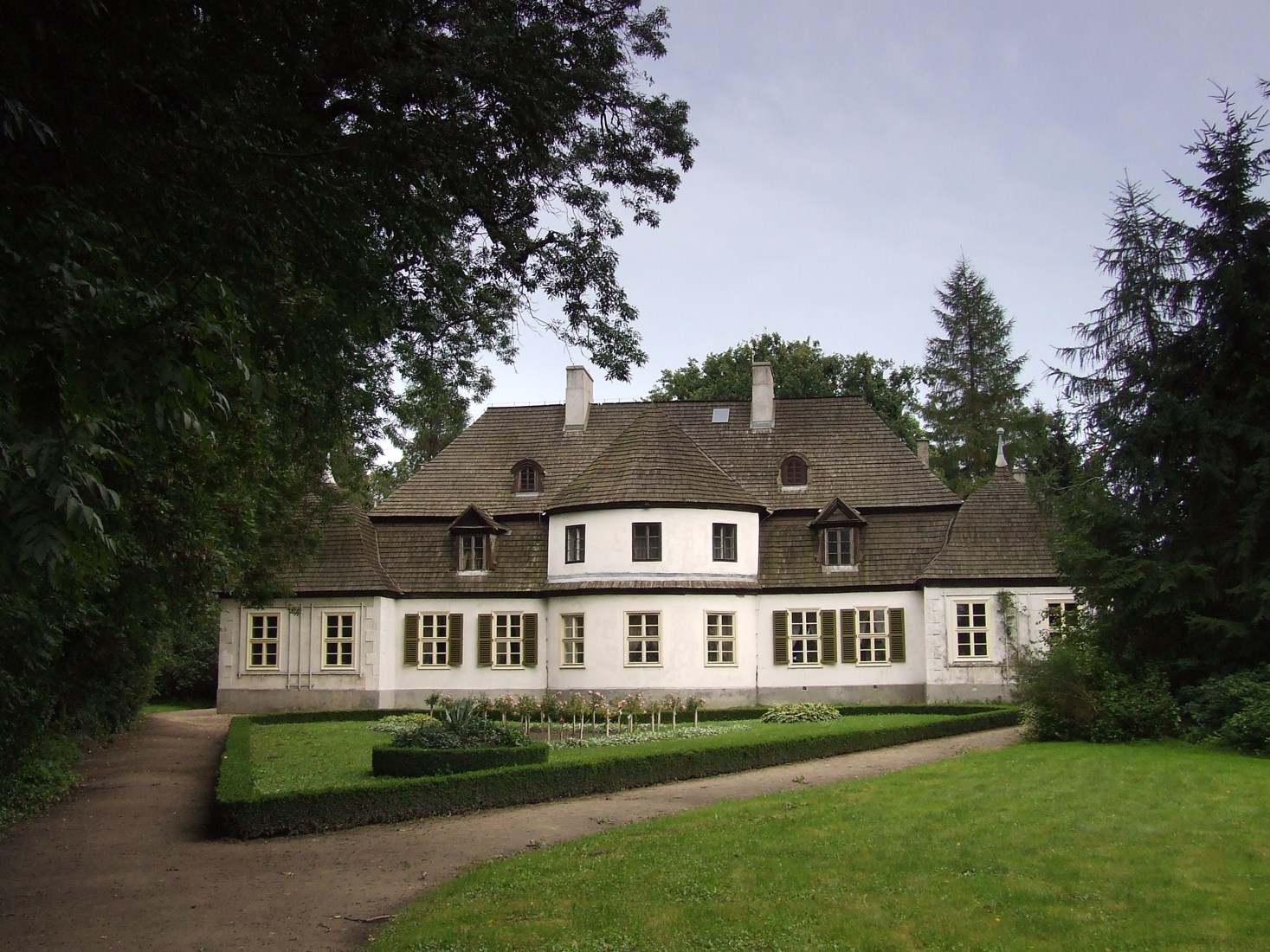
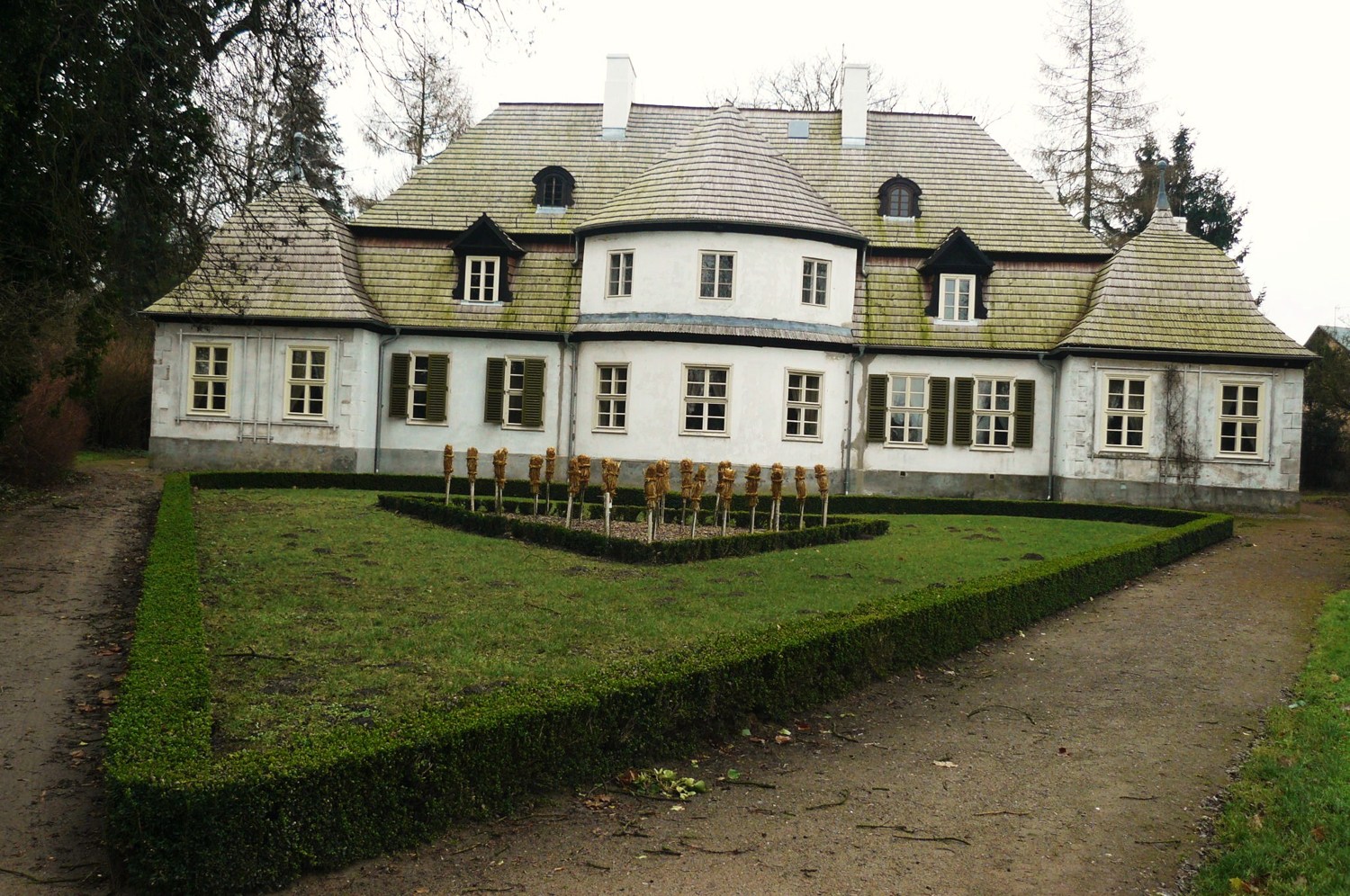
Cover: rear of Koszuty manor and park, archive 2011 exterior, not a current entrance survey. Photo: Maciejw / Wikimedia Commons, CC BY-SA 3.0 Poland. Resized and recompressed under the same licence.
A winter visit to Koszuty needs a weekday in the diary. The Muzeum Ziemi Średzkiej "Dwór w Koszutach", a historic manor outside Środa Wielkopolska, has announced a November 2026 to March 2027 schedule of Tuesday to Friday, 09:00-16:00. It has also moved free admission to Thursday from November. Those two changes matter more than the older opening-hours panel still visible on its homepage.
The attraction is a furnished country house rather than a castle with ramparts or a modern hands-on science museum. Eight rooms recreate the atmosphere of a small landed family's home in Wielkopolska around the turn of the twentieth century. A landscape park surrounds the manor. For an expat trying to understand the Polish word dwór, this is a useful place to connect a familiar-looking rural building with the social world it represented.
Winter hours: use the dated seasonal announcement
The museum's notice of 23 October 2026 explicitly sets Tuesday-Friday, 09:00-16:00, for November 2026 through March 2027. Its easy-read visitor information says the museum is closed on winter Saturdays and Sundays, as well as Mondays. Plan an ordinary winter visit within that weekday window, not as a Sunday afternoon addition to a drive.
There is a real discrepancy on the official website: the homepage's general panel still says 09:00-15:00 on weekdays and lists weekend hours for April-October 2026. The dated winter announcement is the more specific source for the present season. If you intend to arrive in the last hour, confirm with the museum before leaving. No separate last-entry deadline was found in the pages checked, so 16:00 should not be interpreted as an invitation to start a full visit at closing time.
Special events can have separate hours. A November cultural gathering advertised for a Sunday evening does not mean the museum has restored ordinary weekend opening. Likewise, its notice closing for 11 November concerned that holiday, not an indefinite shutdown. Check the news page for your chosen date rather than treating an old closure headline as current.
Tickets and the new free Thursday
The current dedicated price page lists normal admission at 20 zł and reduced admission at 15 zł. It says card payment is available. The museum's notice published on 2 November 2026 announces free visiting on Thursdays from November, and the price page also identifies Thursday as the free day. An older directory result naming Wednesday should not determine your plan.
For two adults paying the normal rate, ordinary admission therefore comes to 40 zł. Thursday removes that admission cost, but do not extend the free-day notice to a private guide, a museum lesson or a workshop: those are separately priced services. The museum's price list gives lessons as 25 zł and workshops as 40 zł, without enough detail on that page to turn either amount into a complete group quotation.
The current price page lists a guide charge of 70 zł. Some older museum pages still show 50 zł, including an April 2024 price-change notice and the easy-read description. Use 70 zł as the published current figure and confirm the full booking terms when arranging a guided visit. The pages checked do not establish group size, tour duration or English-language availability. A listed guide fee is not proof that an English tour is running whenever you arrive.
The easy-read page describes reduced admission for children, young people, students, pensioners and organized groups. It does not supply every age threshold or evidence requirement. If your family's budget depends on a particular concession, ask what document is needed. Do not assume a child is free simply because other Polish museums have an under-seven exemption.
Finding the entrance without walking to the wrong door
The destination is Koszuty 27, 63-000 Środa Wielkopolska. It is in the village of Koszuty, not a museum building in Środa's central square. The National Institute of Cultural Heritage places the village about 30 kilometres southeast of Poznań. That is geographical context, not a verified journey time or a promise of a direct public-transport connection.
The museum gives unusually useful arrival instructions. After entering the park through the marked gate, you first see the rear of the manor. Paths run around the heart-shaped lawn and lead to the entrance on the other side. The ticket-office door is on the right of the building. The main visitor entrance is central, through a wooden veranda, and a staff member opens it after the ticket has been purchased.
This arrangement explains why a photograph of the rear is not a map to the visitor door. There are room descriptions inside, and staff indicate the visiting direction. The toilet is next to the ticket office. For a small historic house, following that route is more reliable than looking for a large reception hall or assuming every exterior door is an entrance.
What the manor actually shows
The permanent exhibition is called Mała siedziba ziemiańska w Wielkopolsce, approximately "A small landed estate residence in Wielkopolska". The museum describes eight rooms arranged in the spirit of a late-nineteenth- and early-twentieth-century Polish manor. Furniture, paintings, textiles and decorative objects work together as domestic interiors, rather than as isolated objects in a chronological corridor.
The museum's account names prints by Michał Elwiro Andriolli, works from Napoleon Orda's album, and paintings associated with artists including Wojciech and Jerzy Kossak and Julian Fałat. Treat that as an introduction to the collection, not a guarantee that a particular work will be hanging in the same place on your visit. Look at how the objects fit the room's purpose: sitting, eating, studying or receiving guests.
There is an important distinction between an atmospheric reconstruction and an untouched household. The museum says the interiors have been recreated to convey the earlier way of living. The furniture and everyday objects span the eighteenth, nineteenth and early twentieth centuries. The impression of residents having briefly gone out is an exhibition approach, not evidence that every object belonged to the last family in the house.
The easy-read information also describes an upstairs display about Środa Wielkopolska, including old maps and plans and a city plan more than 200 years old. That gives the visit a local-history dimension beyond the furnished rooms. Anyone who cannot use stairs should establish which parts of that display can be seen before booking travel; the published entrance-ramp information does not establish step-free access upstairs.
A house with several historical layers
The present manor dates to around 1760 and was later enlarged. The heritage institute links its construction to Józef Zabłocki, while explaining that an earlier house stood on the estate. Its low main body, steep broken roof and projecting corner rooms make it a different architectural experience from the much larger palaces visitors may know elsewhere in Poland.
The building's appearance also reflects changes around the turn of the twentieth century. The institute records a difficult period after the owners left in 1941, followed by postwar deterioration. After repairs, the house was used as a primary school, and it was assigned to the regional museum in 1966. Restoration continued over later decades, including work on the roof and a reconstruction of the veranda in 2010.
The manor and park were designated a Pomnik Historii, a Polish Monument of History, by a presidential regulation dated 20 April 2018. That recognition concerns the historic ensemble. It does not turn it into a royal residence or mean that every visible element is eighteenth-century fabric. The value is in reading the house, its later alterations and its landscape together.
The park is part of the story
The museum describes a landscape park of about 4.7 hectares. Its reconstruction drew on an 1830 map and other historical evidence. The heart-shaped lawn is one of the clearest details to look for; the heritage description also records two artificial ponds, old trees and remains of an icehouse. These are features of a designed estate, not a separate woodland attraction.
The museum received a culture ministry gold medal in 1995 for the park's reconstruction and upkeep. A winter visit will naturally give a different impression from leafy archive photographs: the building and garden structure may be more visible, while the flowerbeds are not the reason to come. No independently stated winter park-opening schedule was found in the pages checked. Do not assume the grounds are open around the clock, or that museum closure still leaves access to every path.
Access: request the portable ramp in advance
The museum's accessibility declaration, reviewed on 1 August 2026, describes one designated disabled parking space and about 55 metres between the parking place and the entrance. The wooden veranda has one step. Staff can put out a portable ramp on request, and the declaration asks visitors to notify the museum beforehand.
The ticket-office entrance has three steps. A visitor unable to use them can ring the bell by the veranda, beside the tactile building plan, and buy a ticket outside with staff assistance. The declaration also lists an accessible toilet, admission with an assistance or guide dog subject to the stated documentation, online Polish Sign Language interpretation and a tablet with a recorded PJM guide.
Those are specific provisions, not a blanket promise of independent access to the whole property. Ask about your wheelchair's dimensions, the route you want to see and any upstairs exhibits. For an English-speaking visitor, PJM provision should not be confused with an English audio guide. The main contact page lists +48 733 450 733 and [email protected] for practical questions.
Who should put Koszuty on the list?
Choose it if you want a compact introduction to Polish manor-house culture and can visit on a winter weekday. Families can use the room settings to talk about how children played, how meals were served and how a household worked before today's appliances. Organized educational sessions are a separate option to arrange, not an activity automatically included with every ticket.
Before setting off, settle the date, the dated winter hours and any language or access needs. Choose Thursday if free ordinary admission is useful, keep the paid-guide distinction clear, and allow time before closing rather than chasing an unconfirmed last-entry rule. Koszuty's appeal is the relationship between house, rooms and park, provided the practical plan gets you through the door.
Sources and checks
Checked 27 November 2026. Primary sources: dated winter schedule; November free-Thursday announcement; current price list; easy-read visitor route and concessions; museum history and eight-room display; manor and collection account; park history; accessibility declaration; contact details; homepage and notices; National Institute of Cultural Heritage description. Current dated notices take precedence over older general hours and guide prices.
Frequently asked questions
Is Koszuty manor open on winter weekends?
Winter weekends are closed. The dated November 2026-March 2027 schedule is Tuesday-Friday 09:00-16:00. Special events do not establish ordinary weekend opening.
Which day is free?
Thursday, from November 2026, according to the 2 November announcement and current tariff. Separately priced guiding, lessons and workshops are not promised free.
Is there wheelchair access?
The August 2026 declaration describes a portable ramp at the veranda, on request, and outside ticket purchase via the staff bell. It does not establish step-free access upstairs.
Sources
- dated winter schedule
- November free-Thursday announcement
- current price list
- easy-read visitor route and concessions
- museum history and eight-room display
- manor and collection account
- park history
- accessibility declaration
- contact details
- homepage and notices
- National Institute of Cultural Heritage description