Kalisz Regional Museum: Free Tuesday, Branch Tickets and Winter Hours
The essentials: Main museum, Kościuszki 12: Tue-Fri 10:00-18:00, weekends 11:00-18:00. Zawodzie and Russów in winter: Tue-Sun 10:00-15:30. Monday closed; last entry 30 minutes before closing. Single-site tickets 20/12 zł; all-branch 30/20 zł, family 50 zł. Tuesday free; guides extra.
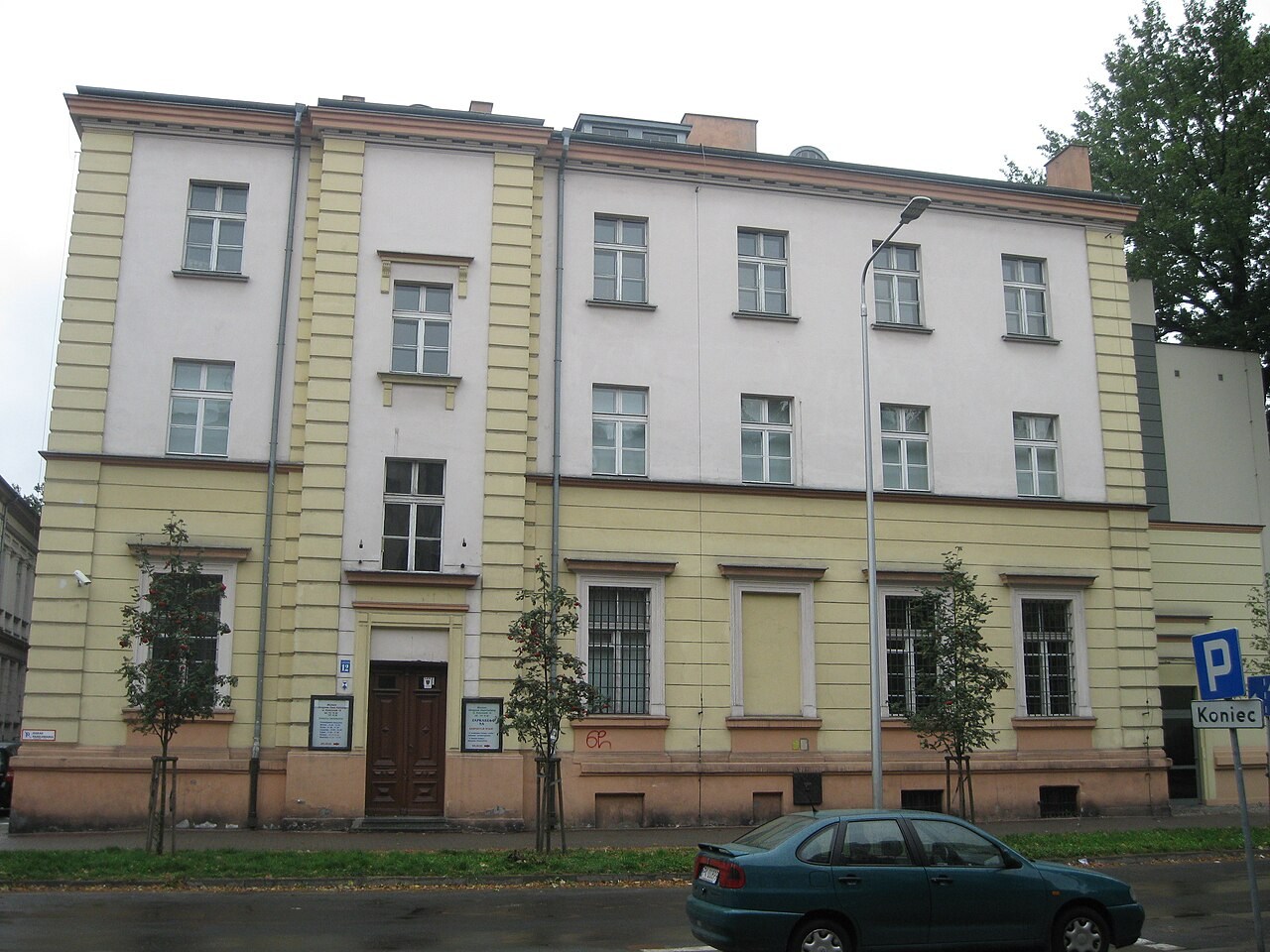
Cover: Kalisz regional museum, photographed 19 September 2011. Archive view, not a current entrance or access survey. Photo: LukaszKalisz / Wikimedia Commons, CC BY-SA 3.0 PL. Resized and recompressed under the same licence.
Start with the building, not the oldest-city slogan
Kalisz's regional museum is a useful starting point for understanding the city beyond a walk around its centre. The main building at Kościuszki 12 brings archaeology, local history, rural customs and graphic art together. Two branches offer different experiences: the reconstructed early-medieval stronghold at Zawodzie and Maria Dąbrowska's childhood home in Russów. They share an institution and a combined ticket, but not the same opening hours, family price or terrain.
For an English-speaking visitor, the practical advantage is that English guiding is explicitly offered, rather than merely assumed. The catch is advance booking. For a winter outing, the other important distinction is closing time: the city building stays open until 18:00, while both branches close at 15:30. Plan an outdoor branch first and the indoor galleries later, not the reverse.
Main museum hours and a small temporary restriction
The official main-building visitor page lists Tuesday-Friday 10:00-18:00 and Saturday-Sunday 11:00-18:00. Monday is closed. Last admission is 30 minutes before closing, so 17:30 is the ordinary final entry, not a sensible arrival time for an unhurried visit. Tuesday is listed as the free day; do not assume that removes a separately booked guide's charge.
A direct check of the museum's live page on 27 November 2026 showed a notice that one archaeology display case is unavailable on 27-30 November, with the rest of that exhibition open. Older search extracts described a different, earlier city-history restriction. This is a reason to use the live visitor notice before travelling, rather than treat a search result as today's closure list. Ask about any particular object that is the main reason for your visit.
Tickets: where a family or combined ticket changes the calculation
Main-building admission is 20 zł full price, 12 zł reduced and 10 zł per person for an organised group of more than ten. The 30 zł family ticket covers up to six people, including one or two adults and children under 18. It is not an unrestricted six-adult group ticket. Children under seven qualify for free admission, and documentary evidence is required for relevant concessions and exemptions.
The published reduced categories include specified school and student groups, people over 65, pensioners, disabled visitors and carers, and other eligible groups. Several categories have nationality or education-system conditions. A foreign student card or an overseas pension status should not automatically be assumed to qualify: check the detailed list with the cashier and bring the supporting document. Karta Polaka holders are among the listed free-entry categories.
A combined ticket for all branches costs 30 zł full price, 20 zł reduced, 18 zł organised-group or 50 zł family. It is valid for two days from purchase, extended to three days when bought on Sunday. Guiding is excluded from the combination. Compare this with the sites you can actually reach while they are open. The ticket's validity is not a promise that every branch opens every day, and a cheap combination is no saving if your second destination has already shut.
For example, two full-price adults visiting the main museum alone would otherwise pay 40 zł. If they are visiting with qualifying children and fit the family definition, the published 30 zł family option is worth asking for. For two paid sites, the 30 zł individual combined ticket is lower than two separate 20 zł full-price admissions. These are comparisons of published ticket prices, not a reservation or an assurance that a special event is included.
Archaeology: objects that connect the city to its surroundings
The archaeology exhibition follows settlement in the Prosna basin and south-eastern Wielkopolska through two rooms. Stone and flint tools, reconstructed burials, bronze ornaments and pottery help turn a long chronology into things visitors can compare. It is a regional account, not proof that every object was found beneath the modern market square.
Among the museum's described objects are a Roman-import sword bearing the inscription ALLIVS PA from the Wesółki/Janków II cemetery, a blacksmith's burial assemblage and finds from Piwonice. The medieval section introduces coin hoards from Kalisz-Rajsków and Słuszków. The latter deposit contained more than 13,000 objects; that is the size of the hoard, not a claim that every piece is on display. Finds from the market square include an oak water conduit and leather footwear. With the temporary case restriction, confirm individual-object availability rather than building a visit around a guaranteed sighting.
Rural customs, local industries and an artist's studio
The ethnography galleries organise late-19th- and 20th-century rural life around themes such as childhood, marriage, protection, harvest and tradition. An embroidered infant's wrap, clay whistles, a reconstructed wedding dress, straw decorations and Easter masquerade masks make the displays approachable without pretending every visitor already knows Polish seasonal customs. Some clothing and ceremonial objects are reconstructions, which matters when explaining them to children.
The city-history exhibition is a set of themed displays rather than one continuous timeline. Its subjects include the city's destruction and rebuilding, schools, local associations, industries and entertainment. That gives newcomers a way to connect everyday names and businesses with the place where they now live. Check current room availability at reception, especially if a particular historical period matters to you.
The Tadeusz Kulisiewicz room offers a different pace: more than a hundred graphic works and drawings, alongside a studio reconstructed from original elements. The artist left his home city the contents of his Warsaw studio, including more than 1,300 drawings, prints and sketches. That bequest is larger than the selection exhibited. Look at how his working table and travel souvenirs sit beside the art rather than expecting the entire collection in one room.
Zawodzie: winter hours and reconstructed buildings
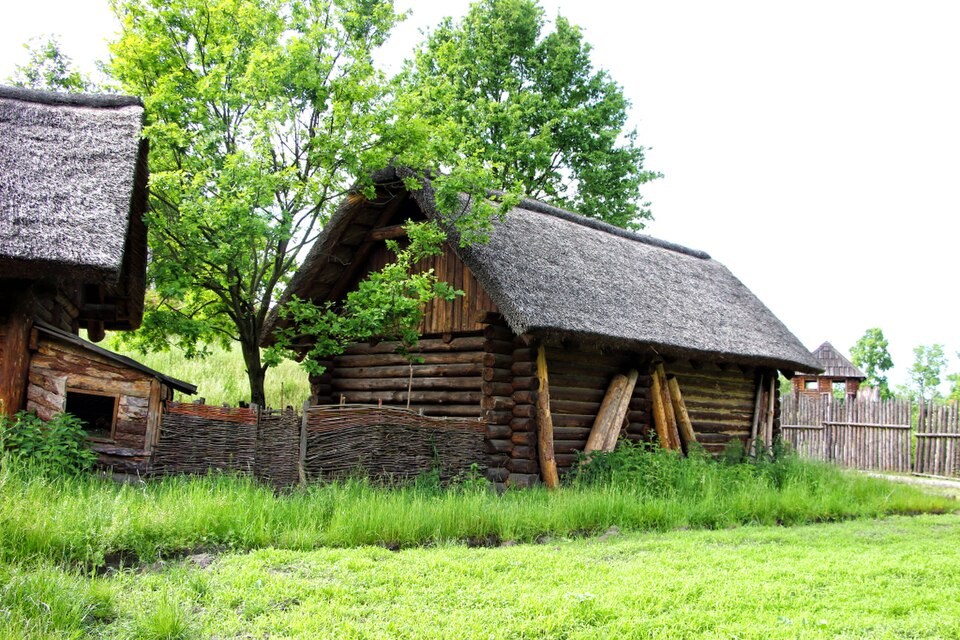
The Zawodzie reserve stands on the early-medieval stronghold site. Its partly reconstructed defences and buildings date from the 2008 reconstruction project: palisade, bridge, timber houses, defensive tower and an outline of the Romanesque collegiate church. These are not intact medieval houses. The distinction helps visitors appreciate the archaeology without confusing interpretation with surviving fabric.
The reserve's timetable gives Tuesday-Sunday 10:00-15:30 from 1 November to 30 April, closed Monday, with last entry at 15:00. Summer extends Thursday, Saturday and Sunday to 18:00. Single-site admission is 20/12/10 zł, but the family ticket is 40 zł, not the main building's 30 zł. Tuesday is free. Polish guiding is 50 zł for the reserve or 75 zł including St Adalbert's church; English guiding is listed at 75 zł. Confirm the route and availability when booking.
Russów is a separate literary and rural-life outing
The Russów branch centres on Maria Dąbrowska's childhood home, not a house her parents owned: her father administered the estate. The rebuilt manor opened a memorial room in 1971 and became a museum branch in 1979. The park's rural buildings were moved from several villages, so they should not all be described as the writer's original household.
Its winter timetable is Tuesday-Sunday 10:00-15:30, last entry 15:00, Monday closed. Summer weekends extend to 17:00. Tickets are 20/12/10 zł, family 40 zł, with Tuesday free and guiding listed at 50 zł. Leave time for the journey rather than treating Russów as another room beside the Kalisz galleries.
A realistic winter plan therefore starts by choosing between Zawodzie and Russów rather than squeezing both into a short afternoon. Check the branch timetable, book any guide, then leave the main-building galleries for later. Tuesday can reduce ordinary admission costs, but transport and guiding still need a budget. For a Sunday combined-ticket purchase, ask the cashier to explain the three-day validity alongside Monday closures so that the printed end date and your second visit agree.
English guiding and access need branch-specific planning
Guided groups are limited to 30 people. Booking is by phone on weekdays 10:00-15:00, and English must be ordered at least three days ahead. At the main museum, Polish guiding costs 30 zł for one exhibition or 70 zł for all exhibitions; English is 150 zł. Admission is separate. Russów's page offers the same advance-English booking rule but does not list a separate English price, so request the actual quote rather than importing Kalisz's or Zawodzie's rate.
The access declaration places the main entrance on Kopernika, despite the Kościuszki postal address. It describes entrance steps with a wheelchair lift on the left, an internal lift, access to all exhibitions, an adapted toilet and designated parking. Ask staff about lift operation before arriving if you depend on it. Zawodzie has an accessible gatehouse and toilet but uneven natural ground outside. At Russów, advance notice is needed to deploy a mobile platform for entering the rural cottages. No induction loops are provided. Match the outing to the branch and your needs, not to a single institution-wide accessibility label.
Visitors who need written communication can use it with staff, according to the access declaration. It does not promise a sign-language interpreter or large-print information. Large wheelchair groups are asked to notify the museum in advance. The main contact is +48 62 501 34 84; explain the branch, arrival date and specific help needed rather than asking only whether the museum is accessible.
Frequently asked questions
Is Tuesday free at all three sites?
All three official visitor pages list Tuesday as the free day. Separately booked guiding is not included in the combined admission ticket.
Does the main museum have wheelchair access?
The access declaration describes an entrance lift on Kopernika, an internal lift, all exhibition access and an adapted toilet. Confirm lift operation if your visit depends on it.
Is Zawodzie open in winter?
The published November-April timetable is Tuesday-Sunday 10:00-15:30, last admission15:00, Monday closed.