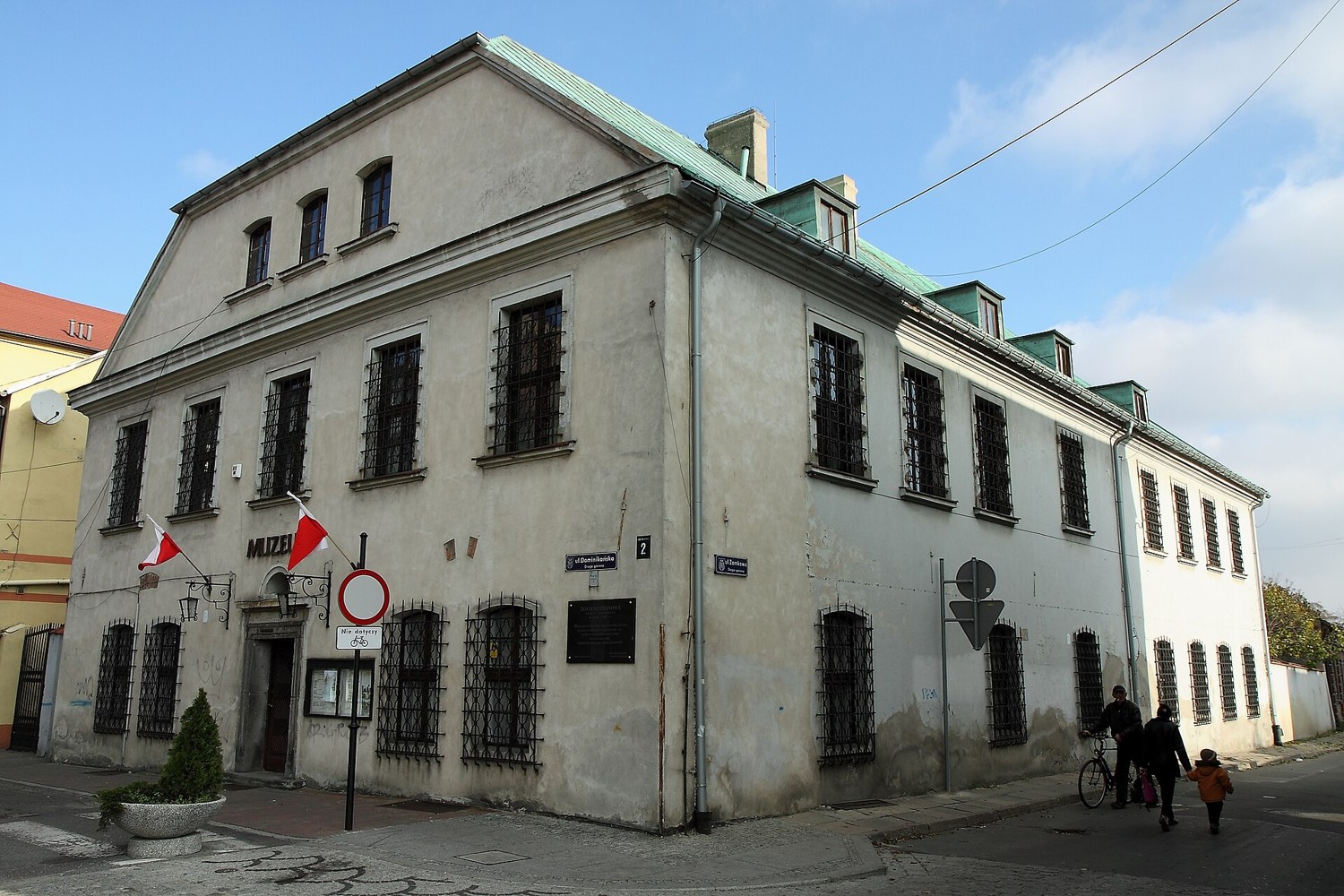
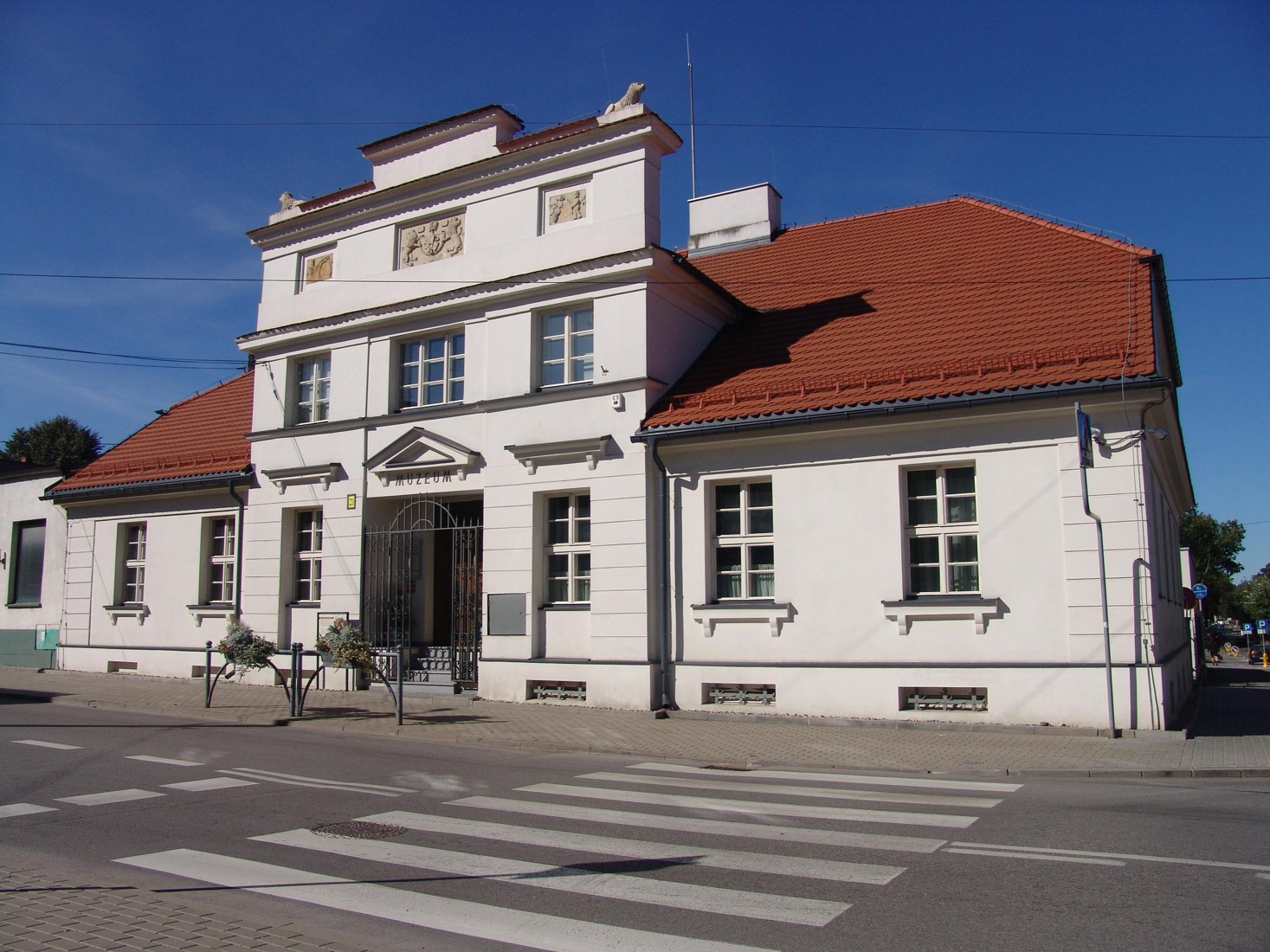
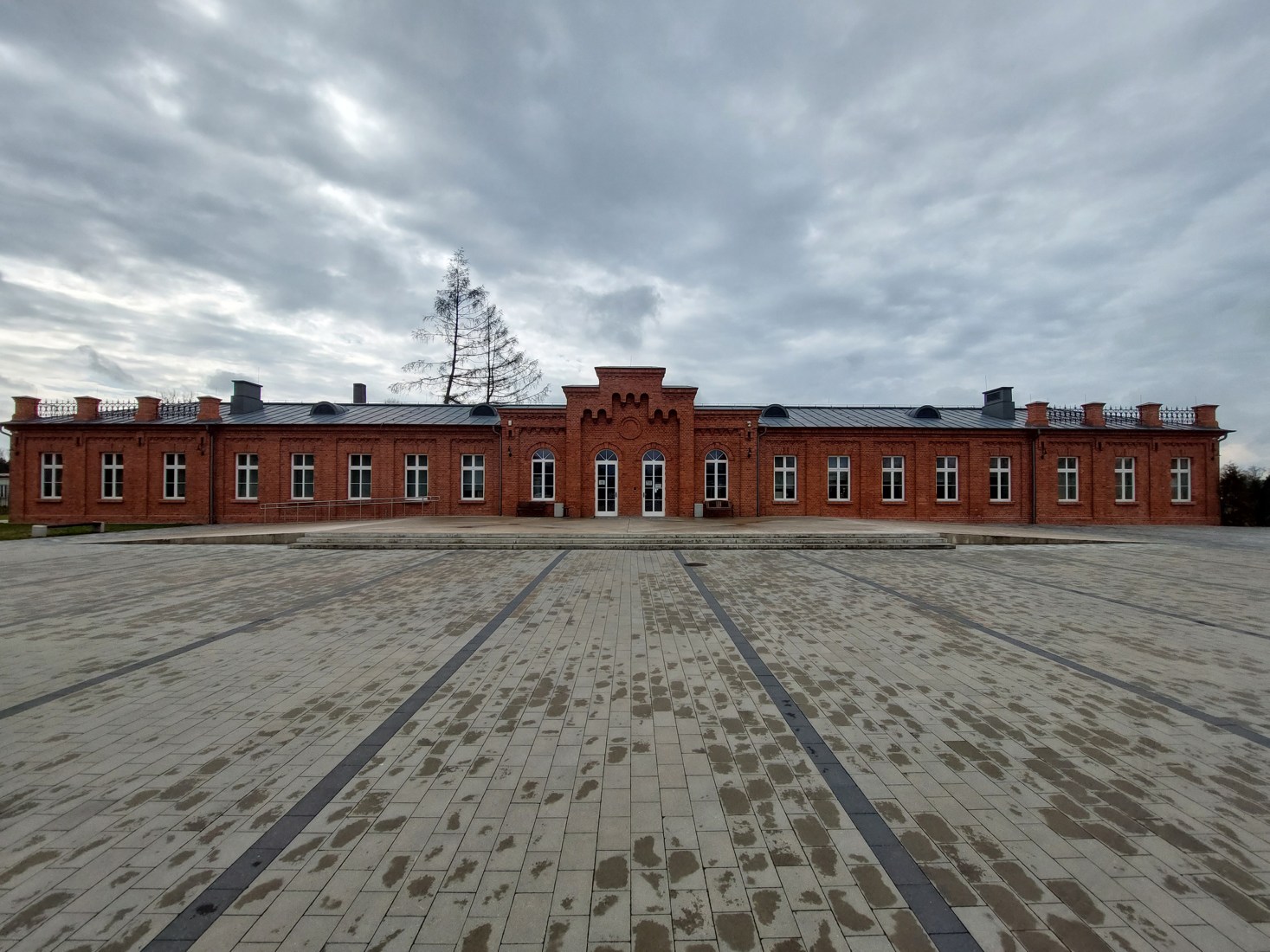
Zduńska Wola Museum and Karsznice: Tickets and Sunday Hours
The essentials: City museum, Złotnickiego 7: Tue-Fri 10:00-18:00; Sunday conflicts between 10:00-14:00 and 11:00-15:00, call first. Karsznice, Kolejowa 6: Tue-Fri/Sun 11:00-15:00. Both close Monday and Saturday. Ordinary tickets at each site: 15/8/4 zł; under seven free.
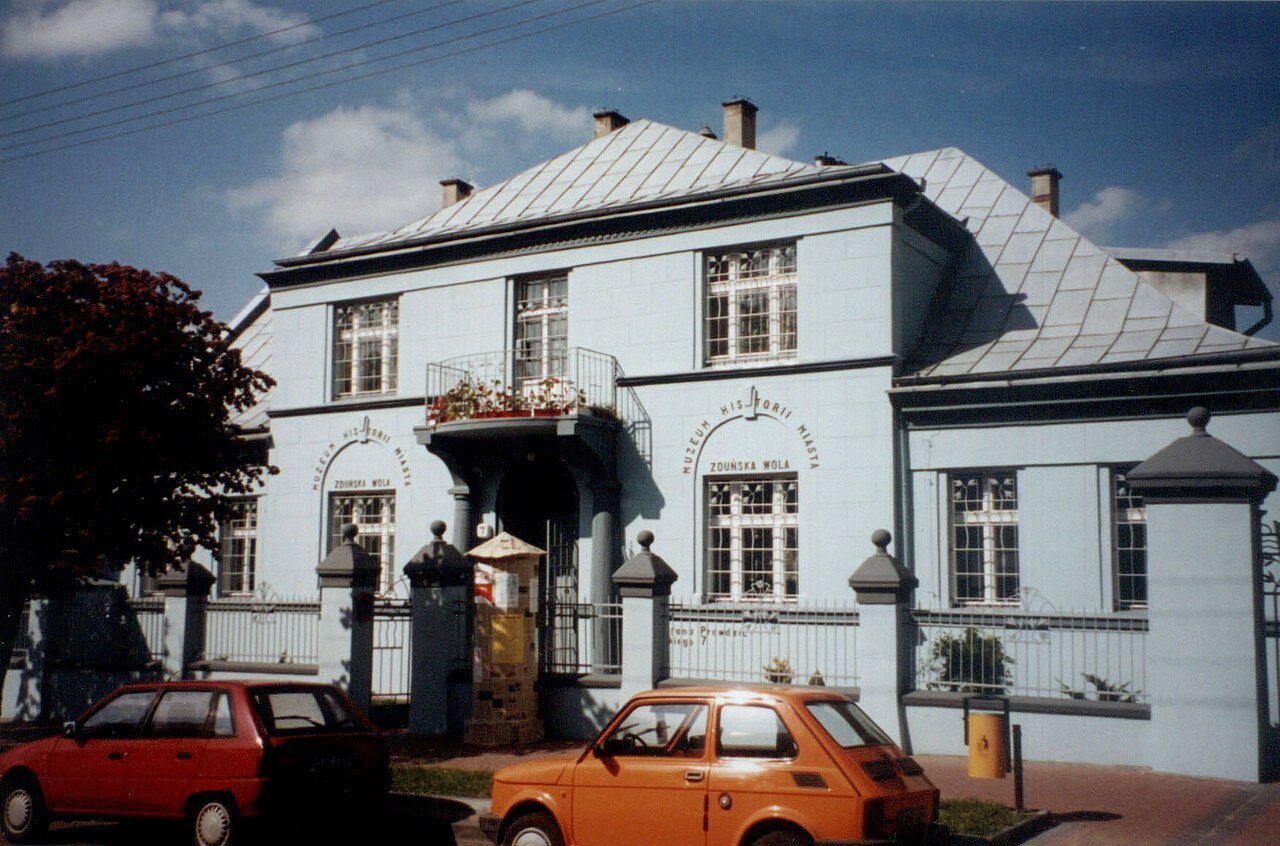
Cover: archive exterior of the city-history museum at Złotnickiego 7, Zduńska Wola. Photograph uploaded in January 2006; capture date unspecified. Not a current access survey. Photo: Mick44 / Wikimedia Commons, CC BY-SA 3.0. Resized and recompressed under the same licence.
Two museums, two addresses and one easy mistake
Zduńska Wola offers two different ways to understand its industrial past: the city-history museum at Złotnickiego 7 and the locomotive collection in Karsznice at Kolejowa 6. They belong to the same institution, but their hours, guiding charges and visitor experience differ. As checked on 27 November 2026, ordinary admission is 15 zł at each location, with reduced and children's rates. Do not assume that one payment buys a two-site pass.
The main museum is the better starting point for weaving, local families, a reconstructed pharmacy and the city's Jewish heritage. Karsznice suits visitors interested in railway machinery and the freight routes that shaped the district. Both publish Monday and Saturday closures. If you are planning a weekend outing, check Sunday directly: the main museum's own website gives conflicting Sunday hours, while the railway branch consistently lists 11:00-15:00.
Main museum hours: Sunday needs confirmation
The official visit-planning page lists the city museum Tuesday-Friday 10:00-18:00, with Monday and Saturday closed. Its main timetable gives Sunday 10:00-14:00. However, the footer on that same page, and across other official pages, gives Sunday 11:00-15:00. Neither version is labelled as a dated seasonal change that resolves the difference.
Do not treat repetition in the footer as proof that it is newer. Call 43 823 48 43 or 43 824 98 80 before a Sunday journey, especially if arriving near either end of the day. If your schedule is flexible, a Tuesday-Friday visit avoids this particular disagreement and offers a longer published window. Holiday and event notices still take priority over an ordinary weekly timetable.
The pages checked do not give a clear last-admission cutoff. That does not mean entry is possible at closing time. Leave enough time for the visit and ask about the last ticket when arranging your arrival. The educational page suggests that visiting the permanent displays itself takes about 45 minutes, but this is a planning indication, not a compulsory pace or a guarantee that every visitor will finish in that time.
Tickets and what free Tuesday actually establishes
Permanent-exhibition tickets at the city museum are 15 zł full price, 8 zł reduced and 4 zł for young visitors under 16. Children under seven enter free. A separate temporary-exhibition tariff is 4 zł full price or 2 zł reduced. The page does not clearly identify every reduced-admission entitlement, so bring relevant identification and check rather than assuming that a particular foreign card qualifies.
The main museum's permanent-exhibition section explicitly says admission is free every Tuesday. The railway branch has its own published tariff but does not repeat that free-Tuesday statement. Nor does the temporary-exhibition section explain whether Tuesday waives its separate charge. For a dependable budget, use free Tuesday for the city museum's permanent collection and confirm any temporary display or railway-branch exemption separately. Do not advertise the whole two-site day as automatically free.
Guiding through the permanent exhibitions costs 30 zł. Groups of more than 15 people have a 6 zł per-person admission rate and must take a guide at that additional charge. This threshold is more than 15, not 15 or more. Guiding around the city and region is a different service, listed at 100 zł per hour. None of these prices establishes English-language availability; ask about language and the actual route when booking.
A small building with a layered history
The museum's building history dates the house to 1928 and identifies its designer as municipal surveyor J. Krasowski. It describes an interwar Polish manor-inspired style, not an eighteenth-century noble residence. A weaving house previously occupied the site. This distinction matters when looking at the symmetrical facade: the building echoes an older domestic style, but its own story belongs to the twentieth century.
During the occupation it housed German gendarmerie and other offices; after the war it returned to residential and organisational uses. The collections developed from local collecting efforts, including a weaving room assembled through PTTK activity in the 1960s. A first exhibition took place in 1980, and the museum moved to this building in 1988. It became an independent municipal institution from 1994. Those dates explain why the museum is about the city rather than simply the history of its present house.
Choose a route through the permanent displays
Tu Czekay explores the town's beginnings and the Złotnicki family. Its description includes guild diplomas, nineteenth-century shooting medals, a bookkeeper's notebook and coins. Use it to understand how settlement, local institutions and incoming weavers connected. It is a more specific starting point than reading the town's development only as a smaller version of Łódź.
The weaving room then makes that history physical. The museum describes a carding machine, spinning wheel, horizontal and vertical looms, weaving shuttles and tools. It links local textile work to arrivals from Saxony, Bohemia and Prussia. With children, follow the stages from preparing fibre to making thread and cloth. These are collection displays, not an advertised hands-on weaving session; ask before touching anything.
The old pharmacy room includes furniture from local pharmacist Eugeniusz Kasprzycki's premises, with material from other local pharmacies. Scales, mortars, measuring glassware, Latin-labelled bottles and drawers show how medicines were prepared and stored. The description also mentions preserved animal specimens in formalin. Families who prefer to avoid that material can ask where it appears before entering the room.
The Missing Mezzuzot of Zduńska Wola, by Estelle Rozinski, focuses on the lives and memory of the pre-war Jewish community. The museum describes an installation of 100 mezuzot forming part of a larger 3,000-piece work, alongside an original mezuzah found at Belwederska 5. The 100 installation pieces should not be mistaken for 100 surviving originals. This is a place to slow down rather than treat every room as another industrial exhibit.
Karsznice: machinery rather than a train ride
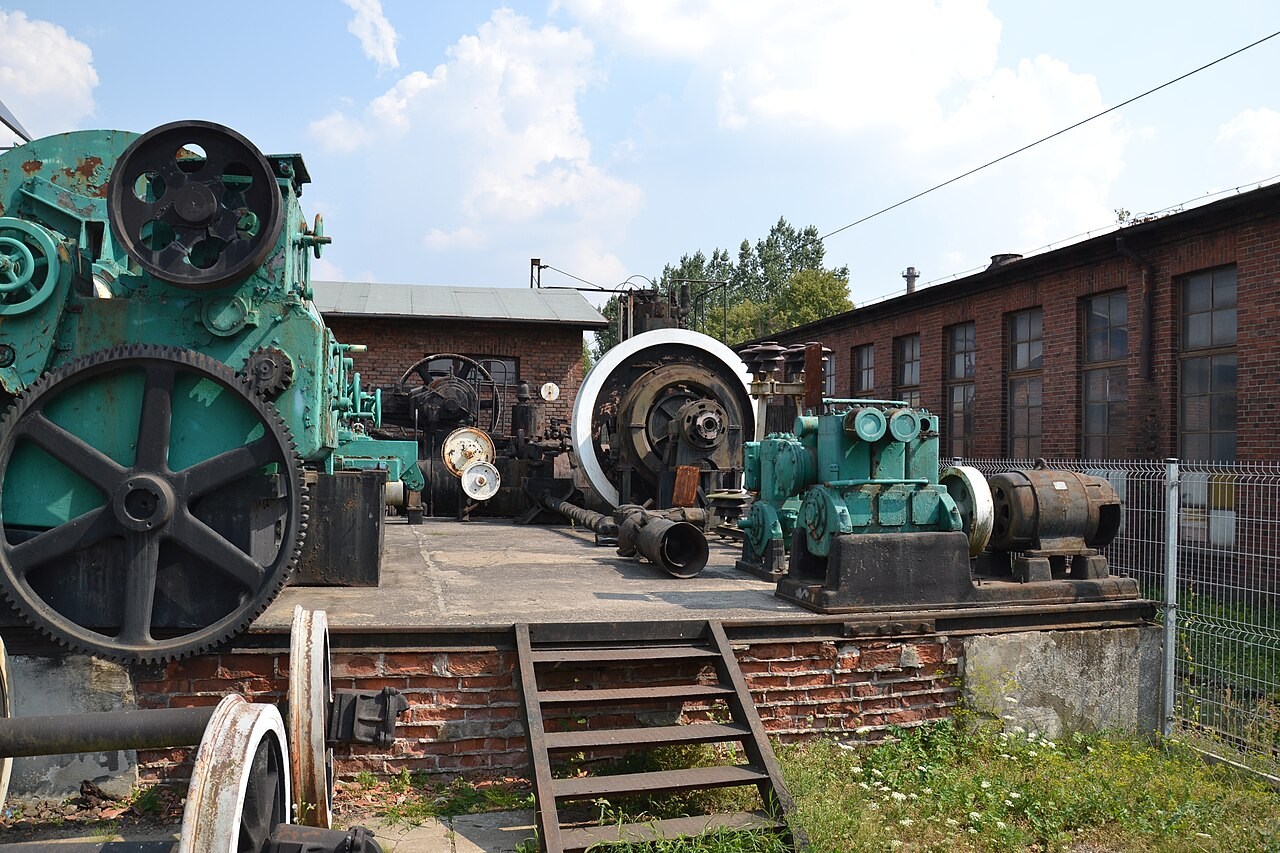
The railway museum's history links Karsznice to the Silesia-to-ports main line. The collection began in 1993, and became an official museum branch in 2015. Its collection plan lists steam locomotives, diesel and electric stock, passenger and freight vehicles, a steam crane, a rotary snowplough and workshop equipment. Treat this as a collection to inspect, not a promise of working engines or a passenger journey.
The branch timetable gives Tuesday-Friday and Sunday 11:00-15:00; Monday and Saturday are closed. Tickets are 15 zł full price, 8 zł reduced or 4 zł for young visitors under 16, with children under seven free. A guide is 50 zł and compulsory for groups of more than 15. These are branch prices, not the city museum's cheaper group-admission formula. Ask about weather restrictions, which vehicles can be approached or entered, and the route on the day.
Getting to the correct railway entrance
Kolejowa 6 is the branch's destination. The official directions distinguish Zduńska Wola station from Zduńska Wola Karsznice and describe approaches over a railway viaduct. Do not choose a station merely because its name resembles the attraction. Compare your actual train and onward journey before setting out, particularly with a short 11:00-15:00 visiting window.
The museum also describes a narrow-gauge Px48 locomotive standing at the Łaska/Karsznicka junction. That roadside exhibit is not the skansen's entrance or the whole collection. The directions list bus routes, but they do not replace a current operator timetable. Check your day's service separately rather than relying on an old route description, and keep the two museum addresses distinct in any taxi or navigation search.
For a weekday two-site plan, put the shorter railway opening window first and leave the city museum for later in the afternoon. That sequence uses the published hours more comfortably than reaching Karsznice after 15:00. Allow additional time between the addresses; neither institution publishes a transfer service as part of the ticket.
Accessibility, workshops and temporary displays
The published accessibility declaration chiefly concerns the website, while the report page provides no usable architectural description. Neither establishes step-free entrances, accessible toilets or wheelchair routes through either collection. Ask each location about the exact entrance, surfaces, steps and toilet provision. The outdoor railway setting does not itself establish accessibility, and historic photographs cannot answer those questions.
The education offer lists museum lessons at 4 zł per person, about 45 minutes and no more than 25 children; carers are exempt. Most workshops do not include the permanent exhibitions. The exception is a first guided introduction offered as a lesson. Arrange the subject and booking directly rather than assuming a walk-in family ticket includes an activity.
A November notice announced Joanna Apanowicz's Faktury exhibition, with an opening on 19 November 2026. It describes tactile relief work intended to include blind and partially sighted visitors, but supplies no closing date. Confirm that it remains available and ask which works may be touched. A tactile exhibition is not evidence that the building itself is step-free. For the main museum call 43 823 48 43; for Karsznice call 667 041 898. Settle Sunday hours, ticket coverage and any access needs before the trip.
Frequently asked questions
Does free Tuesday include Karsznice?
The main museum permanent-exhibition section says Tuesday is free. The branch tariff does not repeat that exemption, so confirm directly rather than assuming both sites are free.
What are the city museum Sunday hours?
The main timetable says 10:00-14:00 but its footer says 11:00-15:00. Ask the museum which applies before travelling.
Are train rides included at Karsznice?
The official pages describe a collection and admission, not a scheduled passenger ride or working-engine guarantee.
Sources
- Main museum hours and admission
- Railway branch hours and prices
- Museum building history
- Town origins and Złotnicki family
- Weaving room
- Pharmacy room
- Missing Mezzuzot installation
- Railway museum history
- Railway collection plan
- Directions to Karsznice
- Access declaration
- Education prices and scope
- November tactile exhibition notice