Zgierz Museum: Free Sunday, Tickets and Dom Tkacza Access
The essentials: Main museum: Dąbrowskiego 21, Tue/Wed/Fri 09:00-16:00, Thu 09:00-18:00, Sun 10:00-16:00; Monday/Saturday closed, last entry 30 minutes before closing. Sunday free. Dom Tkacza toys are at Narutowicza 5, entrance from Rembowskiego.
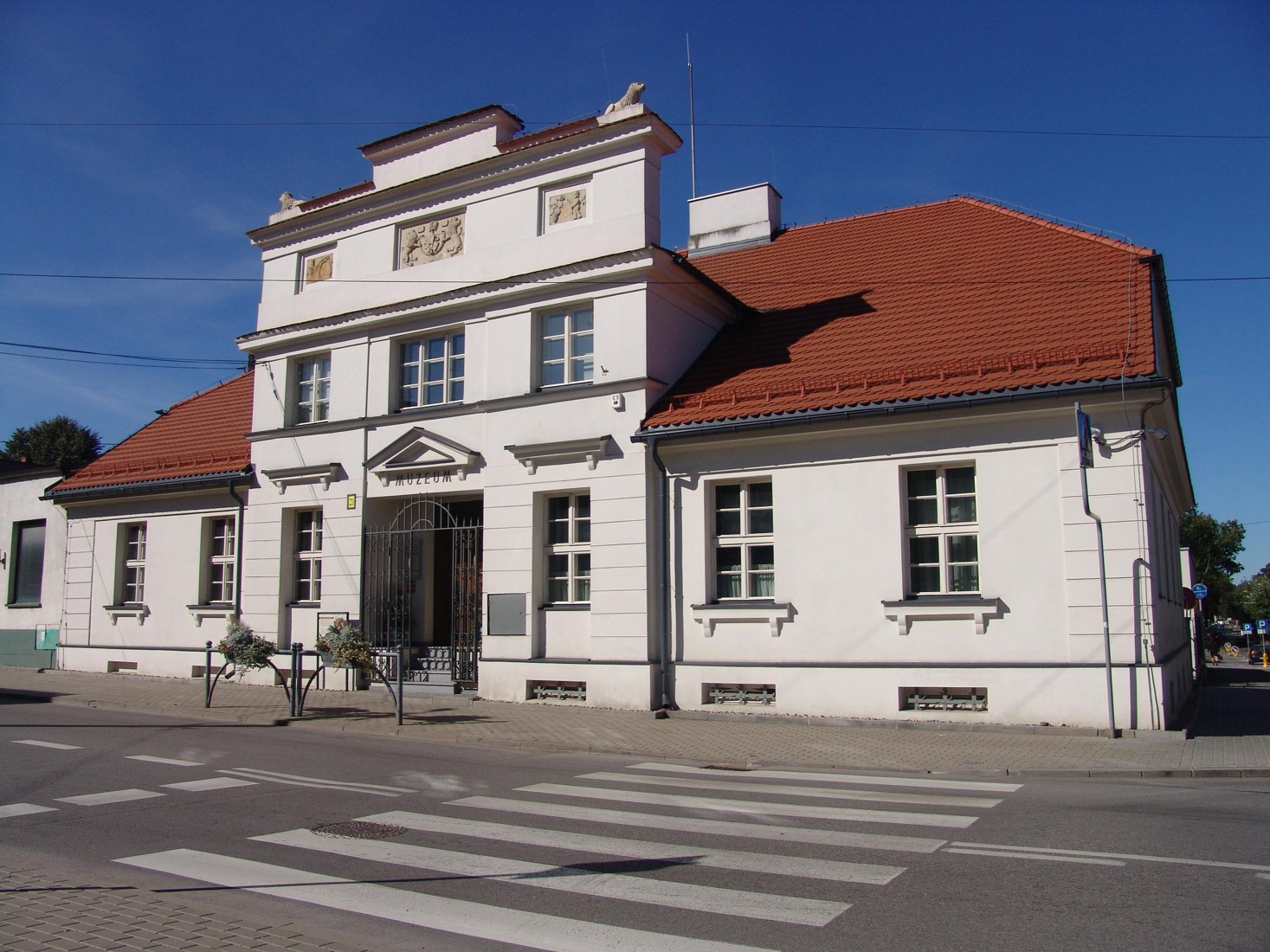
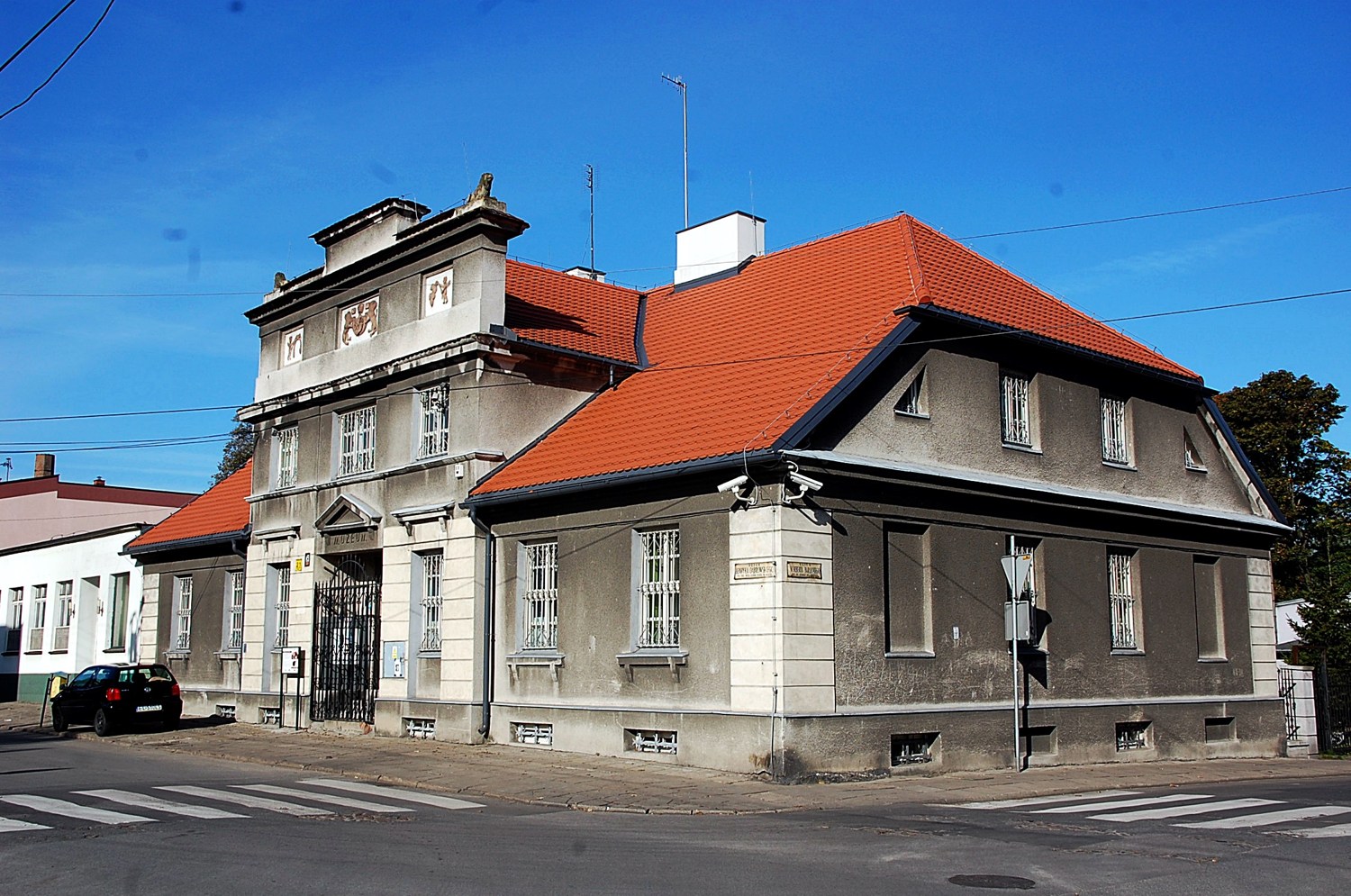
Cover: Zgierz museum, Dom pod lwami at Dąbrowskiego 21, photographed 26 September 2025. Photo: Nexoflexo / Wikimedia Commons, CC BY-SA 4.0. Resized and recompressed under the same licence.
Choose the museum building before choosing the ticket
Zgierz offers two different ways into its textile-city history: the Muzeum Miasta Zgierza in the “Dom pod lwami” at gen. J. H. Dąbrowskiego 21, and the weavers' houses around the Miasto Tkaczy cultural park. They belong in the same outing, but they are not interchangeable addresses. The main museum's domestic interiors and city-history exhibition are different from the historic-toy collection in Dom Tkacza at Narutowicza 5, entered from Rembowskiego.
That distinction is particularly useful for families. If old dolls and toys are the main attraction, heading straight to the main museum may send you to the wrong door. If your interest is a furnished textile-factory family's home or the city's development, the Dąbrowskiego address is the starting point. Before travelling, name the exhibition you want and ask which building and opening arrangement apply.
Sunday is free; Saturday is normally closed
The main museum's visitor and contact pages agree on the regular timetable: Tuesday, Wednesday and Friday 09:00-16:00; Thursday 09:00-18:00; Sunday 10:00-16:00. Monday is closed to visitors, and Saturday is closed. Do not assume the usual weekend pattern of Saturday opening and Monday closure applies here. Sunday is the straightforward weekend option, and the visitor page says admission is free every Sunday.
Last admission to exhibitions is thirty minutes before closing. That puts the normal last-entry time at 15:30 on Tuesday, Wednesday, Friday and Sunday, and 17:30 on Thursday. Arriving then leaves only a short look, not a full museum afternoon. Allow more time if you want to compare the furnished interiors with the history display or need help moving between levels.
For confirmation, use +48 42 716 37 92 or [email protected]. Public holidays and special events can change a normal opening day. The published main timetable should not be treated as proof that every cultural-park institution or workshop follows the same hours.
One exhibition or several: how the published tariff works
The general visitor page lists 16 zł standard, 8 zł reduced and 36 zł family for one selected permanent or temporary exhibition. For two or more exhibitions, it lists 32 zł standard, 16 zł reduced and 72 zł family. The ticket price includes guiding. These are exhibition-based prices, not evidence of a pass covering every building in the cultural park.
The family rate needs one extra check before it becomes a budget. The displayed table does not define how many adults and children qualify, or the age limits. Do not assume that any group calling itself a family can use it. Likewise, ask about the reduced-ticket category if eligibility matters rather than carrying over another Polish museum's concessions.
There is a specific inconsistency worth knowing: the separate “Dzieje Zgierza” exhibition page says that entry to that exhibition is free, while the general visitor tariff prices permanent and temporary exhibitions. The pages do not explain how the exemption and tariff fit together. Ask whether the city-history display remains free on your chosen weekday, and which other exhibition a paid ticket covers. Sunday is the clearest published free-entry option, but it does not establish a free workshop or historical walk.
Kruszówka: a real family's rooms, not anonymous period furniture
“Kruszówka” presents a wealthy Zgierz family's apartment around the turn of the nineteenth and twentieth centuries. The Krusze family arrived in the city in the 1890s; Julian married Małgorzata Borst, daughter of one of its wealthiest residents. The museum says most objects shown came from the house where they lived until the 1920s. That provenance gives the rooms a stronger local connection than a general collection of antique furniture.
The display includes a living room with dining area, a bedroom, a hall and a kitchen. Look at how those spaces divide public presentation from private life and domestic work. For a newcomer trying to understand an industrial city's social layers, this is a useful complement to a factory-centred account: textile wealth also shaped the way families ate, received guests and furnished their homes.
The exhibition's own description does not establish that visitors can touch the furniture or open drawers. Treat it as a museum interior rather than a hands-on house until staff explain otherwise. If you want a guided explanation in English, ask before arriving. The fact that guiding is included in the tariff does not promise a particular language on demand.
Dzieje Zgierza: put the textile boom in a longer history
The city-history exhibition ranges from prehistory to the interwar years. Its description includes Bronze and Iron Age material, objects more than three thousand years old, a medieval room, a tiled stove and a blacksmith's workshop. It also addresses the damage and decline associated with seventeenth-century wars. This is a broader story than “a town built for weaving”, even though industrial expansion is central to its later identity.
A model reconstructs mid-nineteenth-century Zgierz using archival documents, maps and drawings. There is also a factory office from around the turn of the nineteenth and twentieth centuries, and material about mayor Jan Świercz. For visitors unfamiliar with Polish local history, the model is a useful anchor: find the relationship between streets, work and housing before following individual biographies.
Keep the model, reconstructed settings and original objects conceptually separate. Each helps explain the city, but a reconstructed room is not an untouched interior surviving from the Middle Ages. Ask a guide which parts are original and which are interpretive if that distinction matters to you.
The toy collection is at Dom Tkacza
“Dziecięcy świat, zabawki z dawnych lat” is at Narutowicza 5, with entrance from Rembowskiego. It contains more than a thousand toys, mainly dolls, formerly belonging to collector Wiesława Zeler. The oldest date from the early twentieth century; the museum highlights Polish celluloid dolls from the 1950s and 1960s alongside dolls from other parts of the world.
The objects are arranged in scenes with younger visitors in mind, rather than as a strictly chronological history. That can make comparing familiar and unfamiliar toys an easy family activity. It does not mean the collection is a playroom or that historic toys can be handled. Ask about any separate activity rather than promising children they can play with the exhibits.
The wider cultural park was created in 2003 to protect the town layout dating from the 1820s. The museum describes around thirty surviving weavers' houses and several cultural and social institutions within it. It is a living urban area, not one enclosed open-air museum with a single ticket and a single reception desk.
Access at the main museum requires planning
The accessibility declaration, last reviewed in March 2025, describes three entrances to the main building. From the courtyard reached through the gate on Barlickiego, stairs lead up to the ground-floor permanent displays and down to the basement temporary-exhibition rooms. The declaration says a stair-climbing device can serve these courtyard approaches. That is assisted equipment access, not a step-free entrance you should assume is independently usable.
Wheelchair circulation is described on the ground and basement levels, but there is no lift. Historic wooden stairs lead to the attic conference room, research library, archive and offices, and the stair-climbing device cannot use those stairs. The accessible toilet is in the basement. Ask ahead about staffing, equipment suitability, your chair and the exact route, especially if attending a lesson in the conference room.
The courtyard has six parking spaces, not six designated accessible bays. The declaration identifies a designated accessible space in the municipal car park opposite. Assistance and guide dogs are admitted. The main museum has no induction loop or on-site/online Polish Sign Language interpreter; the declaration does report Braille information on the permanent exhibition.
Branch access and organised visits need separate checks
For Dom Tkacza, the declaration describes two concrete entrance steps, ground-floor rooms and an accessible toilet, with no lift. Despite the source's reassuring wording about those steps, wheelchair users should ask how the threshold is actually negotiated. At Rembowskiego 1, a different cultural-park building, it describes a courtyard ramp, ground-floor facilities and an induction loop. Do not transfer those features to Narutowicza 5 or the main museum.
Museum lessons require at least a week's advance booking, run Tuesday-Friday 09:00-14:00 and take groups of up to twenty-five. The visitor page lists 60-120 minutes and 12 zł per participant; exhibition admission for groups is calculated under the ticket tariff. Group carers are exempt from the lesson charge. A historical walk is a different service, approximately ninety minutes for up to twenty-five people at 300 zł.
For an ordinary first visit, choose Sunday if the published free opening suits you, confirm the specific exhibitions and building, and leave time for access arrangements. For a school or expat-family group, settle the language, age range, rooms, full price and booking before setting a date. Zgierz rewards that small amount of planning with a view of industrial life through homes, objects and streets, rather than a generic story about textile factories.
Frequently asked questions
Does the general admission tariff cover Dzieje Zgierza?
The general tariff prices exhibitions but the Dzieje Zgierza page separately says its admission is free. Ask how that exemption applies on a weekday; Sunday is the clear published free day.
Where is the toy exhibition?
At Dom Tkacza, Narutowicza 5, entered from Rembowskiego, not at the main museum on Dąbrowskiego 21.
Is the main museum step-free?
Its declaration describes stairs with stair-climber assistance at courtyard entrances, no lift and inaccessible attic stairs. Confirm the route and equipment before visiting.