Rawa Mazowiecka Museum: Free Monday, Jatki and Castle Season
The essentials: Main museum: Łowicka 26, Mon-Fri 09:00-16:00, Sat 10:00-14:00; Monday free. Standard 8 zł, reduced 4 zł, under-seven free. Jatki: Tue/Thu 10:00-16:00, Sat 10:00-14:00. Tower regular season June-September weekends 11:00-15:00.
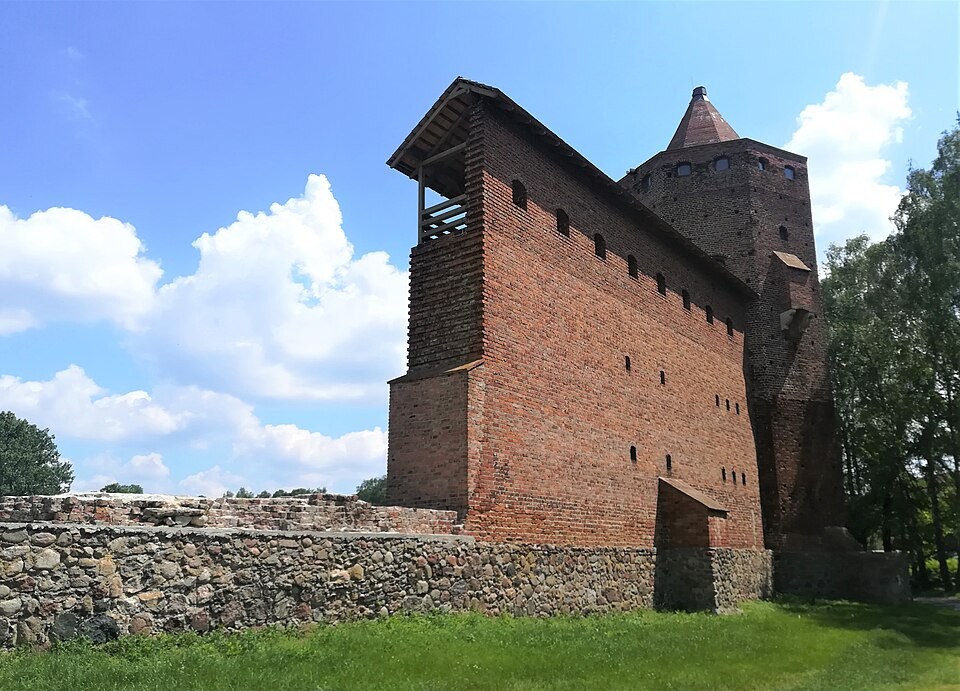
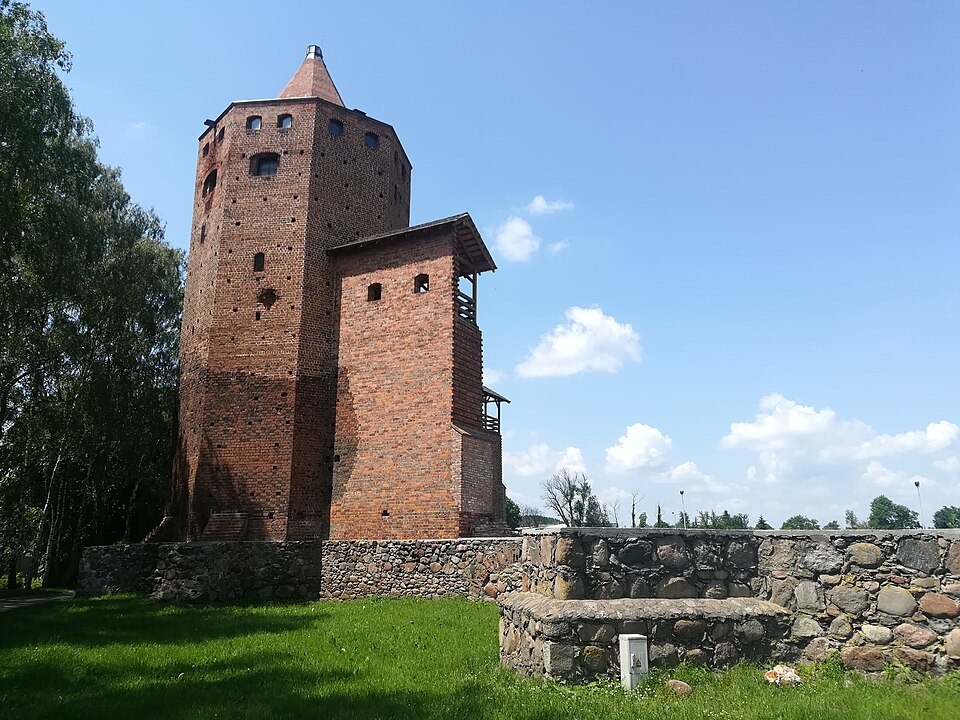
Cover: Rawa Mazowiecka castle tower and restored wall, photographed 13 June 2020. A separate seasonal site, not the main museum at Łowicka 26. Photo: MOs810 / Wikimedia Commons, CC BY-SA 4.0. Resized and recompressed under the same licence.
Three museum addresses, three different visits
Rawa Mazowiecka's castle tower is the obvious photograph, but it is not the town's year-round museum reception. The Muzeum Ziemi Rawskiej has a main building at Łowicka 26, the Jatki municipal market building at Mickiewicza 11, and the surviving tower of the Castle of the Dukes of Mazovia under its care. Each gives a different view of the town, and their timetables do not match.
That distinction is particularly useful in winter. The museum's current website lists the tower's regular visitor season as June to September, on Saturdays and Sundays only. The main museum has weekday and Saturday hours, while Jatki opens on a smaller selection of days. A photograph of the tower beside an article about the institution should not be read as a promise that its door is open throughout the year.
For a first visit, choose the story that interests you most: the castle and regional power, money and household life in the main museum, or the history of trade at Jatki. Then check the corresponding address and hours. A shorter visit to an open building is better than a route based on three interchangeable map pins.
Main museum hours and free Monday
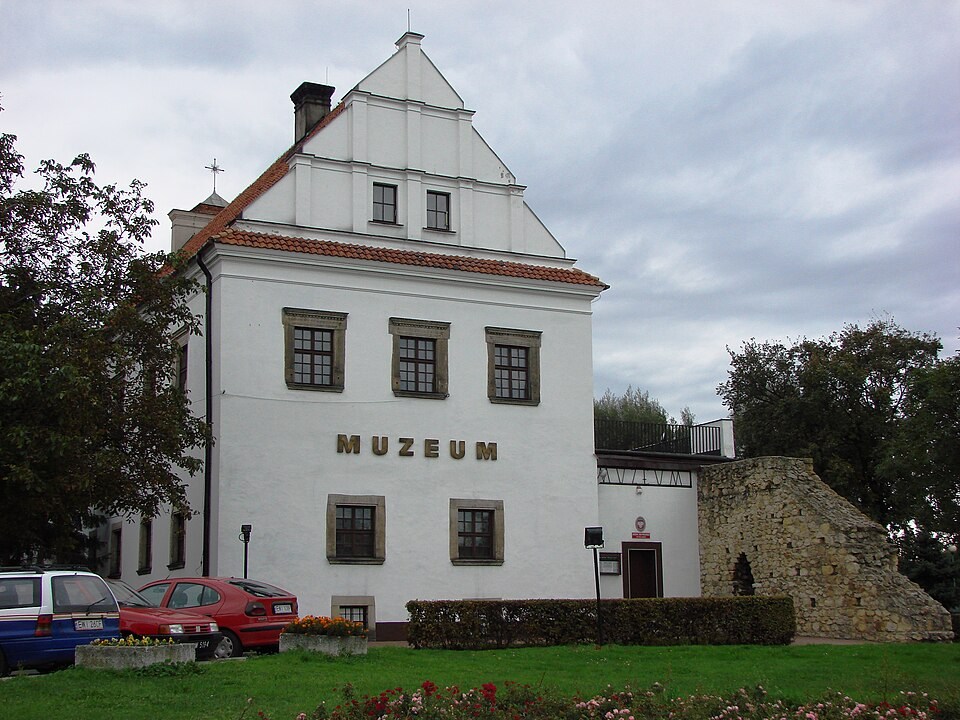
The main building at Łowicka 26 publishes Monday-Friday hours of 09:00-16:00 and Saturday hours of 10:00-14:00. The website does not list regular Sunday opening for this building. Monday is shown as the free-entry day in the museum's current website footer. Do not extend that offer automatically to a separately arranged tower visit, guided service or workshop.
For Jatki, the homepage lists Tuesday and Thursday 10:00-16:00 and Saturday 10:00-14:00. Those are not the same as the main museum's five weekday openings. A free Monday visit to Łowicka therefore should not be planned as an ordinary Monday entry to Jatki as well.
Use the museum's own current hours rather than an older directory extract. Municipal and other listings can preserve earlier contact details or shorter opening hours. For a journey that depends on a particular room, call +48 781 700 503. The museum also gives [email protected] for enquiries. Check recent notices before leaving, since exhibition changes and special events can affect normal opening.
Tickets, children and organised groups
The museum's tariff notice, published in March 2024 and consistent with the prices still displayed on its current homepage, lists individual standard admission at 8 zł and reduced admission at 4 zł. Children under seven enter free. The homepage separately displays the same 8/4 zł prices for the castle tower.
A group of more than ten is listed at 4 zł per person. The guiding offer for organised groups of more than ten adds a 150 zł guide service to admission. The description names the main museum, castle and Jatki among the managed buildings, but it is not a promise that one 8 zł ticket buys an unrestricted three-site pass. Ask what your proposed visit includes, especially if arranging more than one building.
Bring proof of any reduced-price entitlement. A published reduced tariff does not itself explain every eligible category or establish that a foreign document will be accepted. Likewise, do not confuse a booked educational visit with the normal admission price: confirm its contents, language, group size and final charge when enquiring.
What the castle really preserves
The museum's castle history places the stronghold in the second half of the fourteenth century. It stood in the wet confluence area of the Rawka and Rylka, on a trading route linking Pomerania with Rus. It was a residence of the Mazovian dukes before becoming a royal administrative centre after incorporation into the Crown.
The castle later served several purposes beyond defence. The museum describes notable prisoners held there and the storage, from 1569, of the kwarta tax intended for the Crown army. These details make it more interesting than a generic ruined fortress: the building connected regional government, military finance and the treatment of high-status captives.
What visitors see today is not a complete medieval palace. Fires, war and deliberate destruction reduced the complex, and lightning damaged the surviving tower in 1859. Post-war work in 1954-1958 exposed the foundations and reconstructed part of the curtain wall and octagonal tower. Its appearance needs to be understood as a surviving and restored fragment of a much larger, nearly square enclosure.
When the tower can be visited
Regular public access is listed for June-September, Saturday and Sunday 11:00-15:00. The tower page describes an exhibition on the history of the castle against the history of the town and region. It also says organised groups can arrange visits on other days of the week in advance.
That group sentence does not establish year-round winter access. If travelling outside the regular season, ask explicitly whether an interior visit can happen on your date. Do not assume that a group booking overrides weather, staffing or building restrictions. For independent winter visitors, the safe plan is to treat the tower interior as unavailable unless the museum confirms otherwise.
Nor is an exterior photograph an accessibility statement. The tower's historic form and the museum's images do not establish a step-free route to its exhibition. If climbing, narrow passages or standing for long periods would be a problem, ask for a description of the actual visitor route before making the tower the central purpose of the day.
The main museum's villa has its own story
The institution's history begins with local efforts to protect the region's material and folk heritage. An initial museum centre opened in the reconstructed tower in 1963. The formal institution was established in 1965, with a ceremonial opening in the former Jesuit college in 1966. Those are different milestones rather than competing dates for a single event.
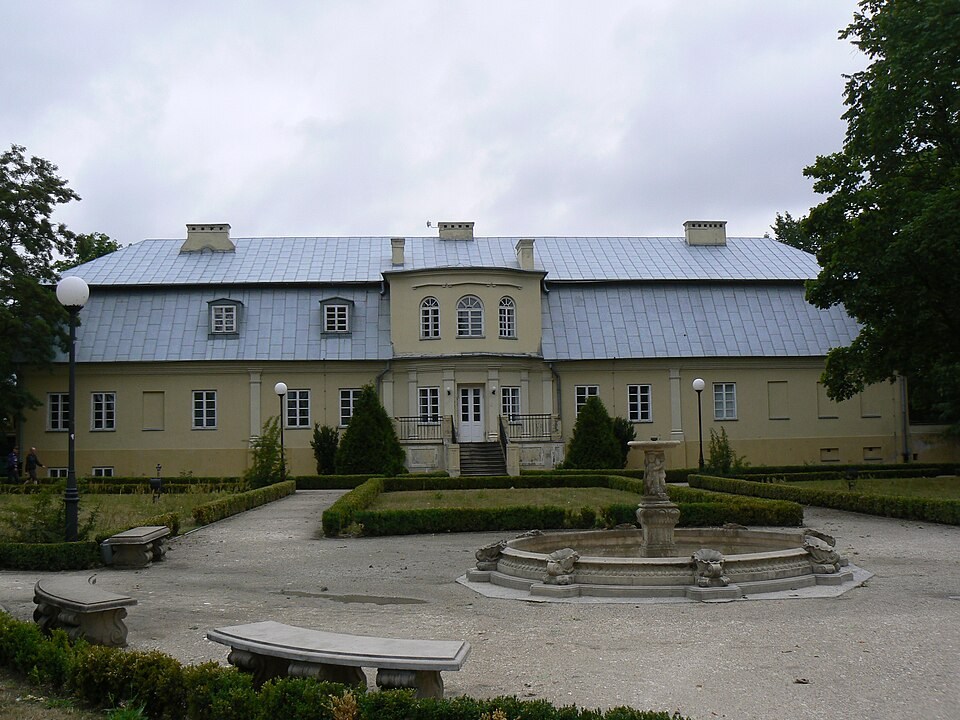
The museum received the villa at Łowicka 26 in 1981. Built in 1930 for Tadeusz Frankiewicz, director of the local agricultural syndicate, it later had other uses, including as a court. Adaptation took more than two years, and the refurbished museum rooms opened in December 1984.
This is why the main building should not be mistaken for a palace branch of the castle. Its scale and domestic origins are different. It offers a place to explore local collections, rather than a reconstructed itinerary through the dukes' original residential rooms.
Coins and the many jobs of a rural room
The numismatic cabinet uses regional coin hoards as a starting point for the history of money in Polish lands. The museum describes four hoards in its collection, with the largest comprising 700 objects and the smallest 31. Banknotes and commemorative medals broaden the subject beyond coins alone.
For families, money offers an accessible question: what makes a small piece of metal or printed paper valuable? The display can introduce changing rulers, trade and images of public identity without requiring a child to recognise every denomination. The museum's description is about its exhibition, not a guarantee of an English-language activity sheet.
The Rawa room from the early twentieth century presents a different kind of economy. One rural room could be kitchen, bedroom, work area, religious space and setting for social occasions. Its arrangement grouped objects by task and kept the centre free for work.
Look for food preparation, clothing care and decoration rather than treating everything as quaint furniture. Bread-making vessels, cheese presses, butter churns, washing equipment and irons point to labour. Paper flowers, cut-outs and the devotional corner show how people made that working room meaningful. It is an interpreted exhibition of regional life, not an untouched household frozen in place.
Jatki: do not confuse the two market buildings
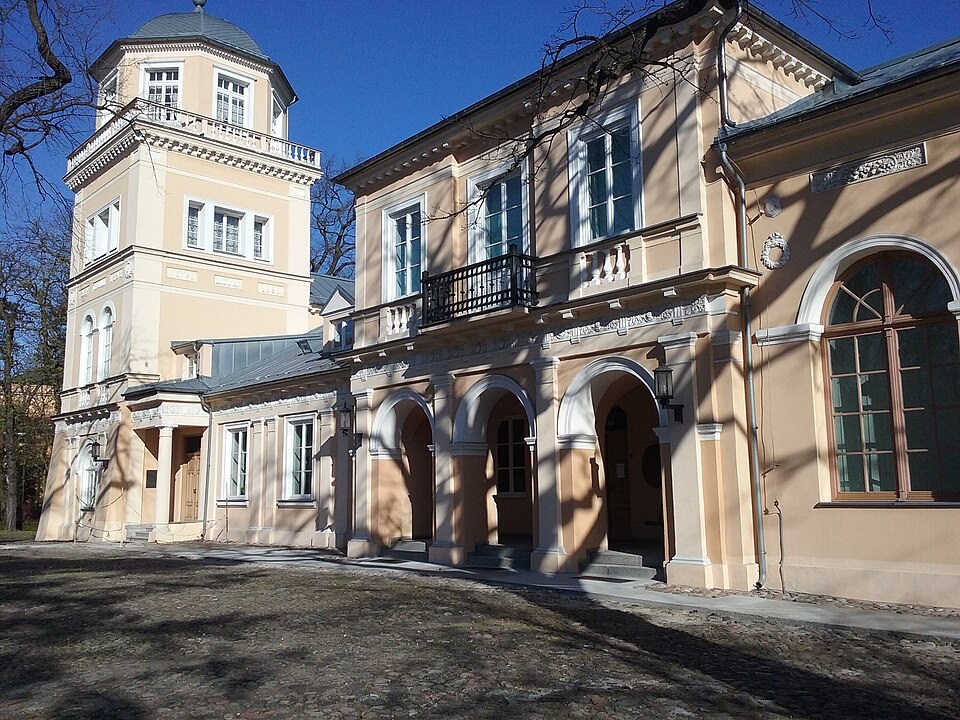
The museum's detailed Jatki history makes an important distinction. The bakery and butcher stalls built in 1827 on the New Market were not simply the same building now visited at Mickiewicza. The present museum branch at Mickiewicza 11 was erected in 1859-1860 for firefighting equipment and other rooms, with later commercial use.
The museum discusses uncertainty over exactly when that later change occurred. Keep the distinction intact rather than merging every reference to historical jatki into one continuous building story. The surviving branch was restored and adapted in 2018-2020, with educational rooms and a permanent exhibition interpreting the old meat-shop environment.
This is a good stop for adults interested in ordinary urban life: leases, shopkeepers, municipal income and changing uses of public buildings. The historical exhibition includes scenography, so the sensation of entering an old shop should not be confused with every fitting being original and in its original position.
Make the visit fit your needs
The museum's public visitor pages used for this guide do not provide a detailed, current accessibility route for each of the three sites. If a wheelchair, pushchair, adapted toilet, resting place or English explanation is necessary, ask site by site. A renovated branch does not automatically establish the facilities available in the villa or tower.
For a simple winter outing, choose Łowicka on a weekday or Saturday, or pair it with Jatki on a published overlapping day after confirming both. For a summer castle visit, work within the tower's weekend season and give the main museum its own timetable. Rawa's appeal lies in the difference between these places. Respecting that difference makes the trip easier to plan and the history easier to understand.
Frequently asked questions
Is the castle tower open throughout winter?
No regular winter opening is published. Its public season is June-September weekends; ask the museum about any separately arranged visit.
Does free Monday cover every branch?
The current site labels Monday free for the main museum. Jatki has no regular Monday opening and the tower has a separate seasonal timetable.
Is admission a three-site pass?
The published tariff does not establish a three-site pass. Confirm the buildings and services included before buying or arranging a group visit.