Tomaszów Museum: Ostrowski Palace, Free Tuesday and Access
The essentials: POW 11/15. Tue-Fri 09:00-16:00, Sat-Sun 10:00-16:00, Monday closed. Standard 12 zł, reduced 7 zł; permanent exhibitions free Tuesday. Last entry 15:30. Two entrance steps, no lift and inaccessible toilets. Confirm Rosi access before a special trip.
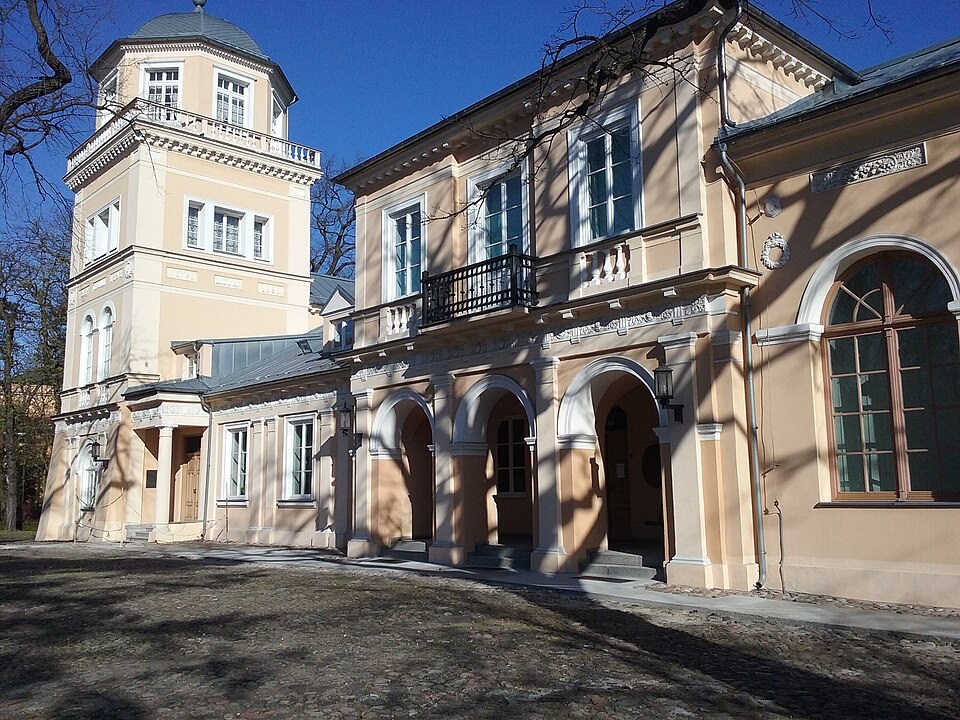
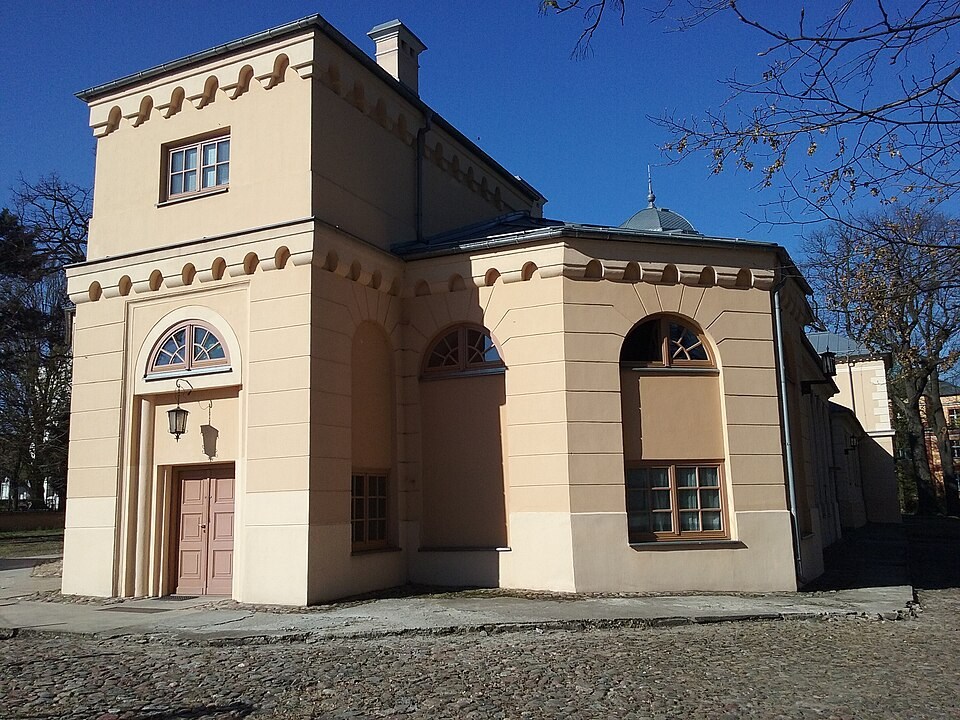
Cover: Ostrowski Palace, Tomaszów Mazowiecki, photographed 14 April 2020. Historic exterior, not a current entrance or works survey. Photo: WrS.tm.pl / Wikimedia Commons, released by the author into the public domain. Resized and recompressed.
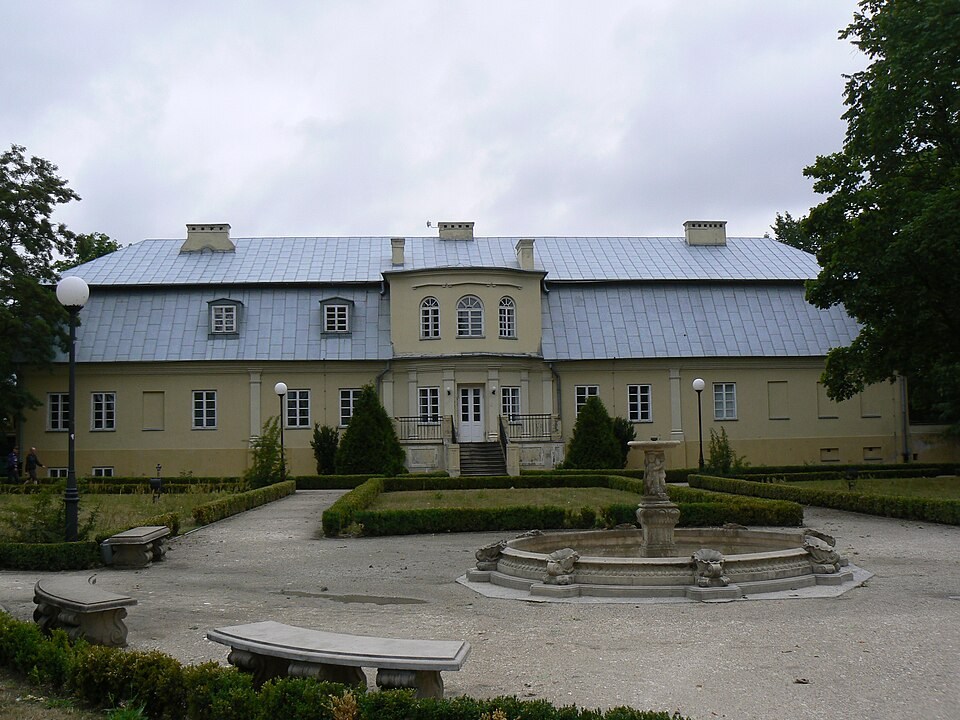
The museum in Tomaszów Mazowiecki combines a palace visit with a story about industry, migration and life beside the Pilica. Its home, the Ostrowski Palace, connects directly to the family behind the town's early development. Inside, the collections move from archaeology and local wildlife to textile manufacture and the people who settled here.
For visitors, three details deserve attention before anything else: Tuesday's free admission applies to permanent exhibitions, the current standard ticket is 12 zł rather than the older 10 zł quoted elsewhere, and an accessible ground-floor layout does not remove the two steps at the entrance. Plan those points first, then choose the displays that match your interests.
The essentials
- Location: Muzeum w Tomaszowie Mazowieckim im. Antoniego hr. Ostrowskiego, ul. POW 11/15.
- Public opening: Tuesday-Friday 09:00-16:00, Saturday-Sunday 10:00-16:00; Monday closed to visitors.
- Admission: standard 12 zł, reduced 7 zł; specified family and resident cards 5 zł. Children under seven enter free on individual visits.
- Free day: Tuesday for permanent exhibitions. Last entry is 30 minutes before closing.
- Access: two entrance steps without a ramp or lift; no lift to the first floor or tower. Call +48 44 724 48 48 about your particular needs.
Use the museum's current hours and tariff
The museum's opening-hours page gives Tuesday to Friday as 09:00-16:00 and both weekend days as 10:00-16:00. Monday is closed to visitors. The office works Monday-Friday 08:00-16:00, which is useful for making arrangements but is not an earlier exhibition opening.
The current ticket table lists 12 zł standard and 7 zł reduced admission. It also lists 5 zł tickets for Karta Dużej Rodziny and Karta Tomaszowianina holders. Some tourism pages still show a 10/5/3 zł structure and a different daily timetable. Use the museum's own current pages rather than combining the cheapest numbers from different sources.
Special closures can override the regular schedule. Check current notices before a trip built around a particular exhibition, especially near holidays or conservation work. A previous closure announcement is not proof that the museum remains closed indefinitely, just as the normal weekly schedule does not rule out a one-day change.
Tuesday is free, but keep the scope clear
The museum's published visiting regulations specify free admission to permanent exhibitions on Tuesday. That is a good opportunity to explore the collections without paying the ordinary admission charge. It does not establish free workshops, a free guide or automatic entry to every separately organised activity.
The ticket table gives children under seven free entry on individual visits. It also lists several local-card benefits, including free admission for holders of Karta Młodego Tomaszowianina and Karta Tomaszowianina Senior. These are specific cards, not a general promise that every young person or older visitor enters free. Bring the document relevant to your concession.
There is a detail worth settling directly if you travel with support: the tariff lists a 7 zł ticket for a disabled person's companion, while the regulations describe free admission for a carer accompanying a group of ten disabled visitors. Those are not the same situation. Do not assume an individual companion receives a free ticket based on a group rule.
Last entry, individual visits and groups
The visiting regulations set last entry at 30 minutes before the exhibitions close. With the ordinary 16:00 closing time, that means 15:30. Visitors must leave before closing, so arriving at the cutoff is not a way to gain a full-length visit.
Individual visitors do not reserve museum admission under those rules. Group arrangements can be made Monday-Friday by telephone or email. The maximum group size is 40 people including carers; larger parties must be divided and the museum informed. When booking, the museum asks for the institution's address, the organiser's contact details, group size and participants' ages.
The tariff lists guiding at 45 zł, museum lessons at 7 zł per person, and workshops at 15 zł per person. Those are separate services from the ordinary admission headline. Ask what your chosen programme includes and what language is available before confirming a group visit. The pages checked do not guarantee an English-speaking guide on arrival.
A palace tied to the town's industrial beginnings
The museum's palace history describes a building developed in stages, not a house completed all at once. Work began around 1810 or 1811, with the first stage finished in 1812. Fryderyk Albert Lessel designed it, and Jan Komorowski of Ujazd was the principal builder. It became the family's summer residence while Ujazd remained their main home.
An orangery followed in 1817, and the tower and neighbouring rooms grew during the 1820s. Later nineteenth-century rebuilding changed the appearance again. The different masses visible from outside therefore reflect a sequence of decisions rather than a single symmetrical palace plan. The exterior is worth looking at as a building with a working history of its own.
The museum has occupied the palace since 1950. Its institutional history goes back further, to 1927 and the work of local collectors and the Polish sightseeing society. The collections suffered severe losses during the Second World War, then were rebuilt. Knowing that background helps explain why the museum joins several kinds of regional material rather than concentrating only on aristocratic rooms.
Why the history display matters to newcomers
The permanent history exhibition traces the change from an ironworking settlement into a textile-manufacturing town. Tomasz Ostrowski established the industrial settlement in 1788; Antoni Ostrowski later encouraged textile production and the arrival of skilled workers. City rights followed in 1830.
Among the museum's described exhibits are an 1827 lease agreement with a German-origin weaver and a German-language recruitment brochure from around 1830. For an international resident, those are a useful reminder that migration and work contracts are not new chapters in Polish town life. The displays also cover guild records, apprenticeship documents and the factories that shaped local employment.
A separate section, "Tomaszów, a city of many cultures", explores the contribution of different communities through photographs and surviving traces in the townscape. Another follows residents in national uprisings and the world wars, with documents, uniforms and weapons. Choose the industrial and multicultural sections if your main interest is how a town and its population developed, rather than treating every room as a military-history visit.
Nature, archaeology and the Rosi display
The natural-history display introduces wildlife of the middle Pilica area through habitats including rivers, reedbeds, wet meadows, fields and woods. The museum describes an interactive animal-sound board. This offers a different way into the region from reading a sequence of historical dates, although it is a museum display rather than a live-animal attraction.
The archaeology exhibition includes burial-related objects, urns, a reconstructed skeletal grave and a model of a settlement. Parents may want to judge the burial material against their children's interests and comfort. It is not simply a room of everyday pottery or a supervised play space.
The museum also describes Rosi, a German armoured personnel carrier recovered from the Pilica in 1996, in a former stable building beside the palace. Its own exhibition page presents a permanent display, while a tourism listing says the vehicle is under repair and unavailable. If Rosi is your main reason for travelling, confirm current access directly rather than relying on either undated description.
Ground-floor space does not mean step-free entry
The museum's accessibility declaration describes two steps at the entrance from POW Street, without a ramp or lift. The double entrance doors can open wider, but that does not remove the steps. Contact the museum before travelling if you use a wheelchair or cannot manage an assisted transfer.
Inside, the declaration says ground-floor exhibitions can be visited by wheelchair users, with routes at least 1.5 metres wide and doorways between 85 and 120 centimetres. It also identifies thresholds and changes in floor level. There is no lift to the first floor or palace tower. Toilets are below the entrance-hall level, reached by stairs, and are not adapted for disabled visitors.
The declaration was prepared in 2020, so treat it as the museum's published description rather than a recent physical inspection. Ask about any changes and the exact route you need. It also says there are no induction loops, Braille or contrast markings, and no sign-language interpreter. Large-print labels and chairs for resting are available in parts of the exhibition.
A practical family visit without surprises
The access information permits pushchairs and framed baby carriers in exhibition rooms. It also says there is no changing-table toilet, no independent children's play zone and no food service inside the museum. Plan feeding and toilet stops accordingly. An attraction that welcomes children does not necessarily have the facilities of a family activity centre.
The rules require large bags and outerwear to be left in the cloakroom, children to remain supervised, and visitors not to touch objects or sit on historic furniture. Personal photography is generally free, but flash and tripods are prohibited. Temporary-exhibition photography requires the curator's permission, and the museum places separate conditions on publication and commercial use.
Parking is available along POW Street, including designated disabled spaces according to the declaration, but the museum has no disabled parking spaces on its own grounds. Confirm current street charges and availability locally. For a calm visit, choose your priority display first, leave time for stairs if you can use them, and call +48 44 724 48 48 or email [email protected] for any access, language or Rosi question that will determine whether the trip works.
Frequently asked questions
Is Tuesday completely free?
Tuesday free entry covers permanent exhibitions. Guiding, workshops and separately organised activities are not automatically included.
Is the ground floor step-free from the street?
No. The published declaration describes two entrance steps without a ramp or lift, plus thresholds inside.
Is Rosi definitely available?
Confirm with the museum. Its exhibition page describes a permanent display, while a tourism listing reports the vehicle unavailable during repair.