Kutno Saxon Palace: Guided Tours, Free Thursday and English Visits
The essentials: Plac Piłsudskiego 20. Tue-Sun 10:00-18:00, last guided entry 16:00, about 100 minutes. Normal 28 zł, reduced 16 zł, Thursday free with a ticket. English by prior agreement; pushchairs not allowed on the route.
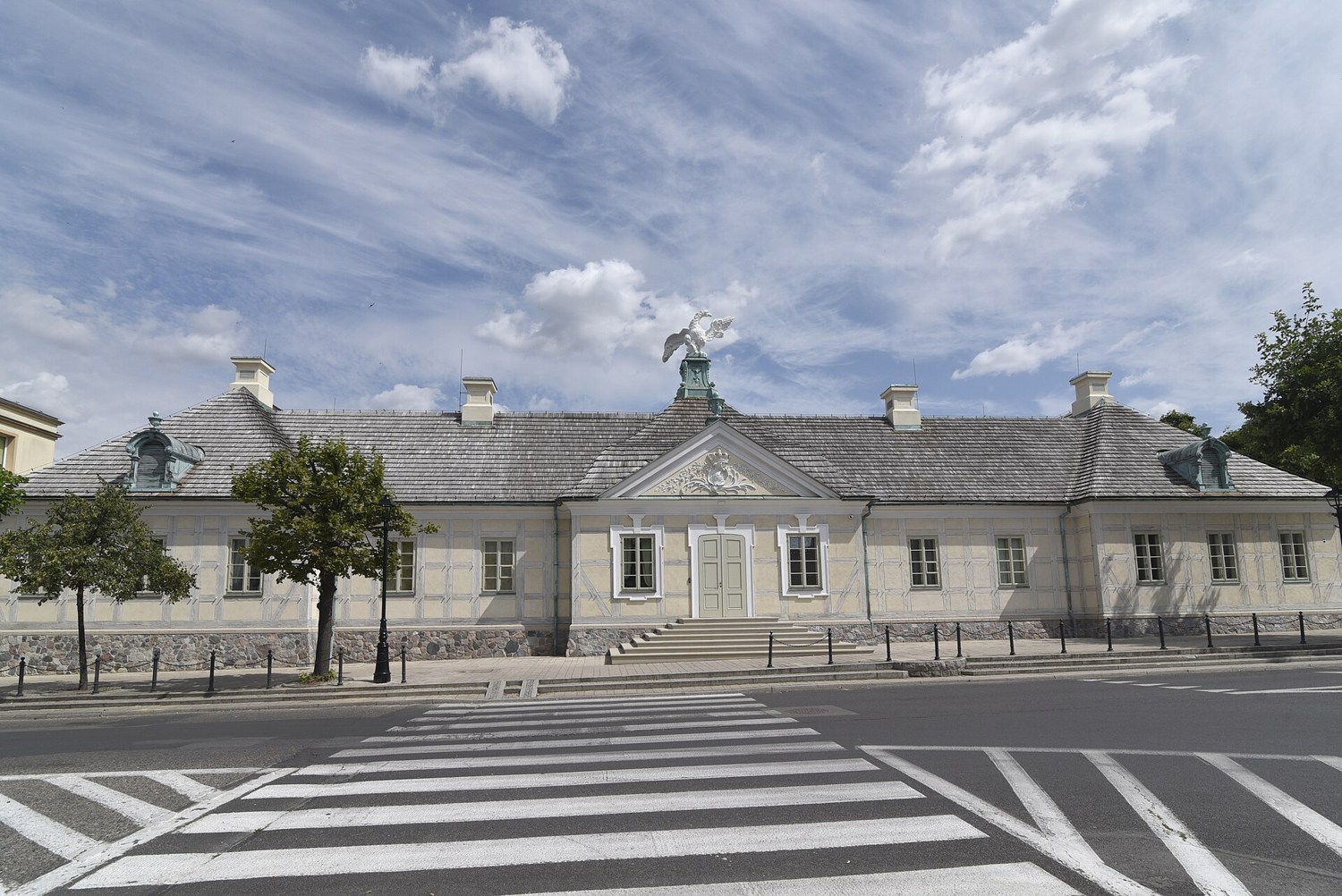
Cover: Kutno’s Saxon Palace street façade, photographed 19 July 2023. Historic exterior, not a current access survey. Photo: MRKutno / Wikimedia Commons, CC BY-SA 4.0. Resized and recompressed.
Kutno's Saxon Palace is a good museum choice if you want a visit built around a particular story rather than an open-ended collection. It follows the connection between Poland and Saxony, royal travel and the history of Kutno itself. The important practical difference is that you cannot simply buy admission and wander at your own pace: the main route is guided, starts on the hour and takes about 100 minutes.
For an English-speaking visitor, arranging the language matters as much as choosing the date. Regular interpretation is in Polish. The museum's published rules allow English, German or Russian visits by prior telephone agreement, but that is not a promise of an English tour every hour. Resolve that before paying for a train or a museum slot.
Where to go, and what the ticket covers
The museum address is Plac Marszałka Józefa Piłsudskiego 20, 99-300 Kutno. Use the current name, Muzeum Pałac Saski w Kutnie, when searching maps or tickets. Older material uses Muzeum Regionalne w Kutnie. This is Kutno's palace, not the Saxon Palace project in Warsaw. Check the city as well as the name when following a search result.
The museum regulations describe a connected complex of palace, pavilion, linking sections, town hall and inner courtyard. Permanent exhibitions are visited with a museum guide. Temporary exhibitions are included within that guided visit under the published rules, rather than being a separate promise of unrestricted browsing. The courtyard itself is free to enter without an exhibition ticket.
Do not add the separate Museum of the Battle of the Bzura to an itinerary as an open second stop. The current contact page says that site has been closed until further notice since 1 April 2022. The exhibitions page says some related objects, photographs, weapons and uniforms can instead be seen in the Kutno-history part of the palace museum.
Opening hours: 18:00 closing does not mean 17:00 entry
The current visiting page gives Tuesday to Sunday, 10:00-18:00. Guided departures are on the hour, and the final visitors start at 16:00. The ticket office has different hours, 09:30-17:00. Arriving at the museum at 17:00 because the building closes at 18:00 will therefore not get you onto the normal exhibition route.
The museum closes on Mondays and on days following public holidays. It also reserves additional closures under its regulations, so check the museum's news before a holiday trip. A standard weekly timetable is not a substitute for a dated closure announcement. For an ordinary visit, choose the tour first and fit travel around its start and roughly 100-minute duration.
The museum asks visitors to be there five minutes before the ticket time. That is a minimum arrival instruction, not a sensible target for reaching Kutno station. Allow separate time for reaching the square, finding the ticket desk and leaving coats or bags. If your arrival depends on a train, use a current railway planner for the actual date; this guide does not assume a particular connection or journey time.
Current ticket prices and the older PDF
The live visiting page, homepage and contact page agree on 28 zł for a normal ticket and 16 zł for a reduced ticket. The listed group price is 12 zł per person for groups of at least ten. These are the current published admission figures checked for this guide. Bring the document supporting a concession rather than assuming a particular card will be accepted.
There is an older number worth catching before it causes confusion. The downloadable regulations effective from September 2023 still contain 25 zł normal and 15 zł reduced admission. Those amounts conflict with the current pages. Use the current 28/16 zł listing for planning, and check the amount displayed for the actual date before buying.
A group rate is not the same as a private English-language tour quote. The rules describe organized groups of ten to fifteen and splitting larger parties. If you want a particular language, a school visit or a departure outside the ordinary pattern, ask what is possible and what the total will be. Do not multiply the group admission price and assume it settles every extra arrangement.
Free Thursdays still have limited places
Thursday is the published free-admission day. The regulations say visitors must collect a free ticket at the ticket office, and that organized groups cannot reserve or visit as groups on that day. Free admission does not turn the route into an unstaffed, drop-in exhibition: the guided format and departure times still matter.
The normal limit is fifteen people per hourly entry, including online ticket holders. The regulations explicitly warn that a departure can already be full when you arrive to buy at the desk. A free day is therefore attractive if you have flexibility, but it is a poor reason to assume a specific tour will have room. Ask about the day's arrangements if timing is tight.
For a visiting family, the useful comparison is often between flexibility and certainty, rather than only the ticket price. A paid departure that fits the children's routine may work better than waiting for a free place. Conversely, if you live nearby and can return another day, Thursday can make a longer museum visit easier to try without paying admission.
English visits and buying a timed ticket
The museum's online ticket shop is linked from its own website at bilety.muzeumkutno.com. Before choosing a slot, settle whether you are comfortable following a Polish guided visit. The published regulations say English, German and Russian can be arranged by telephone in advance on +48 505 019 890. They do not state an automatic English schedule or a guaranteed language upgrade at the desk.
The current site also lists +48 24 337 19 01 for the museum and +48 534 072 494 for Education Department reservations. A useful enquiry gives your date, party size, language and any access needs together. Ask for a confirmed departure and any additional charge, then buy the appropriate ticket using the museum's instructions.
The published rules say online tickets can be bought up to two hours before an event; after that, sales are at the desk, subject to availability. They also note that a lack of online tickets does not necessarily mean the desk has none. That makes a direct enquiry worthwhile, but it is not evidence that a sold-out-looking date has spare places.
Why this small palace has a different story
The palace was built in 1750 for Augustus III, when the Polish crown and Saxony were linked through the Wettin dynasty. The museum explains its role as a stopping place on the royal postal route between Warsaw and Dresden via Poznań. Rather than treating the building only as a decorative residence, think about the logistics of a monarch travelling with a court.
Its working life as a royal travel palace continued until the king's death in 1763. The museum's history then traces changing owners and uses, including shops and services, followed by the 2003 fire and later restoration. That sequence helps explain why the present museum combines recovered historic fabric with a carefully restored setting.
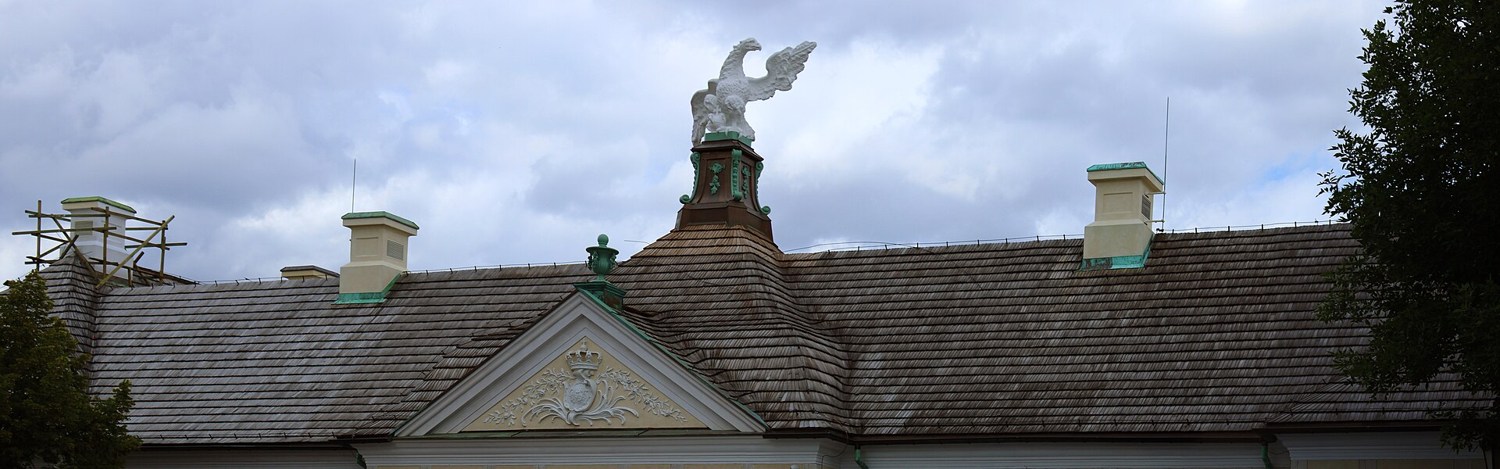
The museum describes its permanent subjects as the Saxon era and royal journeys, alongside Kutno's history from earlier periods into modern times. This makes it useful for newcomers who know Poland's larger royal cities but less about the towns between them. You are seeing how a European political connection passed through one particular place, not another general survey of every Polish dynasty.
Children, pushchairs and the length of the route
About 100 minutes is a substantial commitment for a small child, especially on a guided route where the group moves together. The regulations require adults to supervise preschool and school-age children under sixteen. They also prohibit pushchairs on the exhibition route: visitors must leave them in a place indicated by staff.
Ask about a suitable alternative before bringing a child who cannot comfortably manage without the pushchair for that long. Do not assume that a lift, where available, overrides the museum's pushchair rule. Food and drink are not allowed on the exhibition route, so plan a snack and toilet break before the departure rather than counting on stopping midway.
Coats go in the cloakroom, and backpacks, bags and umbrellas are not normally allowed onto the exhibition unless the guide agrees. The regulations mention keyed deposit lockers. Travel lighter if possible, especially when combining the visit with a railway journey. Check arrangements for unusually large luggage instead of arriving with a suitcase and assuming it can be stored.
Mobility access: ask about the whole route
The site's accessibility declaration is dated 2020 with a December 2022 update. Its architectural statement only says adaptation is in progress, and it still refers to an earlier temporary address. It is not detailed enough to establish the present step-free route, wheelchair dimensions or accessible toilet provision.
The visiting rules do mention lifts for disabled visitors, people with reduced mobility and older people under staff supervision. That is useful evidence of an assisted lift arrangement, but it does not prove every room is reachable. Ask whether the entire current guided route, entry and exit are step-free, whether a lift is working, where an accessible toilet is and whether assistance must be arranged.
Photography and a workable first visit
Private photography is allowed under the museum's conditions, but recording multimedia projections or the guide's speech requires management consent. Non-private photography and filming have separate permission rules, as do tripods, extra lighting and drones. Calls and messaging during the visit are prohibited. Put the phone away when it is not needed, and follow room-specific signs.
A workable first visit is straightforward: settle language and access, choose an hourly departure no later than 16:00, check the current 28/16 zł tariff or Thursday arrangements, and leave enough time for the full guided route. Add a walk around the square afterwards if you want, rather than placing another timed attraction immediately after it. The palace works best when its own story and timetable set the pace.
Frequently asked questions
Is English available every hour?
No regular English schedule is published. Arrange an English visit by telephone before booking.
Can I enter at 17:00?
The last guided entry is 16:00. Ticket-office and building closing times are later.
Can I bring a pushchair?
Not onto the exhibitions. The rules require leaving it where staff indicate.