Opoczno Regional Museum: Ceramics, Free Saturday and Access
The essentials: Plac Zamkowy 1. Mon-Fri 8:00–15:30, Sat 10:00–16:00; Sundays only arranged groups over 20. Tickets 10/5 zł; Saturday free, guided groups 5 zł/person. Level entrance but only about 30% of rooms wheelchair accessible in the published declaration.
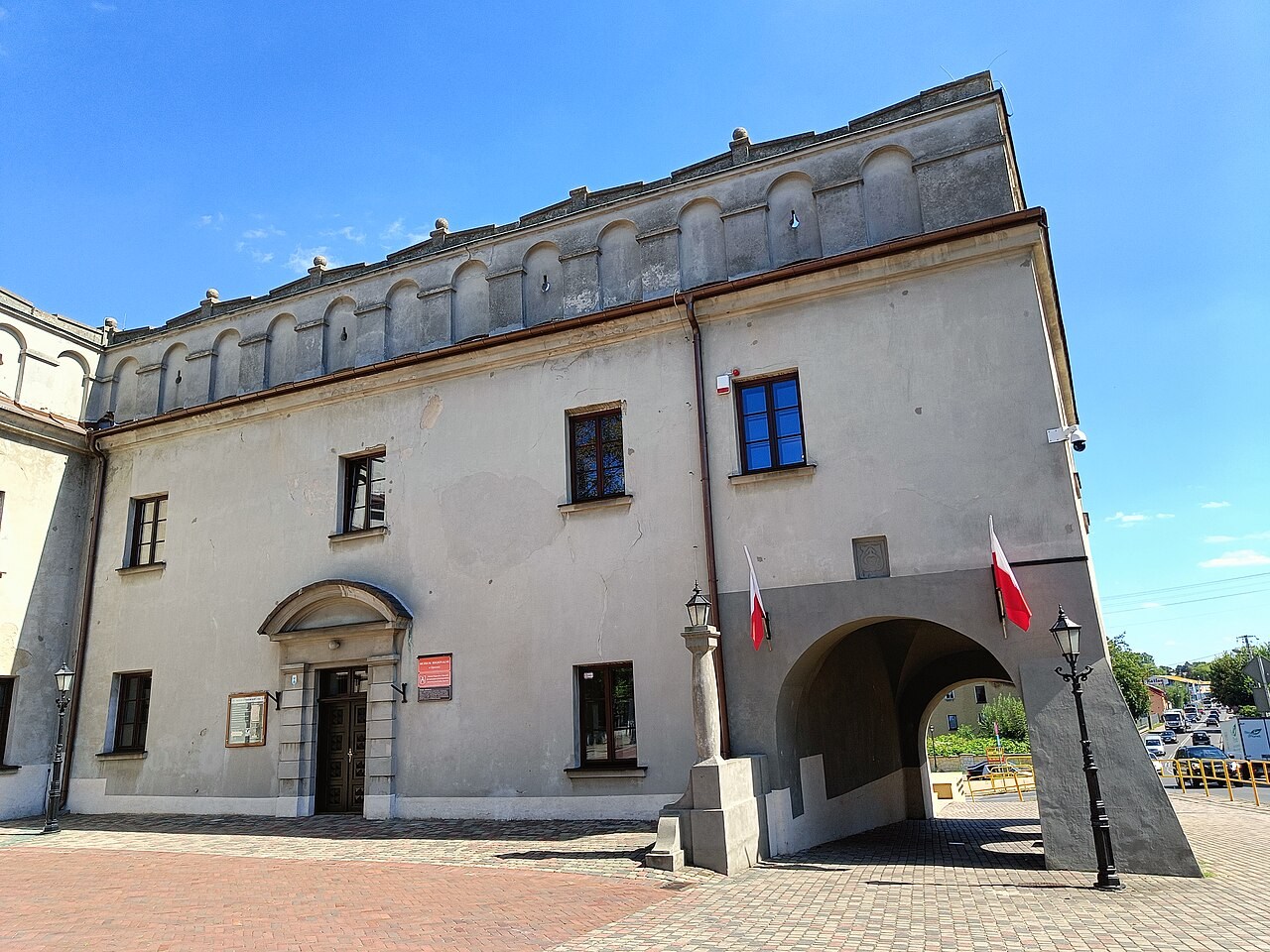
Cover: Regional Museum castle building in Opoczno, photographed 12 August 2024. Historic exterior, not a current access survey. Photo: Plati / Wikimedia Commons, CC BY-SA 4.0. Resized and recompressed.
Opoczno's Regional Museum brings together two sides of the town that a quick look at its castle cannot explain: the history of ceramic manufacturing and the everyday skills behind the region's woven clothes, decorated homes and paper ornaments. It is a useful small-town museum for residents exploring beyond Poland's largest cities, especially if you want objects with a clear local connection rather than another general castle tour.
The practical surprise is the timetable. The museum normally opens on Mondays, starts early on weekdays and offers free individual admission on Saturdays. Sunday is not an ordinary walk-in day. Its ground-level entrance also does not mean the whole building is wheelchair accessible. These differences matter more than choosing the most photogenic angle of the castle.
Where to go and when the museum opens
The address is Plac Zamkowy 1, 26-300 Opoczno. The museum occupies the Kazimierzowski Castle, so a castle search and a museum search can lead to the same building. Use the museum's own contact details when asking about exhibitions or an arranged visit: telephone +48 44 755 23 19 or email [email protected].
The published hours are Monday to Friday, 8:00-15:30, and Saturday, 10:00-16:00. On Sundays the museum admits organised groups of more than 20 people by prior arrangement. A couple or family should therefore plan a weekday or Saturday visit, rather than treating Sunday as a shorter version of Saturday. The museum does not publish a last-admission time on its contact page, so leave enough time to see the rooms instead of assuming entry remains possible until closing.
These are normal hours, not a promise about public holidays or special events. Check the current announcements before setting off around a holiday. For an ordinary weekday, the early opening can help if your afternoon is already committed, but remember that the museum closes at 15:30 rather than staying open into the evening.
Tickets and what free Saturday does not include
The published ordinary ticket is 10 zł and the reduced ticket is 5 zł. Saturday entry is free, with a separate listed charge of 5 zł per person for organised groups visiting with a guide. Do not read the free-day line as an offer of a private guided tour at no cost. If you are arranging a school, association or workplace visit, describe the group and the service you need when booking.
The contact page does not set out the full categories entitled to reduced admission, a family-ticket definition or a separate temporary-exhibition tariff. Bring the document supporting any concession you expect and confirm eligibility with the museum. There is no need to invent a family package: at the published standard rate, two adults would pay 20 zł for ordinary admission, before any applicable concessions or separately booked activities.
City guiding is a different service. The museum lists 100 zł for the first hour and 50 zł for each further started hour. That is not the price of an ordinary museum ticket. Ask what route and language can be provided, how long the proposed walk takes and whether museum entry is included before agreeing to a booking.
Start with Opoczno's ceramic heritage
The permanent exhibition on Opoczno's ceramic heritage is a strong starting point because it explains a part of the town's identity that reaches beyond the castle walls. The museum describes it as its first permanent display devoted to the ceramic industry as an element of local identity. It uses historic objects, documents, photographs and multimedia to show how manufacturing developed here.
Look for examples of the oldest tiles produced in Opoczno at the end of the nineteenth century, rare advertising tiles carrying Polish and Russian inscriptions, and simple tools used in preparing ceramic tiles. Together these let you compare a product's decorative surface with the work needed to make it. The display also introduces Jan Dziewulski and the brothers Władysław and Józef Lange, associated with the factory's beginnings.
The story extends to the related Dziewulski and Lange factory built in the early twentieth century in Sloviansk, in present-day Ukraine. That connection makes the exhibition more than a collection of attractive tiles. For someone living in Poland, it is an accessible way to connect a familiar industrial name with workers, production methods and a specific town.
A reconstructed home, woven clothes and woodcarving
The reconstructed Opoczno cottage interior changes the scale from industry to household life. The museum describes a living room with a kitchen and bread oven, domestic containers and utensils, a loom and spinning wheels, and a sleeping area with embroidered pillowcases. A separate reconstructed storage room contains tools and equipment used around the home, farmyard and fields.
Pay attention to the paper decorations as well as the furniture. Pająki are suspended decorative constructions, not a reference here to living spiders. Paper cut-outs, tissue-paper flowers and paper window decorations help explain how a modest interior could be made festive. This room works well as a looking exercise with children: identify what was used for cooking, weaving, storing food and decorating before reading every label.
The costume exhibition follows changes over time rather than presenting a single timeless folk outfit. It includes women's clothing from around the turn of the twentieth century, interwar wedding clothes, children's garments and men's dress. The museum explains the use of home-woven wool and linen and the changing arrangements of stripes, embroidery and individual pieces. The woodcarving display adds both religious subjects and scenes of village work, with artists including Antoni Baran and other regional makers.
Local history without confusing the castle with a preserved fortress
The museum's local-history exhibition reaches from archaeological objects, including Bronze Age material, to guild records, old photographs and the upheavals that affected the region. Among the objects described are a seventeenth-century locksmiths' and blacksmiths' guild chest, a print connected with the 1655 Battle of Żarnów and records relating to the Opoczno starosty. Old town photographs are useful for comparing the present streets with buildings that no longer survive.
A separate Second World War display covers the fighting of 1939, Major Henryk Dobrzański's unit, whose commander was known as Hubal, local underground activity and residents who fought on different fronts. Uniforms, documents, photographs and personal objects give this section a different tone from the domestic interiors. Families may want to choose their route according to children's interests and readiness for wartime subjects.
The building itself has medieval origins associated with King Casimir the Great, but its current appearance reflects repeated damage, rebuilding and changing uses. The museum's architectural history describes nineteenth-century administrative use, alterations in the interwar period and adaptation for the museum from 1976. Do not expect a complete medieval fortress with an unchanged original plan. The museum was established on 1 January 1976 and opened its first exhibitions on 5 June that year.
A current paper-cut exhibition through January 2027
The museum's announcement published on 23 November 2026 says the post-competition exhibition of the third Folk Paper-Cut Triennial of Łódź Voivodeship opened on 19 November and runs until 27 January 2027. This gives a late-autumn or winter visit a specific additional reason beyond the permanent rooms.
The announcement describes entries from 44 participants, nearly half from the Opoczno region, with work from other ethnographic regions of the voivodeship as well. It points visitors towards both Opoczno and Łowicz paper-cut traditions. Use that comparison alongside the cottage decorations rather than assuming every colourful paper ornament belongs to one uniform Polish style.
Older temporary-exhibition pages are not a reliable list of what remains open. For example, the INDYGO painting exhibition had a published end date of 13 November 2026. The newer triennial announcement is the relevant dated notice for this guide. Confirm any separate arrangements or admission conditions for a temporary show with the museum.
Wheelchair access: a usable entrance, but a limited interior
The accessibility declaration linked from the museum website was last reviewed on 10 December 2024. It describes a level entrance with a manually operated door and a 120 cm opening. The service point is on the ground floor beside the main entrance. That is helpful, but the same declaration says rooms are on two levels, some corridors are inaccessible to wheelchair users and only about 30% of rooms are wheelchair accessible.
Movement between levels is described via a staircase of 22 steps, each 19 cm high, with a handrail along the flight. Do not assume a lift or full access because the exterior looks approachable. Ask which exhibitions are currently on the accessible level and whether the ceramic display or another room you particularly want to see can be reached without stairs.
The declaration lists an accessible toilet in the ground-floor main hall, but its details also report no grab rails by the toilet and limited transfer spaces. This may not meet your personal needs even though the room carries an accessibility label. It also records two free parking areas by the museum, one designated accessible space about 30 metres from the entrance, and admission with an assistance or guide dog. Confirm current conditions directly before relying on this older declaration for an essential access requirement.
School activities, language and a sensible visit plan
The museum lists 30-minute museum lessons at 50 zł per group, with a maximum of 30 participants. Topics cover regional history, local legends, folk costume, seasonal customs and traditional crafts. Its contact page lists workshops at 10 zł per person for groups of 10-30, including paper crafts and Christmas or Easter themes. The workshop page describes sessions led by local folk artists, but these are arranged activities, not a guarantee of a drop-in class whenever the museum is open.
The pages checked do not confirm a routine English guided tour, English audio guide or complete English labelling. Ask about language before booking a group service. Independent visitors can still build a focused visit around the tiles, reconstructed home and costumes, while allowing extra time for Polish descriptions. Translation software may help with individual labels where permitted, but it is not a substitute for an agreed language service.
For a straightforward first visit, choose a weekday or free Saturday, start with the ceramic exhibition, then compare the cottage, clothing and paper decorations. Add local history or the current temporary exhibition according to your interests. If access or language will decide whether the trip works, settle those points first. The museum's low admission price is useful, but a visit planned around the right rooms and the right day is worth more than arriving at a closed Sunday door.
Frequently asked questions
Is Opoczno museum free on Saturday?
The museum lists free Saturday admission, with a separate 5 zł per person charge for organised guided groups.
Can I visit on Sunday?
The published Sunday arrangement is only for organised groups of more than 20 by prior agreement.
Is the whole castle wheelchair accessible?
No. The linked declaration describes a level entrance but only about 30% of rooms accessible to wheelchair users, with stairs between levels.