Piotrków Castle Museum: Winter Tickets, Thursday and Stairs
The essentials: Piotrków castle museum publishes winter Tuesday-Sunday 09:00-16:00, last entry 15:30; Monday closed. Tickets 10/7 zł, Thursday free except separately ticketed temporary shows. On 27 November 2026 only, opening is 10:00-18:00. Ticket desk and galleries require stairs.
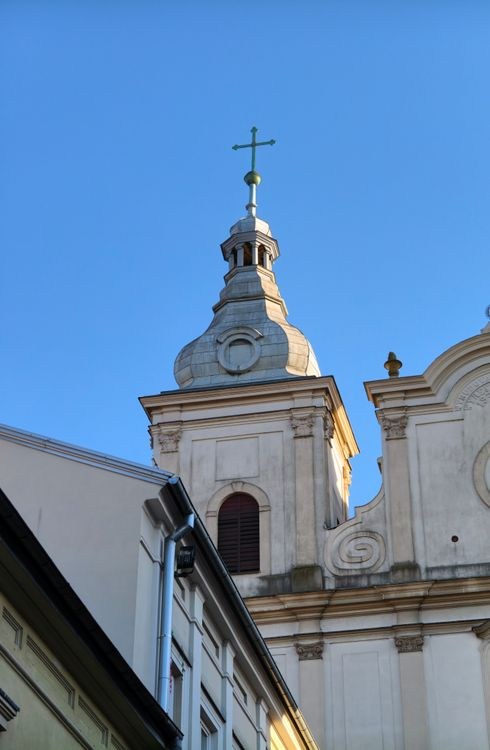
Cover: Historic church tower in Piotrków Trybunalski, an illustrative city photograph, not the Royal Castle museum. Photo: Wera Nika / Pexels.
The Royal Castle museum in Piotrków Trybunalski is a compact royal residence with museum collections inside, rather than a vast fortress with an all-day outdoor route. It stands at Plac Zamkowy 4. For a first visit, the most useful decisions are when to arrive, whether you want a guide and whether the building's many stairs are workable for your group.
There is an immediate date-specific exception: the museum announces 10:00-18:00 opening on Friday, 27 November 2026, with a free lecture at 17:00 about Katarzynki and Andrzejki in folk culture. That is not the general winter timetable. For ordinary dates, the official contact page gives Tuesday-Sunday 09:00-16:00 from October through April, with Monday closed and last entry half an hour before closing.
27 November hours are a one-day change
The museum's notice names 27 November 2026 and gives the extended 10:00-18:00 hours because of the afternoon lecture. Its wording also uses a relative reference to tomorrow, while the page metadata shows 27 November. Use the explicit date and hours, not that relative word, when planning. The weekday and date agree: 27 November is a Friday.
The lecture, Katarzynki i Andrzejki w kulturze ludowej, starts at 17:00 at the castle. The announcement says lecture admission is free. It does not say every exhibition ticket or guiding service is free that Friday, so keep the event's free entry separate from the museum's ordinary tariff. Check directly if you need to combine the lecture with a specific exhibition or arrive close to the final admission time.
Do not carry the extended hours into the following weekend or December. A one-day cultural programme is not evidence of a permanent change. If you are reading this after 27 November, use the seasonal timetable and the museum's latest notices for your own date.
The regular winter timetable
From 1 October to 30 April, the contact page gives Tuesday-Sunday 09:00-16:00. Monday is closed to visitors. The same page states that final admission is 30 minutes before closing, so an ordinary winter visit must start by 15:30 at the latest. For a relaxed first look, arrive earlier rather than treating the final half-hour as a complete visit slot.
From May through September, Tuesday-Saturday opening extends to 17:00, while Sunday remains 09:00-16:00. These are the museum's own published seasonal hours. Other online summaries may show different times, so check the official date-specific notices before relying on a general listing. A normal timetable also does not establish holiday opening.
The address matters too. The museum's accessibility declaration separately describes offices at ul. Dmowskiego 47. That is not the castle exhibition entrance. For the museum visit discussed here, use Plac Zamkowy 4 and the castle contact number, not an administrative-office route.
Tickets and the limits of free Thursday
The museum's tariff lists 10 zł standard admission and 7 zł reduced admission to permanent and temporary exhibitions. On Thursdays, those exhibitions are free except for temporary exhibitions that are separately ticketed. The exception is important: a free Thursday is not a promise that every special exhibition, event, lesson or guided service has no charge.
Holders of the Piotrkowska Karta Mieszkańca have a separate published rate: 7 zł standard and 4 zł reduced. This is a benefit attached to that resident card, not a blanket discount for everyone who lives in Poland or happens to stay in Piotrków. Bring the card and ask which rate applies to the product you want.
The tariff names school and university students, pensioners, people with a recognised disability and their carer, and holders of Karta Polaka among reduced-admission categories, with supporting documents required where stated. Children under three are among those exempt from admission. Do not assume a foreign concession document is automatically accepted in precisely the same way; ask about your own evidence if the discount matters to your budget.
For an ordinary independent visit, decide first whether the standard exhibition ticket is enough. If your priority is a particular temporary show, ask if it has separate admission. A posted general price is not a substitute for confirming what the desk will include on the day.
Guides cost extra and need an agreed time
The museum lists a guide fee of 30 zł for organised groups. For individual visitors, the fee is 40 zł on Tuesday-Friday and 45 zł on Saturdays, Sundays and holidays. Treat these as guide-service fees in addition to any applicable admission, not a replacement ticket covering everything automatically.
The general offer and service tariff ask visitors to agree guiding at least a day in advance. The education page asks for email or telephone reservations at least a week ahead and describes a roughly one-hour castle visit with a guide for educational groups. These are different planning contexts. A week is the safer lead time for a school or organised education visit; for a shorter-notice individual tour, get an actual agreed time instead of assuming the one-day minimum guarantees availability.
The sources checked do not establish a regular English-language tour or English audio guide. If English is essential, ask that question before fixing the visit, along with the number of people, date, fee and admission arrangement. An English-language planning guide such as this article is not proof of an English-speaking guide at the museum.
Why the building is called a castle
The museum's history explains that the building was created for King Sigismund I the Old by the royal builder Benedykt of Sandomierz. Construction ran from 1512 to 1519, with the building accounts settled in 1521. Its original purpose was a royal residence during parliamentary meetings in Piotrków.
The name can create the wrong expectation. The museum discusses the building as a tower, castle, palace and tower-palace, and explains that its compact form and large windows differ from the usual defensive-castle image of ramparts and flanking towers. Think of a vertical royal residence, with rooms on successive floors, rather than a long circuit of defensive walls.
The building also changed substantially over time. The museum describes war damage, later rebuilding, nineteenth-century military uses and twentieth-century restoration. The upper floor was reconstructed during work in the 1960s. This is a building with several historical layers, not a claim that every room survives untouched from the reign of Sigismund I.
Collections: ask what is actually on display
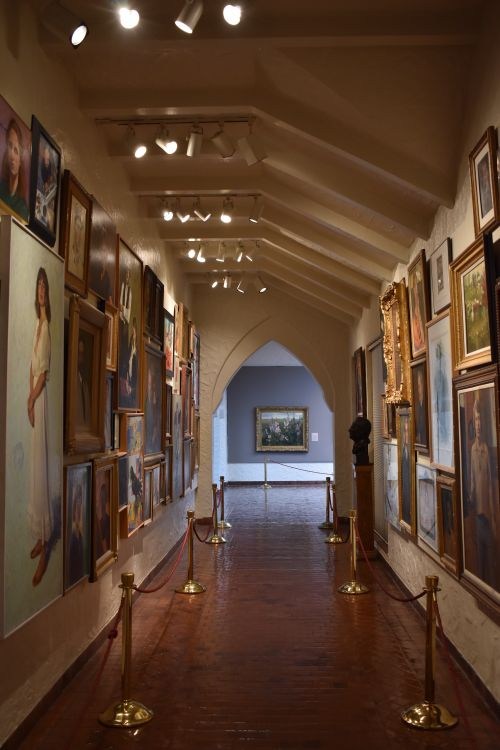
The museum's departmental guide identifies art, archaeology, ethnography and other collections. Its art section includes portrait painting from the eighteenth and nineteenth centuries, sculpture and decorative objects. It says the most interesting art objects are shown in the castle's permanent exhibitions, alongside some furniture and paintings held on deposit from national museums.
That makes the castle and its art a sensible focus for a first visit. Look at the architecture as well as the objects: the changing scale of the windows and the arrangement over several storeys help explain its residential role. A guide may add context, but you can also choose an independent visit during normal opening.
Do not confuse the size of a collection with the amount currently exhibited. The archaeology department page explicitly says it has no permanent exhibition. Its thousands of objects therefore should not be advertised as an archaeological gallery you are guaranteed to walk into. Likewise, an ethnographic collection or an old photograph does not establish that a particular costume or craft display is open now.
If a specific object or subject is the reason for your trip, name it in your enquiry. Temporary exhibitions change, and museum departments also do research and storage work that visitors do not see. The practical question is which rooms and exhibitions are available on your date, rather than whether the institution owns objects in that field.
Access: there are stairs before the ticket desk
The museum's March 2026 accessibility declaration is unusually detailed. It describes a threshold at the entrance, manually operated doors that require force, and a doorbell. The ticket desk is on the raised ground floor, reached by 14 steps. There is no external lift at the building.
Between the ground and first floors there are 34 steps; between the first and second floors, 36. The declaration says movement between exhibition floors is only by steep stairs, with a handrail and resting benches on landings. These details make the route a significant consideration for wheelchair users, anyone with limited mobility and families bringing a pushchair.
One line says corridors are accessible to wheelchair users, but the same declaration says rooms are not wheelchair accessible and explains the stair-only vertical route. It would be misleading to turn the corridor statement into a step-free-museum claim. Ask staff about realistic alternatives and assistance before travelling; do not plan on an independent wheelchair route through the exhibitions.
Visitor toilets are in the basement, down stairs, and the museum states that there is no adapted toilet. It has no private parking, although the declaration identifies public parking with designated disabled spaces opposite the entrance from Plac Zamkowy. Assistance and guide dogs are permitted, with the certificate and vaccination documentation specified by the museum.
Families and a workable first visit
The education offer covers lessons and practical workshops, with subjects ranging from kings and local history to food and rural childhood. The published general rates are 4 zł per lesson participant and 10 zł per workshop participant. These are organised activities with advance arrangements, not drop-in entertainment guaranteed with a standard ticket.
For an independent family visit, make the stairs and the children's interests part of the plan. Choose a manageable set of rooms rather than promising a hands-on castle playground. For an organised group, confirm the topic, age range, language, ticket arrangement and the longer booking lead time with staff.
The castle number is +48 44 646 52 72; the museum publishes [email protected] for enquiries. Give your exact date and mention any guiding, language or mobility needs. A normal winter visit can be a straightforward 10/7 zł museum stop, but the one-day hours, separately ticketed shows and stair-heavy route deserve attention before you set off.
Frequently asked questions
Is the museum open until 18:00 all winter?
No. The explicit 10:00-18:00 notice concerns 27 November 2026. Ordinary October-April hours are Tuesday-Sunday 09:00-16:00, last entry 15:30.
Is Thursday completely free?
Exhibition admission is free except separately ticketed temporary exhibitions. Guides, lessons and workshops have their own fees and arrangements.
Can I tour with a wheelchair?
The access declaration describes 14 steps to the raised ticket desk, steep stairs between floors and no adapted toilet. Do not assume a step-free route; discuss realistic options with staff before travelling.
Sources
- Date-specific 27 November 2026 opening 10-18 and free 17:00 lecture
- Seasonal hours, final entry and exhibition address
- Ticket and guide tariff, resident-card rates and concessions
- Individual and group visit offer
- Education programme and advance group booking
- Accessibility declaration, March 2026 review
- Castle history and residential form
- Museum departments: collections versus exhibitions