Września Museum: School Strike, Free Saturday and Ticket Prices
The essentials: ul. Dzieci Wrzesińskich 13. Tue-Thu 09:00-15:00, Fri 09:00-17:00, Sat 10:00-14:00; Mon/Sun closed. Normal ticket 10 zł; reduced rate conflicts at 5/7 zł across official sources. Saturday ordinary admission free. Guide 100 zł/45 minutes separately. Confirm courtyard wheelchair route and English provision.
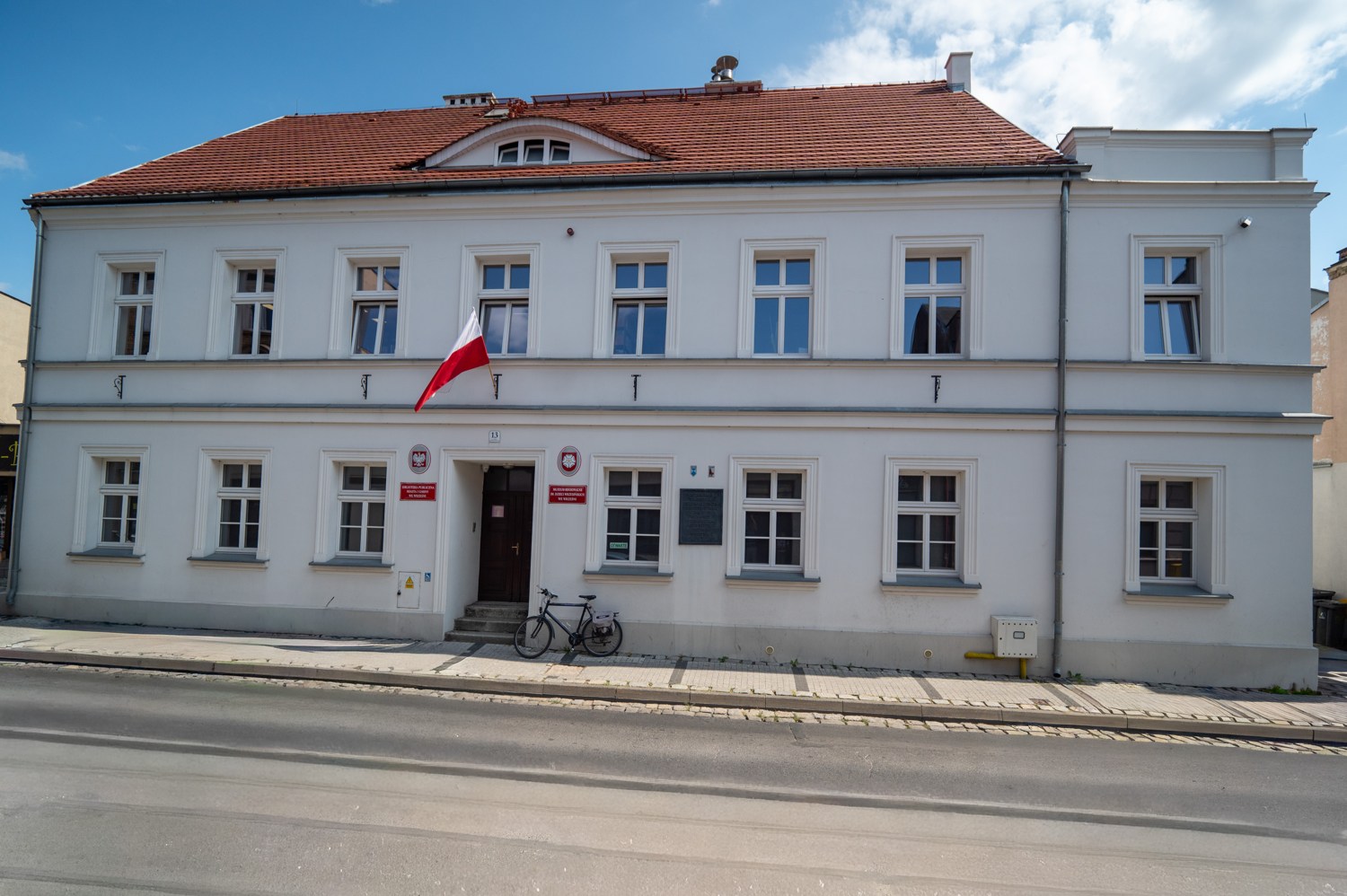
Cover: former school housing the Września regional museum, photographed 20 August 2025. Archive street view, not a current access survey. Photo: Kapitel / Wikimedia Commons, CC BY-SA 4.0. Resized and recompressed under the same licence.
Września's regional museum is in the school where the town's children resisted compulsory German-language religious instruction in 1901. That makes it more than a collection of local objects in a convenient old building. The address itself, ul. Dzieci Wrzesińskich 13, is part of the story. For an English-speaking resident of Poland, it offers a concrete way into the country's history of language, education and identity.
The practical visit is small enough to plan around a town outing, but there are two details to settle first. Saturday is the published free-admission day, with exhibition hours of 10:00-14:00. On paid days, official sources agree on 10 zł normal admission but disagree on the reduced ticket: the visitor page says 7 zł, while the public-information tariff says 5 zł. This guide keeps that disagreement visible rather than inventing a single confirmed concession price.
Opening hours: exhibition time, not staff working time
The museum's homepage and dedicated visitor page list Tuesday, Wednesday and Thursday 09:00-15:00; Friday 09:00-17:00; and Saturday 10:00-14:00. Monday and Sunday are closed. Friday is therefore the published later-opening weekday, not Tuesday. Saturday gives a shorter window and free ordinary admission.
The public-information bulletin also contains a working-hours table, explicitly headed for 2024. It separates the hours staff work in the building from the hours visitors can enter the exhibition. Those are not interchangeable: an employee being present before opening does not make the galleries open. For planning in November 2026, use the matching exhibition schedule on the current homepage and visitor page, and check dated closure notices before travelling.
A notice about an October commemorative event or a past senior weekend is not a standing exception to this timetable. No separate final-entry deadline was established in the pages checked. Leave room to see the displays before closing rather than assuming that arrival a few minutes before 14:00 buys a complete Saturday visit.
Tickets: what is agreed and what still conflicts
Normal admission is listed as 10 zł in both the museum's visitor information and its official public-information tariff. Both identify Saturday as free admission. The tariff also lists a guided service at 100 zł for 45 minutes and a museum lesson at 100 zł for 45 minutes, with the lesson price described as one session for the whole group.
The reduced rate needs care. The public-information tariff, last edited on 30 December 2025, says 5 zł. The live visitor page says 7 zł. Neither source checked explains the discrepancy or gives a newer effective date that conclusively settles it. Budget 7 zł if you want to avoid being short, but ask the museum which rate it currently charges. That is a cautious budget allowance, not a claim that the higher figure has been verified at the till.
The bulletin identifies concession groups including children, pupils and students up to 26, teachers accompanying groups, people over 65, pensioners and recipients of disability pensions, and holders of the Large Family Card or local senior card, with documents required. It does not establish that every young child enters free. A free Saturday visit avoids the ordinary-ticket price dispute, but it does not establish that guiding or a booked lesson is free as well.
The visitor page links an online system for reserving a visit and guide service. Use the link from that official page, rather than a search result that happens to offer tickets. No booking was made for this guide, and no live slot or English-language guide was verified. If language matters, ask before reserving, not after arriving for a Polish-only session.
Why children in Września went on strike
In 1901, Września was under Prussian rule. The museum's historical account describes a protest beginning around March-April, when a new requirement brought German into religious instruction and church singing. Pupils at the local Catholic elementary school resisted. This was not a modern dispute about choosing a foreign-language elective; it concerned an imposed language in an institution with authority over children and their families.
The museum identifies 20 May 1901 as the moment of greatest escalation. Fourteen pupils were subjected to corporal punishment after detention. Parents and other residents gathered outside, and the confrontation led to prosecutions. The museum records a Gniezno trial in November 1901, with 26 defendants and 20 punished.
Bronisława Śmidowiczówna became a symbol of the protest. The museum recounts her returning a German catechism while holding it through her apron. Resistance did not end neatly after the best-known May confrontation: its account says her younger sister Stefania continued until after Easter 1904. That longer timeline is useful when reading dates on objects and commemorations.
With children, introduce the story honestly but without turning a museum visit into a catalogue of punishments. A useful starting question is how it would feel to be forbidden to use the language of home in a familiar lesson. The historical circumstances were specific; a present-day bilingual school should not be treated as the same thing as coercive language policy under partition.
The schoolroom and the records behind the story
The museum describes its schoolroom as containing original equipment from around the turn of the nineteenth and twentieth centuries. It also presents the 1908 film Pruska kultura, described by the museum as the oldest Polish film. Ask staff about the screening arrangement on the day, since a collection description does not establish an on-demand English-subtitled showing.
One especially important object in the museum's own account is a pupil's notebook written by Bronisław Klimas during the 1901-1902 strike. A school exercise book gives the story a different scale from a monument: handwriting and ordinary classroom work sit beside events later turned into national memory. Do not assume every item in the collection is displayed continuously, but look for the connection between personal school material and the wider narrative.
The State Archive in Poznań described supplying records for the museum's 120th-anniversary exhibition in 2021. Its account names pupil lists, teachers' reports, correspondence about punishments and parents' complaints held in the Gniezno branch's school-inspectorate records. That is useful evidence for understanding how the history is studied. It is not a claim that the 2021 temporary exhibition is still running in 2026.
There is more here than the strike
The permanent displays also cover the town's wider history. The museum lists key local episodes including the Spring of Nations in 1848 and the school strike, followed by twentieth-century subjects such as the Greater Poland Uprising of 1918-1919, the local garrison, occupation, life under the Polish People's Republic and the TONSIL factory.
That last subject is a useful reminder that regional history does not stop with a famous patriotic event. Industry, work and urban life are part of the museum's own outline. Two furnished bourgeois parlours represent nineteenth- and early-twentieth-century interiors, with works associated with W. Brodzki, J. Kossak and M. Turwid. They offer a domestic contrast to the schoolroom and political history.
The collection is divided into archaeological, archival, art-and-history, and library departments. The regional tourism body's English introduction also points to material connected with the medieval stronghold at Grzybowo. Treat those collection descriptions as context, not a guarantee that a particular excavation find or library book can be requested from storage during an ordinary walk-in visit.
A former school, then a museum
The museum says the school building was constructed in 1790 and enlarged in 1838. A museum idea existed between the wars, but the collections then assembled were destroyed during the Second World War. A museum room opened in 1961 and became a regional museum in 1966.
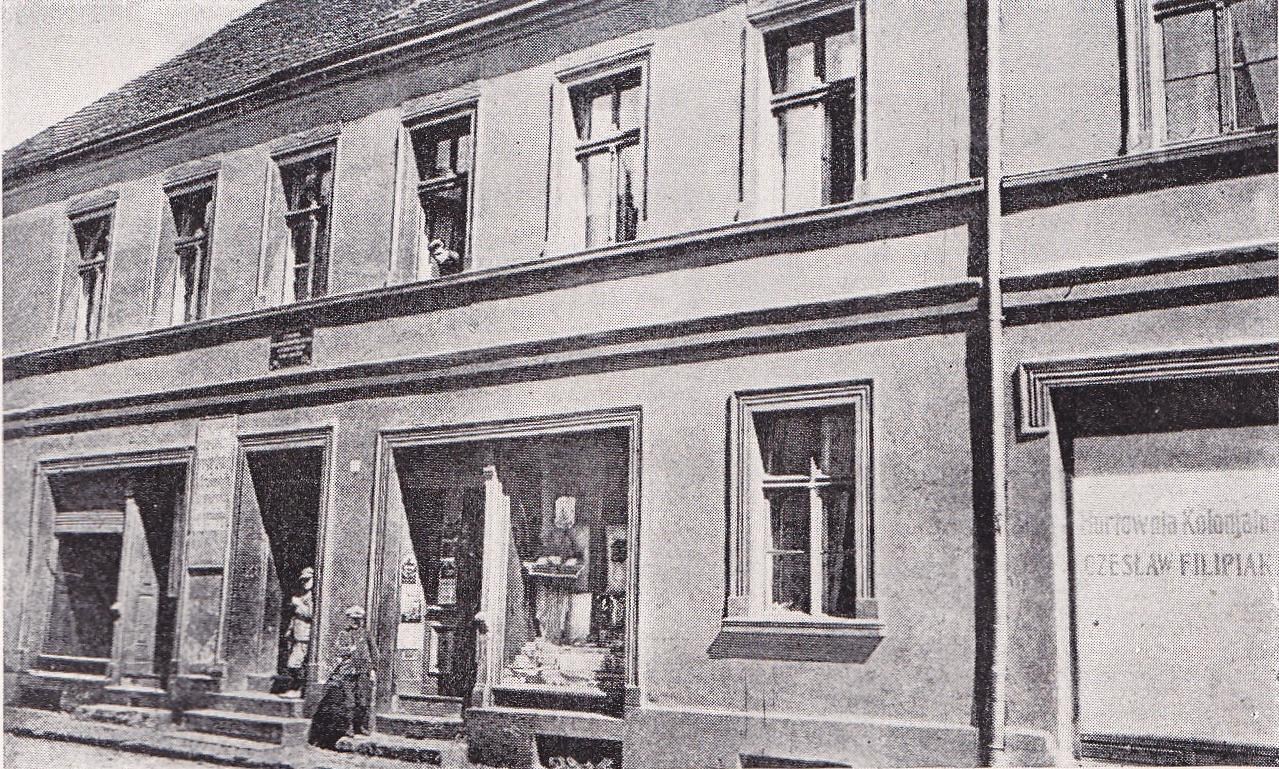
This history matters when looking at the building. It was not erected as a modern museum, and the present displays are a later use of a much older school. The attraction is the relationship between place, surviving material and interpretation. The exterior photograph accompanying this guide dates to August 2025, while the black-and-white body photograph is historical. Neither is offered as a current survey of entrances or gallery arrangements.
Access through the courtyard: confirm the route
The museum's published accessibility declaration dates to September 2020. It says the exhibition is on the ground floor and wheelchair entry is possible from the courtyard side. The building has no lift; administration is on an upper floor, with an intercom at the street entrance. Those details distinguish the public exhibition from offices elsewhere in the building.
The same declaration says there is no museum customer car park. It describes municipal paid parking on nearby streets and designated disabled spaces. Do not treat a 2020 access statement as verification of today's parking charges, availability or parking-card rules. The declaration places visitor toilets on the ground floor with entry from the courtyard, but does not provide enough detail to promise a fully adapted toilet.
Assistance and guide dogs are permitted according to that declaration. It also says the museum lacks dedicated devices for blind, partially sighted, deaf and hard-of-hearing visitors. Because this information is several years old, contact the museum about your specific needs and any improvements since publication. The published contact is +48 61 436 01 92, [email protected].
Making the visit useful in English
Prepare the names Strajk Dzieci Wrzesińskich for the children's strike and izba szkolna for the schoolroom. The regional tourism website offers a short English overview, but that does not establish English labels throughout the museum. Ask about a guide or written material if independent reading in Polish would be difficult.
For a straightforward plan, choose the published Saturday window for free ordinary admission, or Friday for the later weekday closing. Confirm any guide, concession or courtyard-access arrangement separately. Września is worth approaching as a specific local history with a national resonance, not simply as another inexpensive museum to tick off.
Sources and checks
Checked 27 November 2026: museum homepage; visitor hours, ticket prices and reservation link; official tariff; building and collections; museum strike history; 2020 accessibility declaration; contacts; institutional description; regional English introduction; State Archive's 2021 account. Reduced-ticket prices remain conflicting at 5/7 zł.
Frequently asked questions
Is Saturday admission free?
Both the visitor page and official tariff say Saturday ordinary admission is free. Exhibition hours are 10:00-14:00. A guide or museum lesson is separately priced.
How much is a reduced ticket?
Official sources conflict: the public-information tariff says 5 zł, the visitor page 7 zł. Confirm the current rate with the museum; 10 zł normal admission is consistent.
Can wheelchair users visit?
The September 2020 declaration says the exhibition is on the ground floor with entry from the courtyard. It lists no lift. Confirm the current route and your needs before travel.