Łomża Museum: Amber, Tickets, Free Thursday and Access
The essentials: Łomża's North Mazovian Museum is at Dworna 22 C. Permanent exhibitions 16/13 zł; all exhibitions 25/19 zł. Thursday permanent-exhibition admission is free. Winter Tue–Fri 08:00–16:00, weekends 10:00–16:00; Monday closed. Rear lift access; toilets not specially adapted. Confirm English audio.
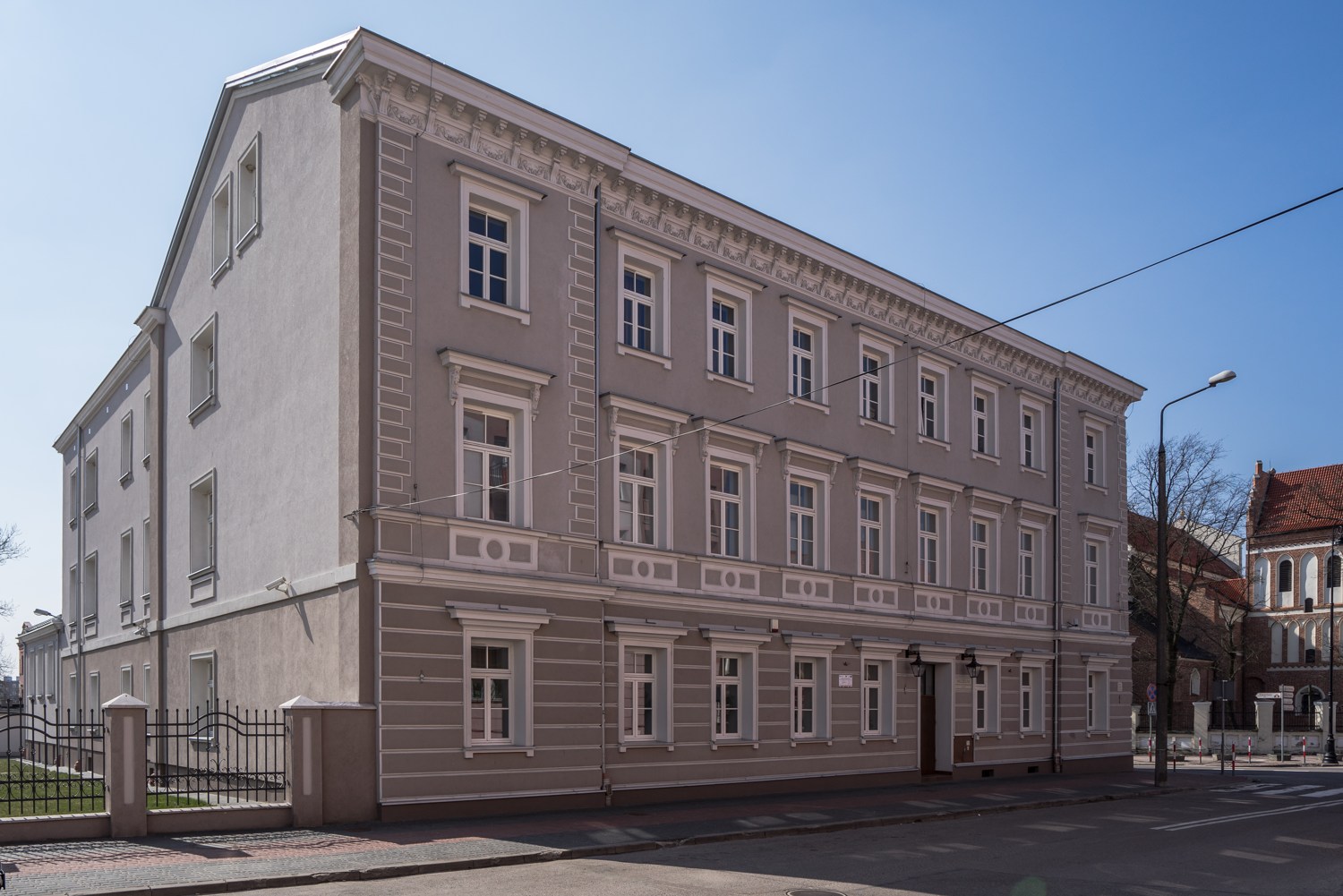
Cover: the main North Mazovian Museum at Dworna 22C, photographed 27 March 2016. Historic exterior, not a current entrance survey. Photo: Arkadiusz Zarzecki / Wikimedia Commons, CC BY-SA 3.0. Resized and recompressed.
Łomża's North Mazovian Museum is a useful first stop if you want to understand the region rather than collect another old-town photograph. At Dworna 22C, its permanent exhibitions connect the city's history with amber working, Kurpie religious sculpture and the changing design of oil lamps. You do not need to be an archaeology specialist to find an entry point: start with a material, an object or a familiar domestic task and work outwards.
The main decision is which ticket you need. Permanent exhibitions have their own 16 zł standard ticket, while the 25 zł standard ticket includes temporary exhibitions too. Thursday's free admission is listed under the permanent exhibitions, not as a blanket offer for every museum activity. The contemporary art gallery at Długa 13 is a different building with different access limitations.
Go to Dworna 22C for the permanent collections
The Polish name to use on a map or when asking directions is Muzeum Północno-Mazowieckie. Its main museum address is ul. Dworna 22C, 18-400 Łomża. The museum's own contact page gives 86 216 28 16 for the institution, while the visitor pages also list SMS 514 007 009 for reservations and information. From a foreign phone, use Poland's +48 country code before the number.
Do not let the gallery address in the website footer send you to the wrong entrance. Długa 13 belongs to the Galeria Sztuki Współczesnej, the contemporary art gallery. The amber, archaeology, history, oil-lamp and Kurpie sculpture exhibitions described here belong to the main museum. If you are booking an activity, repeat both its name and the address so the meeting point is clear.
Opening hours: Wednesday changes with the season
The museum publishes the following ordinary visitor timetable. It is closed on Mondays. Tuesday, Thursday and Friday run from 08:00 to 16:00. Saturday and Sunday run from 10:00 to 16:00. Wednesday has two seasonal schedules: 09:00–17:00 from May 1 to September 30, and 08:00–16:00 from October 1 to April 30.
For a November visit, that means Wednesday follows the earlier winter hours. An after-work plan that depends on the summer 17:00 finish will not fit the published winter timetable. Check the museum's current announcements before a holiday or a special trip, and ask about the last admission separately. The ordinary opening-hours panel does not establish a last-entry deadline or guarantee every room remains accessible until closing.
Tickets: permanent, temporary or both
The current dedicated price page separates three products. Permanent exhibitions cost 16 zł standard or 13 zł reduced. A ticket covering all permanent and temporary exhibitions costs 25 zł standard or 19 zł reduced. Temporary exhibitions alone cost 16 zł standard or 13 zł reduced. Choose by what you actually want to see, rather than assuming the highest-priced option is required to enter.
The same page lists the Ogólnopolska Karta Dużej Rodziny and Ogólnopolska Karta Seniora at the reduced prices for these products. It also lists a 20–50% discount for the Łomża resident card, depending on the package, under the all-exhibitions and temporary-exhibition offers. That is not a promise of the same percentage for every visitor or every ticket. Bring the relevant card and confirm how its package applies.
If you are unsure whether a foreign student, pensioner or other document qualifies for a reduction, ask before paying. The displayed tariff does not settle every eligibility question. For two adults choosing permanent exhibitions, the listed standard tickets total 32 zł; choosing all exhibitions instead totals 50 zł. Those are planning comparisons, not a family package or an advance booking quote.
Thursday's free admission has a defined scope
The museum places its Thursday free-entry notice within the permanent-exhibitions section. That makes Thursday a good option for someone mainly interested in amber and regional history. It does not establish free access to temporary shows, lessons or expert tours. If a particular temporary exhibition is the reason for your visit, ask which ticket it needs even on Thursday.
Old offers can be especially misleading here. An official special-offer page still describes a buy-one-get-one-free promotion that explicitly ended on December 31, 2025. It also contains lower historic ticket prices. Do not build a 2026 visit around that promotion or use its old amounts instead of the current dedicated tariff. A page remaining online is not the same as an offer remaining valid.
Amber beyond the Baltic seaside
The exhibition Bursztyn w dorzeczu Narwi, or Amber in the Narew River Basin, gives the museum a clear regional identity. It is about finding, working and using amber inland, not simply admiring polished jewellery. The museum describes raw material, traditional searching and processing tools, and historic and contemporary amber objects. Look for the connection between the material as found and the forms people chose to make from it.
The museum traces its amber department to Adam Chętnik in 1947 and its first amber exhibition to April 10, 1950. The present exhibition opened on December 19, 2015. Its account explains how amber was found in fields, meadows, water and during digging, and how increasingly specialised tools developed around it. Those details give an inland collection a different story from a seaside souvenir shop.
For children, try following one question rather than reading every label: how does an irregular piece become a bead? For adults, the same objects open up questions about local skills, trade and family possessions. The museum describes amber necklaces passed from mother to daughter and pieces containing inclusions. Treat the visit as a chance to learn the region's relationship with the material, not as a shopping or authenticity consultation.
Choose a route through five permanent exhibitions
The museum's English exhibition index lists five permanent exhibitions. Łomża – A Journey Through the Ages appears as separate archaeology and history exhibitions. The other three are Amber in the Narew River Basin, Kurpie Figures, and Light With Grace, the oil-lamp exhibition. That is a helpful way to divide the visit into manageable subjects rather than facing an undefined regional collection.
Start with archaeology and history if you want context for the streets outside. The museum's overview mentions coins, vessels, weapons, tools, jewellery and old photographs. You can use those objects to compare different kinds of evidence: what an everyday tool reveals is different from what an official document or a posed photograph tells you. There is no need to make the whole visit a chronology lesson.
Kurpie Figures focuses on wooden religious sculpture, including saints and patrons associated with roadside shrines and crosses. The museum dates the displayed tradition from the late eighteenth to the early twentieth century. Light With Grace changes the scale again, towards lamps and domestic interiors. Comparing a plain practical object with an ornate one is an easy way to keep a mixed-interest group involved.
English audio: ask about the device before starting
The museum has an English-language permanent-exhibition index, which helps with names and planning. Its older official special-offer page also describes free audio guides for permanent exhibitions in Polish and English, alongside Polish Sign Language and audio description. However, that page carries the expired 2025 offer. Use it as evidence that English audio has been offered, not as a guarantee of a working device on your date.
Ask the desk whether English audio is currently available, whether it covers the rooms you want, and how the equipment is collected and returned. The 2025 accessibility declaration independently describes free permanent-exhibition guides with Polish Sign Language and audio description. Neither that statement nor an English web page promises a live English-speaking guide. Confirm a live guide's language, timing and price separately.
Access: the lift does not solve every barrier
The museum's March 19, 2025 accessibility declaration is unusually useful about the main building. It describes one step at the front entrance, a ramp at the education-room entrance and a lift entrance at the rear, on the Dworna/Giełczyńska side. The lift provides access to exhibition rooms and offices. A visitor who needs a step-free approach should arrange that rear entrance rather than assuming the front door is suitable.
The same declaration says the toilets are not specially adapted for disabled visitors. This matters more than a general claim that the building has a lift. Ask staff about your specific transfer, doorway or toilet needs before committing to a long visit. The declaration mentions a marked disabled parking space near the toilet; confirm the practical parking location and route with staff rather than treating that wording as street-navigation advice.
Reception has an induction loop, but the exhibition rooms are described as having no hearing loops. The declaration also reports no Braille, contrast or large-print markings and allows assistance and guide dogs throughout the building. Because this is a dated description, reconfirm essential equipment and support. The museum contact page identifies an accessibility officer, so there is a clear route for a detailed question.
The Długa 13 gallery is a separate decision
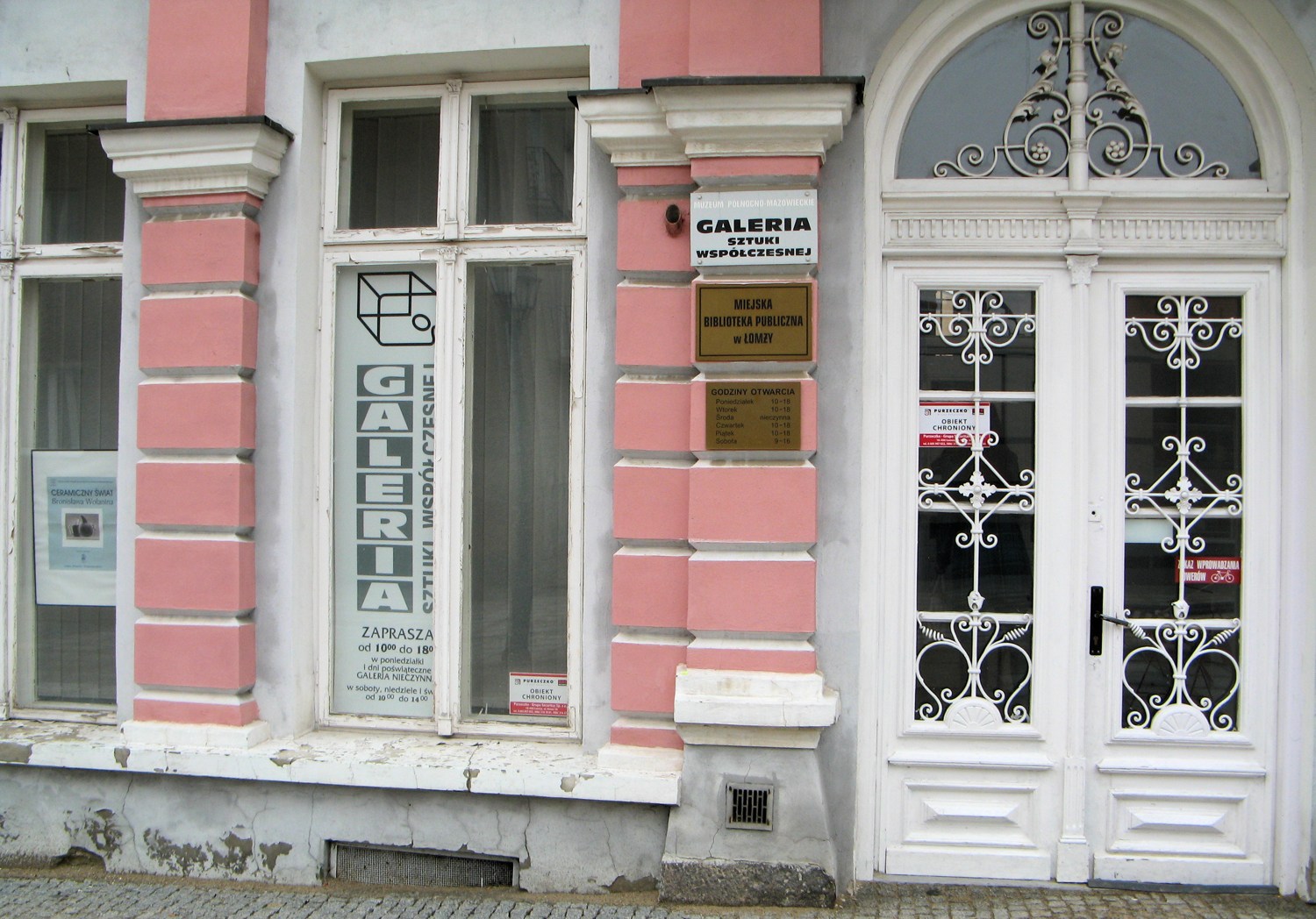
If contemporary art interests you, check the gallery's programme and hours as a separate stop. Do not carry the main museum's timetable or ticket scope across without checking. The accessibility declaration describes entrances from Długa and Jatkowa, both with several steps, and no lift, stair-climber or wheelchair ramps. It also says the entrance doors are not adapted for wheelchair users.
That makes the two buildings materially different choices for someone with limited mobility. A workable route through the main museum does not establish access to the gallery. Ask about alternatives before setting off, and avoid relying on an old photograph to judge the height or number of steps. The photograph here identifies the separate venue; the museum's own access description is the practical starting point.
A sensible first-visit plan
For a first visit, choose permanent exhibitions unless a current temporary show specifically appeals. Plan a comfortable morning or early afternoon arrival rather than using the final hour as your only option. Start with amber, add either the history route or the lamps, and leave room for another section if your group is still interested. This is a suggested route, not the museum's prescribed order or duration.
Before travelling, check announcements, repeat the Dworna 22C address, and ask about any essential audio or access arrangement. If you want an expert tour, the current tariff lists 40 zł per person according to the expert-duty schedule. It also lists museum lessons at 25 zł per person and seasonal lessons or activities at 40 zł per person. Those are separate services, not extras silently included in ordinary admission.
Frequently asked questions
Is Łomża Museum free on Thursday?
The current tariff lists Thursday free admission for permanent exhibitions. Check temporary exhibitions, tours and activities separately.
Does the museum have English audio?
An official 2025 page describes free English audio for permanent exhibitions. Confirm present equipment availability before relying on it.
Is the museum wheelchair accessible?
The 2025 declaration describes a rear lift and an education-room ramp, but toilets are not specially adapted. Arrange essential access with staff.