Suwałki Museum: Tickets, Free Archaeology and Guides
The essentials: Suwałki Regional Museum, Kościuszki 81, is closed 26–27 November 2026. Winter: Tue–Fri 08:00–16:00, Sat–Sun 09:00–17:00. Tickets 24/18 zł, family 60 zł. Archaeology admission free, guiding 15 zł per person. Sunday permanent exhibitions free. Confirm entry cut-offs, guide and access.
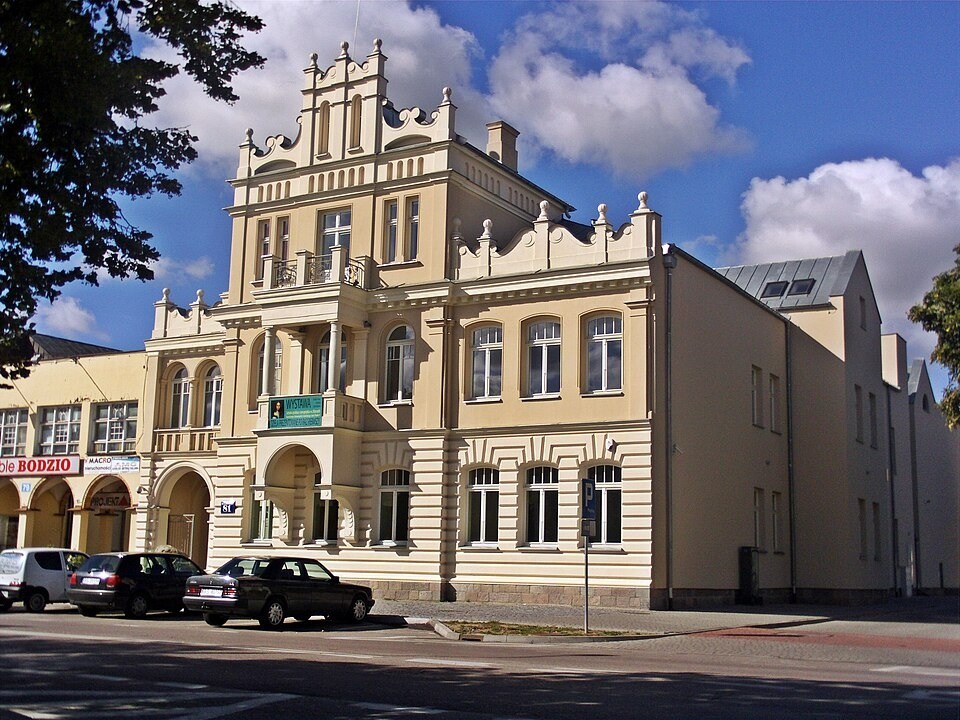
Cover: the Resursa building housing the Regional Museum, photographed on 7 September 2012. Historic street view, not a current entrance or renovation survey. Photo: Adrian Piekarski / Wikimedia Commons, CC BY-SA 3.0 PL. Resized and recompressed.
Check the closure notice before using the normal timetable
Suwałki's Regional Museum at ul. Tadeusza Kościuszki 81 brings together archaeology, the city's borderland history and the paintings of Alfred Wierusz-Kowalski. It is a useful indoor stop if you want the region to mean more than a name on the way to the lakes. There is one immediate exception to the usual opening pattern: the museum has announced that it is closed to visitors on 26–27 November 2026. Those dates are Thursday and Friday. Do not travel there on Friday 27 November simply because the standing timetable says it opens at 08:00.
The notice does not establish a longer closure, but neither is the end of a notice a live confirmation that every gallery will reopen without change. For a visit from Saturday 28 November onward, check the latest announcements and contact the museum if a particular exhibition is the reason for your trip. This guide separates the normal timetable from that dated interruption, and the general admission ticket from the free archaeology exhibition and its separate guiding charge.
Winter hours and an awkward last-entry rule
From 1 September through 30 June, the visiting regulations give Tuesday to Friday 08:00–16:00 and Saturday to Sunday 09:00–17:00. Monday is not an ordinary visiting day. From 1 July through 31 August, the published schedule is Tuesday to Sunday 09:00–17:00. These are visitor hours, not the administration's Monday-to-Friday 07:30–15:30 office timetable.
The regulations attach a first entry of 08:15 and last entry of 15:15 to the September-to-June paragraph, even though that same paragraph gives a later weekend opening and closing time. The summer paragraph gives first entry 09:15 and last entry 16:15. Because the winter paragraph does not clearly split weekday and weekend entry cut-offs, do not infer a winter Sunday 16:15 admission from the 17:00 closing time. Arrive earlier or confirm the weekend last entry directly.
This matters more here than at a gallery where you can simply wander in for twenty minutes. The museum's rules describe visits accompanied by museum guides and managed movement through the exhibition rooms. A late arrival may not fit the next available start. Organised groups should notify the museum in advance, including cancellations, on +48 87 566 57 50, extension 4, or at [email protected].
The 2026 ticket tariff, not just the headline price
The director's tariff dated 27 April 2026, effective from 1 May, sets general Regional Museum admission at 24 zł standard, 18 zł reduced and 60 zł for a family. The family category is two adults with one to five children and/or young people. Reduced categories include pensioners, children, young people and students up to age 25, with other categories specified in the tariff. Bring a document supporting the category you intend to use.
Holders of the Karta Dużej Rodziny or Suwałki resident card receive a 50% reduction from the base ticket price, and the card discounts do not combine. Show the card before buying. This is not a general discount for showing any Polish address. Children under five have free admission, with an exception for organised groups. Other free-entry categories include Karta Polaka holders and specified museum professionals, subject to the appropriate evidence.
On Sundays, entry to the permanent exhibitions is free. That wording should not become a promise that every temporary exhibition, guide or workshop is free. Decide what you want to see, then ask the desk which ticket and service charges apply. A family ticket can be useful, but it is not automatically the right purchase for a family concentrating on an exhibition whose admission is already free.
Free archaeology does not mean free guiding
The permanent archaeology exhibition has a separate rule in the 2026 tariff: admission is free. The same section sets a 15 zł per-person charge for visiting it with a guide. Meanwhile, the visiting regulations say the permanent ground-floor route is accompanied by a museum guide. These two points need to be read together. Do not assume that free admission guarantees a fully independent, zero-cost visit at any time.
Ask staff how the free-entry option operates on your chosen day, whether an unguided start is available and whether the 15 zł guided service will apply. This is especially important on a Sunday: the permanent-exhibition admission rule is free, but a guiding service is a different item. The museum also describes an archaeology audio-guide app in its access information, but that does not cancel the current room-management rules or establish that the app replaces a staff guide.
For guiding outside the permanent archaeology exhibition, the tariff lists 12 zł for one or two people, 24 zł for a group of three to ten, and guiding included in admission for groups above ten. The three-to-ten charge excludes organised school groups. Availability depends on staffing. Confirm the total for your party, route and language rather than applying the small-group tariff to archaeology by mistake.
What the archaeology exhibition helps you understand
The exhibition covers Suwałki and eastern Masuria from the end of the Ice Age to the end of independent Yotvingian society. Its official description says the panels are in Polish and English. That gives English-speaking visitors a firmer basis for planning than an assumption that a live English guide will always be available.
Look for the changes in how people lived. A full-size reconstruction of a shelter from around 10,500 years ago introduces the world of mobile hunters, fishers and gatherers. Material from the lake settlement at Dgał Wielki, near Giżycko, illustrates later forms of settlement and defence. The museum uses reconstructions and multimedia, but identifies the excavated objects as the centre of the exhibition.
Objects from the burial-mound cemetery at Szwajcaria, on the outskirts of Suwałki, help explain the region's West Baltic culture and wider trading connections. The later section draws on finds from Szurpiły to tell the Yotvingian story. These names are useful to remember if you will explore the surrounding region afterward. They turn a museum room into an introduction to places you may encounter outside the city.
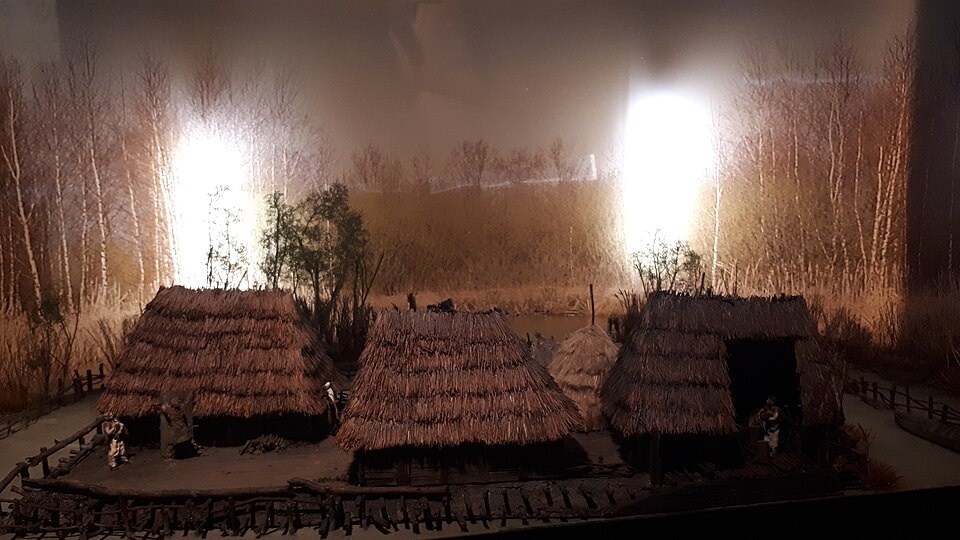
City history and Wierusz-Kowalski upstairs
The history exhibition, Na dziejowym trakcie, follows the region and city through documents, photographs, everyday objects, maps and recorded material. Its themes include religious and cultural diversity, civic life, education and the city's military role. It continues into occupation, wartime violence and post-war history. For a family with younger children, ask staff about the route and content rather than assuming every room is a light-hearted interactive activity.
The permanent Alfred Wierusz-Kowalski gallery occupies three rooms. The museum's description moves from the artist's life and studio material to studies, sketches and drawings, then paintings. It includes personal archives and works from different periods, with loans as well as the museum's own collection. The exhibition credits an English translator, but that alone should not be read as proof of a currently available English spoken tour or audio track.
Give these displays a different kind of attention from the archaeology. In the history rooms, follow an individual document or photograph through the wider story. In the painting gallery, compare a study with a finished work and look at how the artist builds movement and atmosphere. If your time is limited, tell staff your priority before starting so you understand what the managed route will allow.
The Resursa building and its entrance
The museum occupies a building commonly called the Resursa, built in 1912–1913 for a savings-and-loan society. Its early occupants included Polish social and cultural organisations, a reading room and a newspaper. Later uses included a bank, institutional accommodation and a school boarding facility. Museum activity began in part of the ground floor in 1956, and the whole building was taken over for the museum in 1977.
The cover photograph shows its street elevation in September 2012. It is useful for recognising the building, but it is not a current entrance or renovation survey. The access declaration identifies the main accessible entrance on the courtyard side, at the north elevation, with a ramp. A photograph of the street frontage should not send a wheelchair user to the wrong door.
Step-free access: useful details to confirm
The museum's access declaration, prepared in 2020, describes a lift, a ground-floor accessible toilet and a designated accessible parking place in front of the building. It asks wheelchair users to notify staff and agree a visit time in advance. It also describes specific constraints: eight ground-floor passage narrowings with a minimum width of 90 cm, and two upstairs narrowings with a minimum width of 100 cm.
The ground-floor reconstruction of a Baltic house has uneven flooring, although the declaration says there are no thresholds between the rooms. It reports no hearing loops, Braille markings or enlarged-print/contrast markings. Assistance dogs can enter visitor areas. Because equipment availability and building work can change, confirm the ramp route, working lift and toilet arrangements for your actual visit. A broad statement that the museum is accessible is less useful than checking the feature you need.
A second museum and the cross-border ticket
The Maria Konopnicka Museum is a separate branch at Kościuszki 31, not another entrance to number 81. The April 2026 tariff gives its permanent exhibition free admission and a separate 15 zł per-person guided charge. It also prices the Dwarf Alley and the children's exhibition separately. Do not treat the branch as wholly free or assume the Regional Museum's accessibility details apply to its buildings.
For a wider journey, a July 2026 order introduced a 30 zł combined museum ticket sold in Suwałki, valid for three months from purchase. It covers one entry to the Regional Museum, the Konopnicka branch, the local-history museum in Alytus and the regional museum in Lazdijai, Lithuania. Show it at each participating museum. Before buying, confirm which exhibitions and services it covers, especially where ordinary admission is already free or guiding is charged separately.
For a straightforward city visit, first check the dated closure notices, choose the archaeology, history or painting priority, and agree any guide or access needs. On an ordinary winter weekend, arrive well before the uncertain last-entry boundary. The result is a visit built around what you actually want to see, rather than a ticket bought on the assumption that every room follows the same rules.
Frequently asked questions
Is Suwałki Regional Museum free on Sunday?
Permanent-exhibition admission is free on Sundays. Guiding, workshops and temporary exhibitions should be checked separately.
Is the archaeology exhibition free?
Admission is free under the 2026 tariff. Guided archaeology costs 15 zł per person. The route rules describe accompanied visits, so ask how the free-entry option works on your date.
Is there English information?
The archaeology exhibition description confirms Polish and English panels. Confirm availability and pricing of a live English guide separately.